Faroe Islands: 6 Off-the-Beaten-Path activities
Article updated on 22.06.26
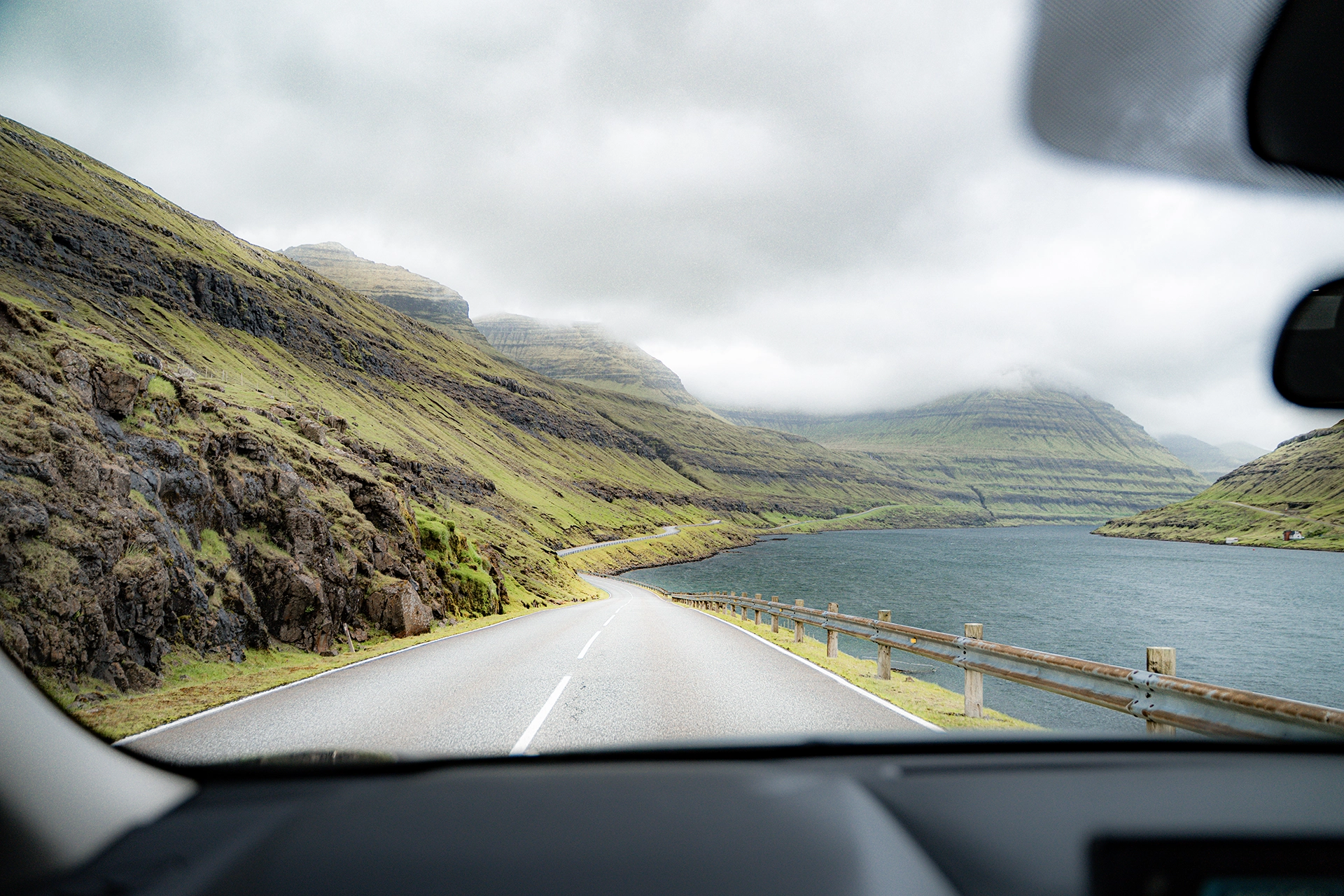
When planning a trip to the Faroe Islands, you’ll often come across the same places: Múlafossur, Trælanípa, Saksun, or the Kallur Lighthouse. And while these spots are absolutely worth visiting, the archipelago also offers plenty of lesser-known experiences.
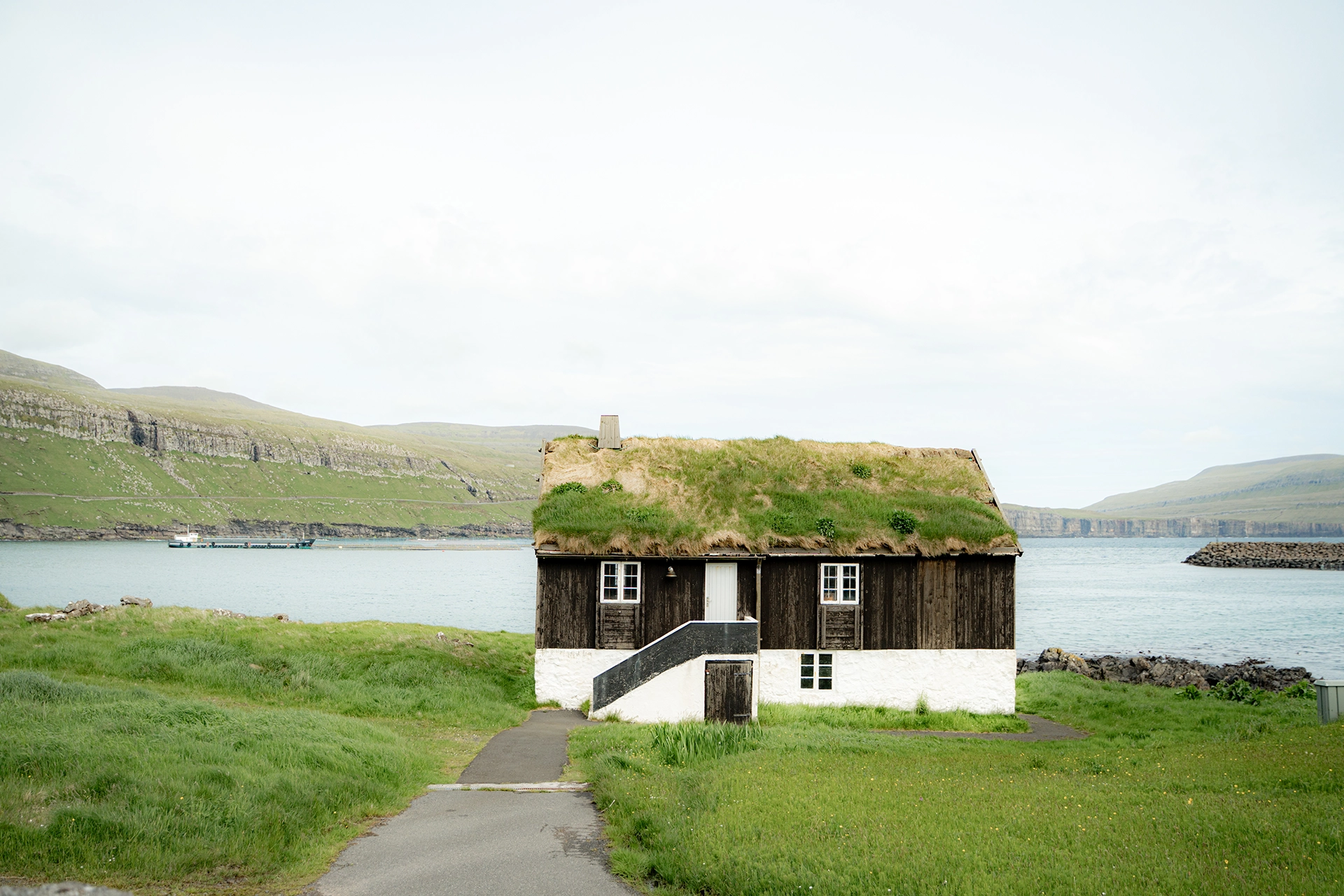
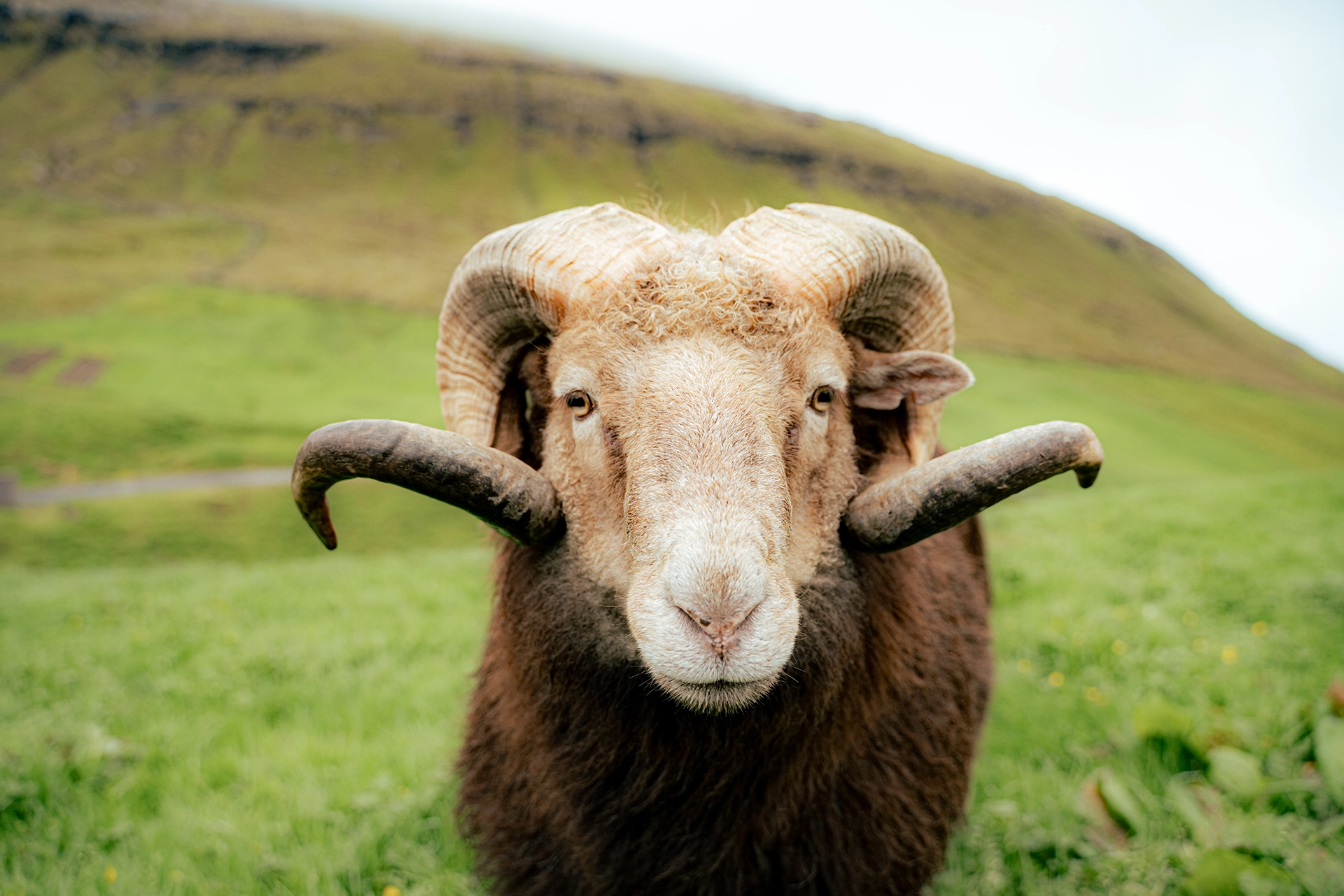
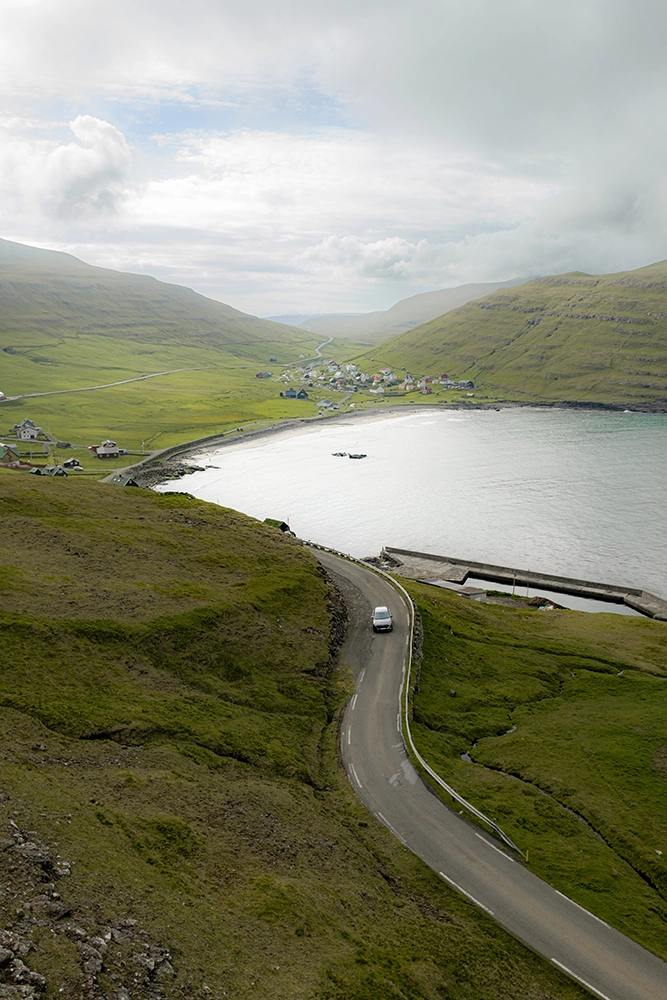
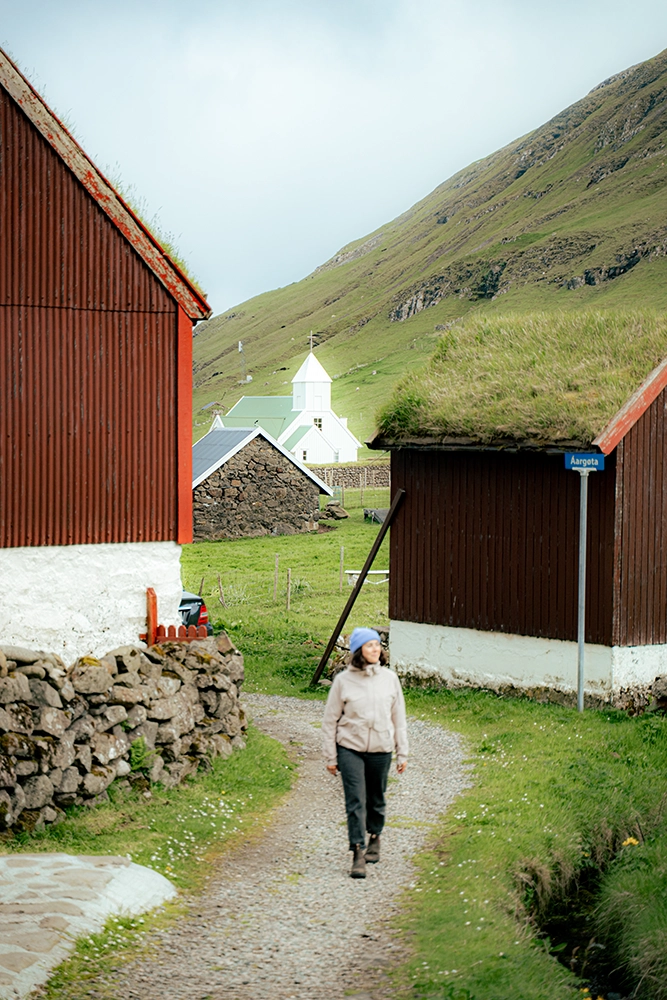
Beyond the famous highlights, there are countless ways to discover the Faroes differently: meeting locals, exploring remote villages, enjoying unspoiled nature, or simply spending time surrounded by sheep and the dramatic landscapes that make these islands so special.
If you already have the classics on your itinerary, here are some activities and experiences we particularly enjoyed that are a little different from the places you constantly see on social media. A great way to complement your Faroe Islands trip and discover another side of the archipelago.
A few practical tips before you go
Before we begin, here are a few useful things to know:
- Drive on the right-hand side.
- BONUS supermarkets are generally open until 10 PM.
- Public toilets are available in most villages and are often free.
- Mobile coverage is excellent almost everywhere on the islands (Vodafone FO and Føroya Tele).
- Download Google Maps offline, even though the network coverage is generally good.
- Some tunnels are toll tunnels, so it can be worth planning your route to avoid unnecessary crossings.
Toll Tunnels in the Faroe Islands
All subsea tunnels are toll roads and, if possible, we recommend limiting their use because costs can add up quickly.
If you rent a car, the tolls are usually charged when you return the vehicle at the airport. If you’re traveling with your own vehicle, you can pay online.
Prices as of June 2026:
- Vágatunnilin: 100 DKK round trip (~ €13)
- Norðoyatunnilin: 100 DKK round trip (~ €13)
- Eysturoyartunnilin: 230 DKK one way (~ €30)
- Rókin (Strendur): 180 DKK one way (~ €24)
- Sandoyartunnilin: 230 DKK one way (~ €30)
The Self-Navigating Car
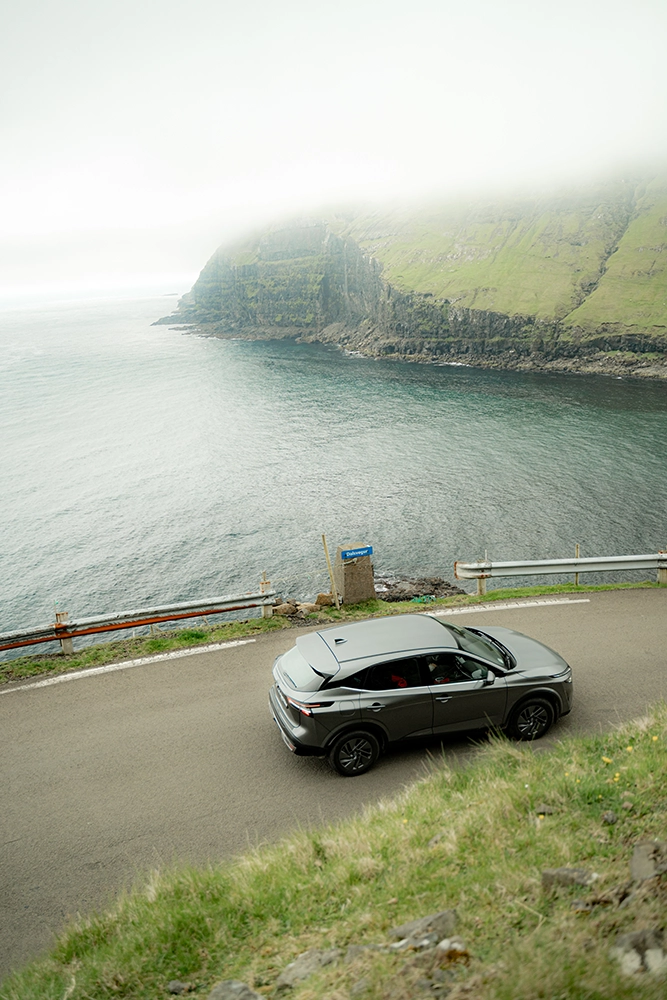
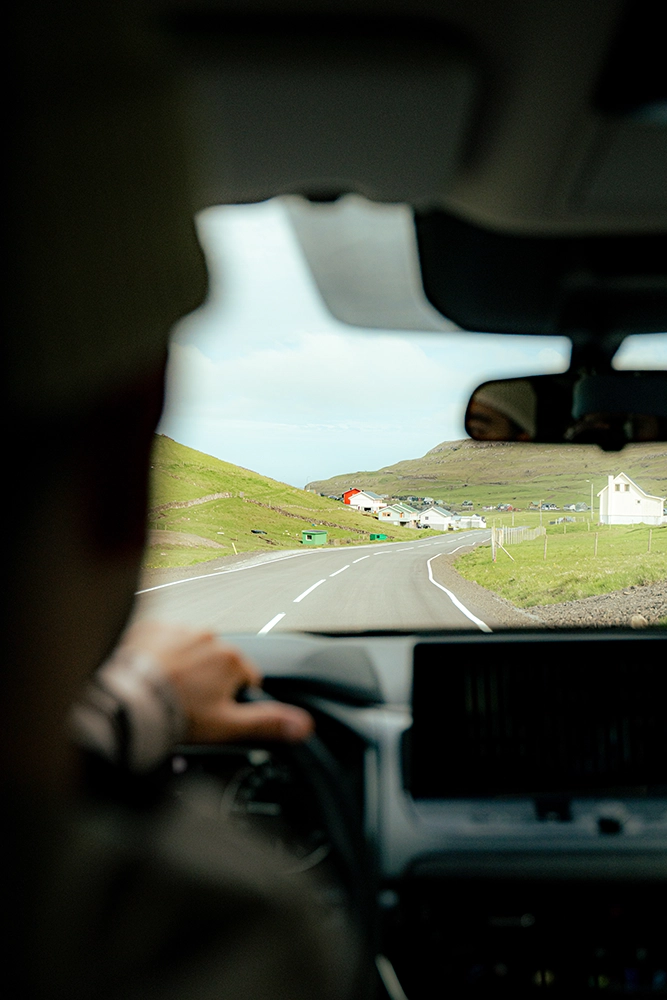
If there’s one original and completely free activity to try in the Faroe Islands, it’s probably this one.
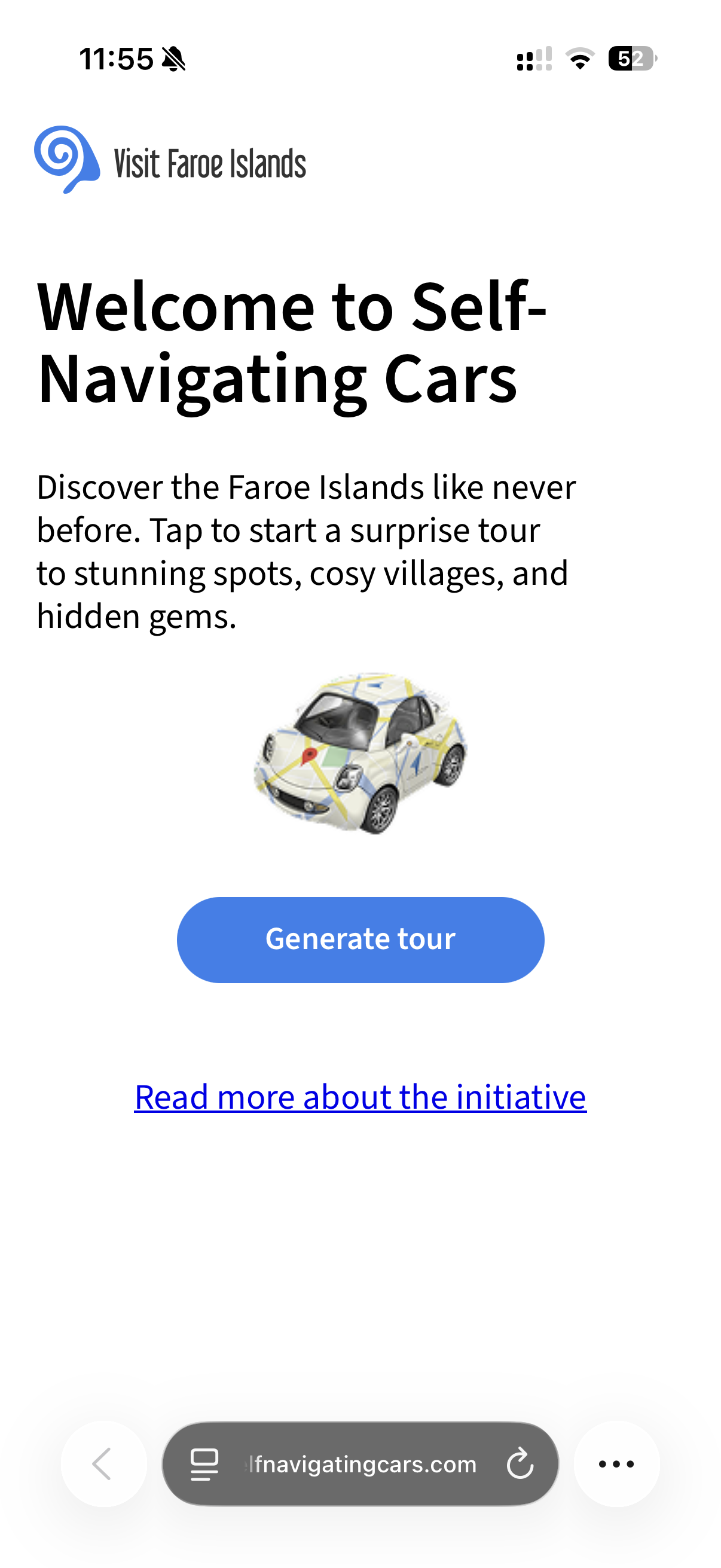
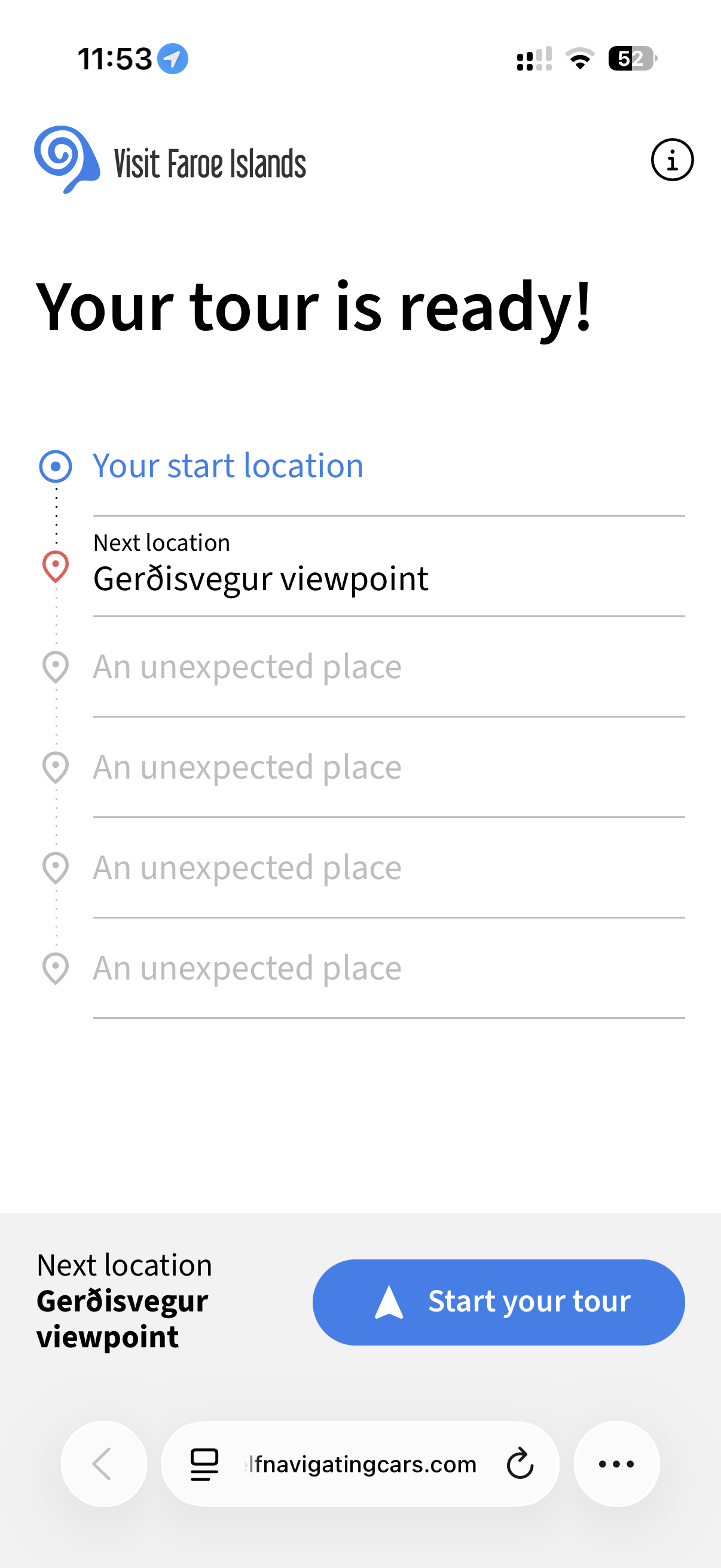
Visit Faroe Islands has created a unique concept: a surprise itinerary generated from your current location.
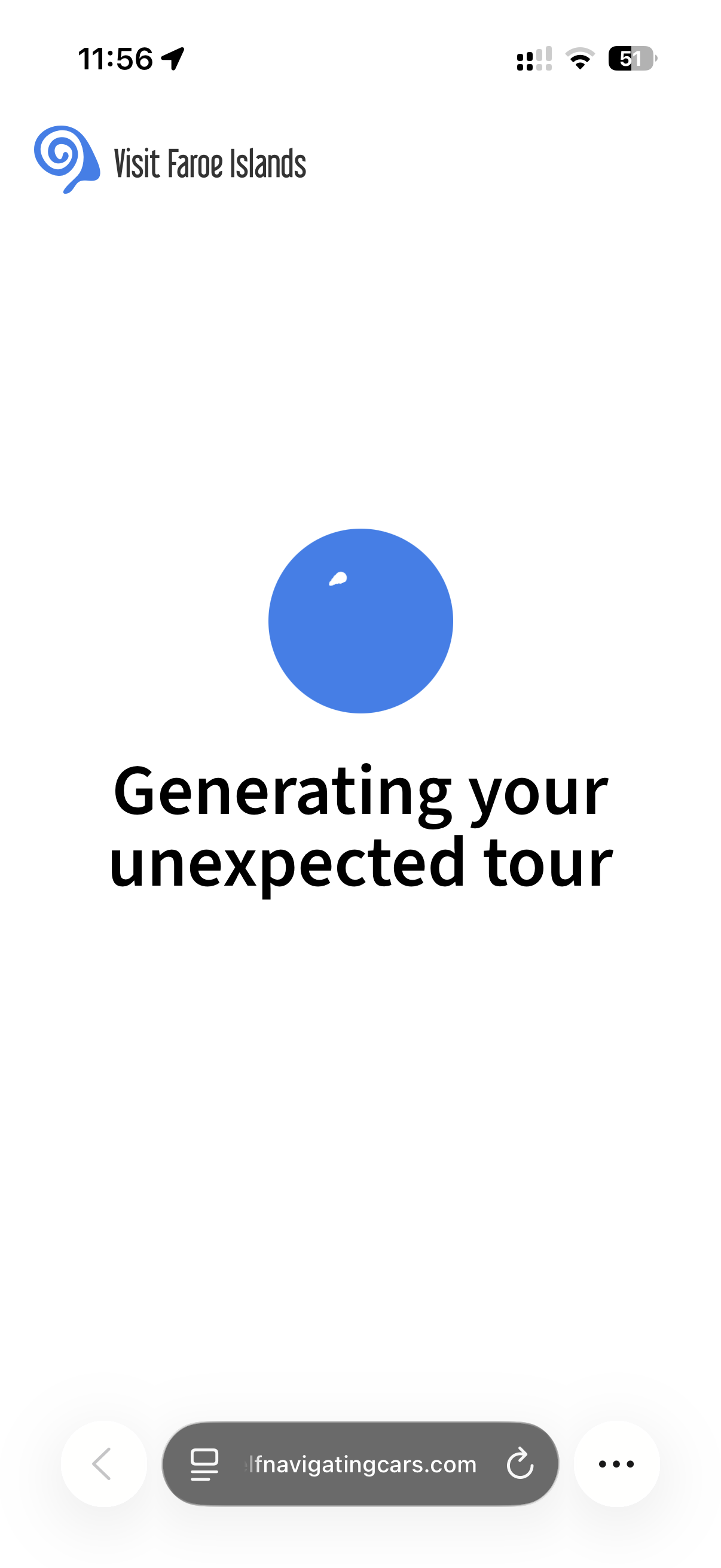
The idea is simple. Once you’re in the Faroes, open https://www.selfnavigatingcars.com on your phone, activate your location, and follow the directions step by step using Google Maps. Each new stop unlocks automatically, so you never know exactly where the day will take you.
The routes were designed with the help of locals who shared some of their favorite places: remote villages, lesser-known viewpoints, local stories, and landscapes that most visitors never take the time to discover.
The goal is also to encourage visitors to explore the entire archipelago rather than focusing only on the most popular attractions.
The concept is completely free and you can use it as many times as you want during your trip. Each time you start a new route, you’ll receive a different itinerary (at least until you’ve exhausted all the suggestions 😉).
It’s a fun and original way to discover corners of the Faroe Islands that you would probably never have found on your own.
Our Self-Navigating Car route
During our test, the route took us from Leirvík to the island of Sandoy, with several stops we would likely never have discovered otherwise.
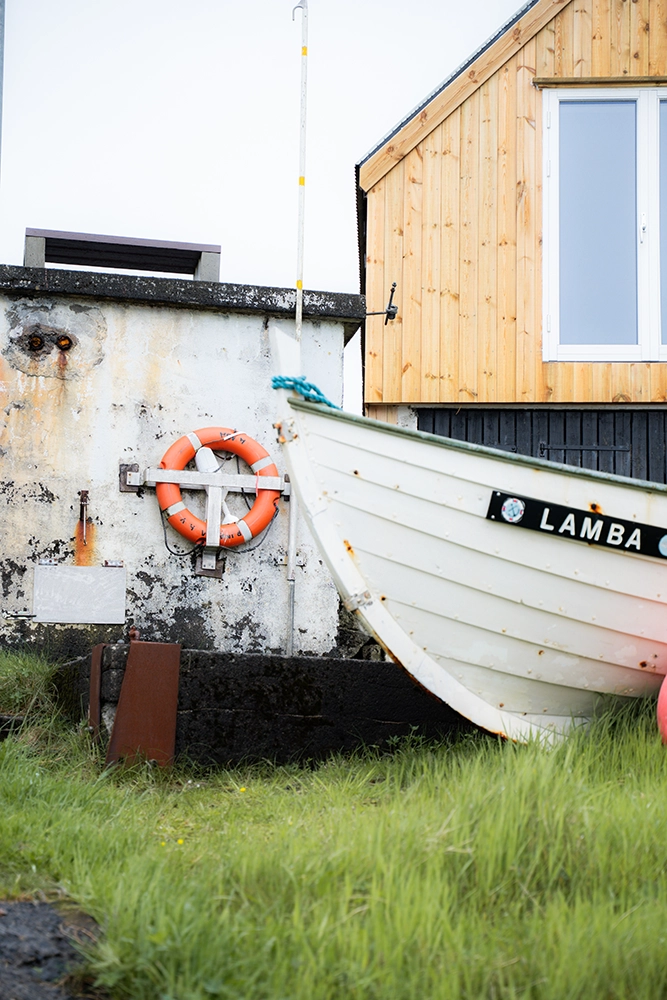
Lamba
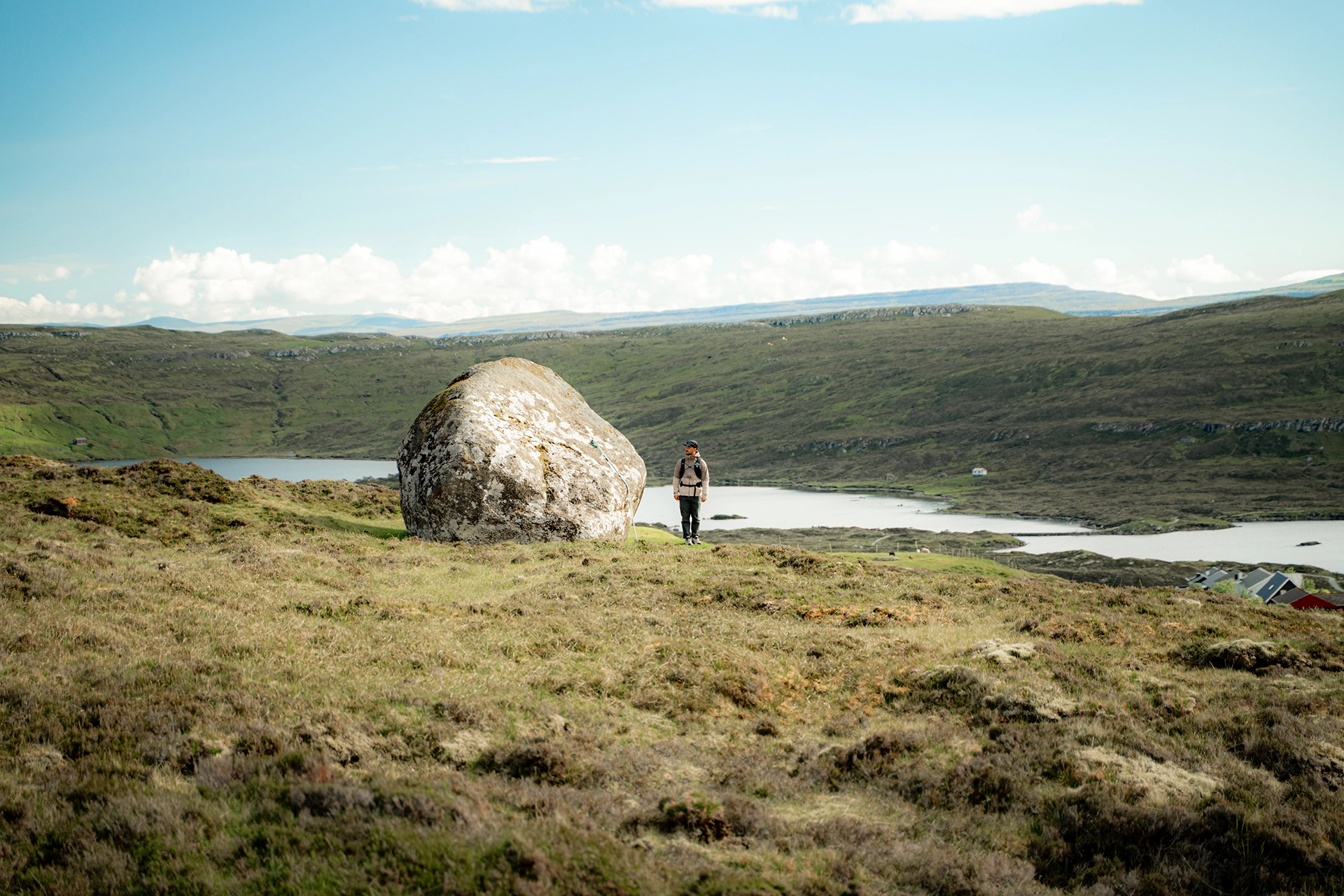
Nestled between two fjords, Lamba offers beautiful views over Skálafjørður. The village is best known for a local legend involving a large rock in the harbor that nobody dares to move because it is said to be inhabited by the huldufólk, the famous “hidden people” of Faroese folklore.
Kirkjubøur
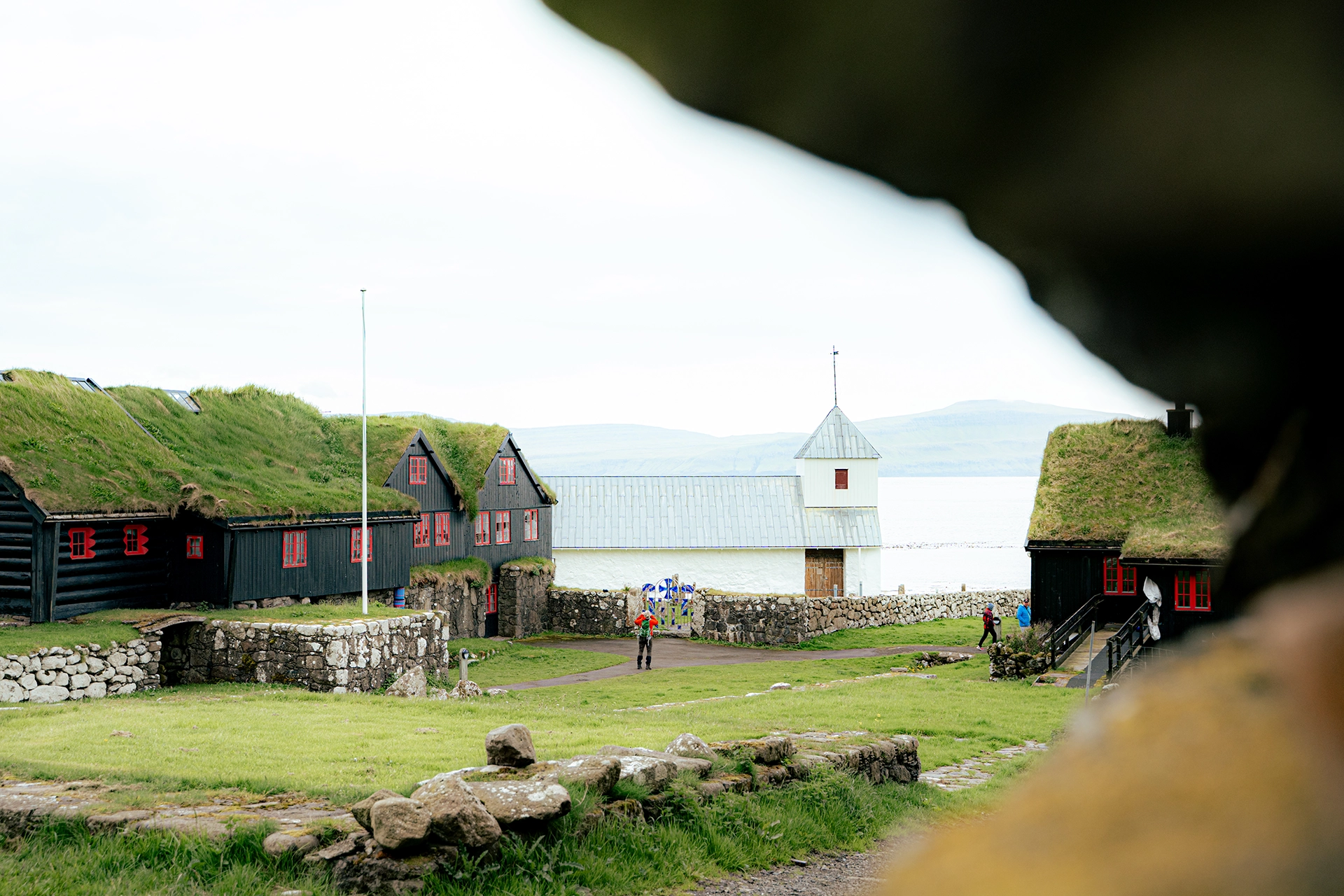
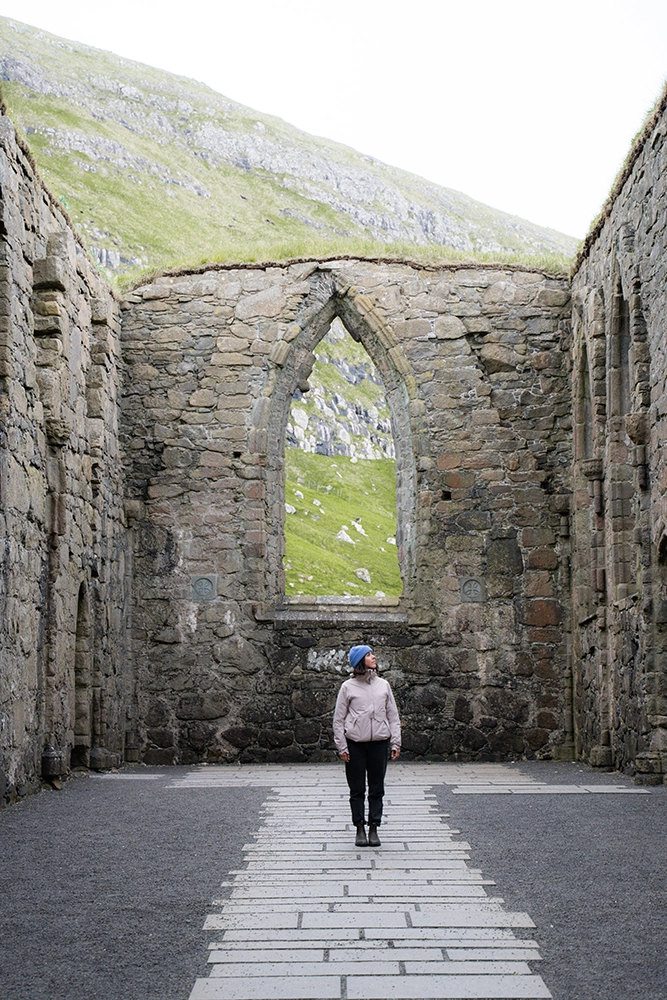
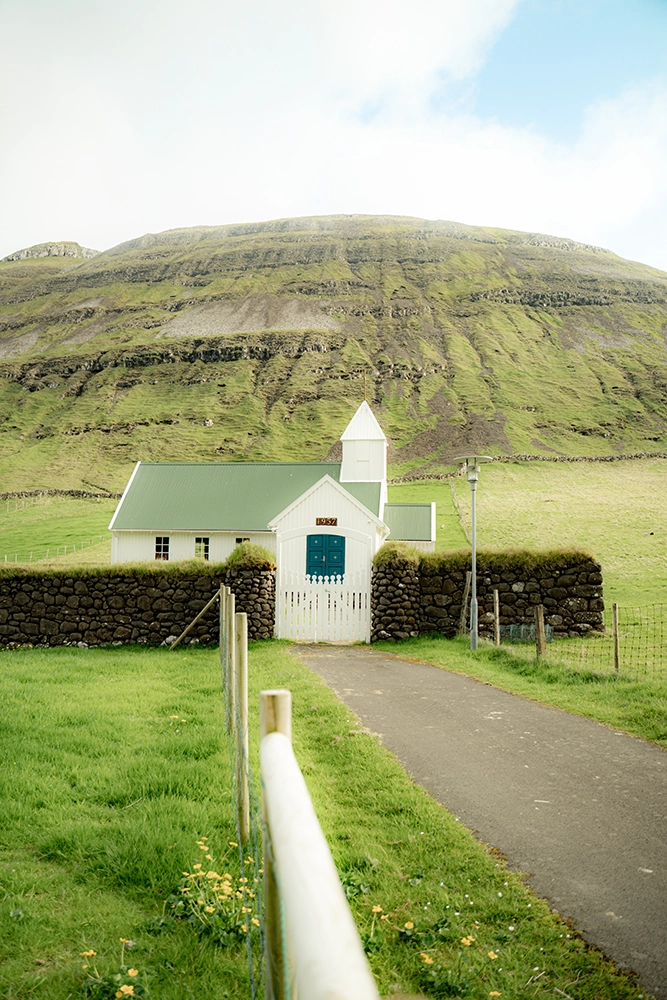
Before reaching Sandoy, the route also passed through Kirkjubøur, one of the most historic villages in the Faroe Islands. Here you’ll find the ruins of the 13th-century Saint Magnus Cathedral and the still-active Saint Olav’s Church.
From there, the route continues toward Sandoy through the 10.8 km subsea tunnel (which is subject to a toll).
Sandur and its dunes
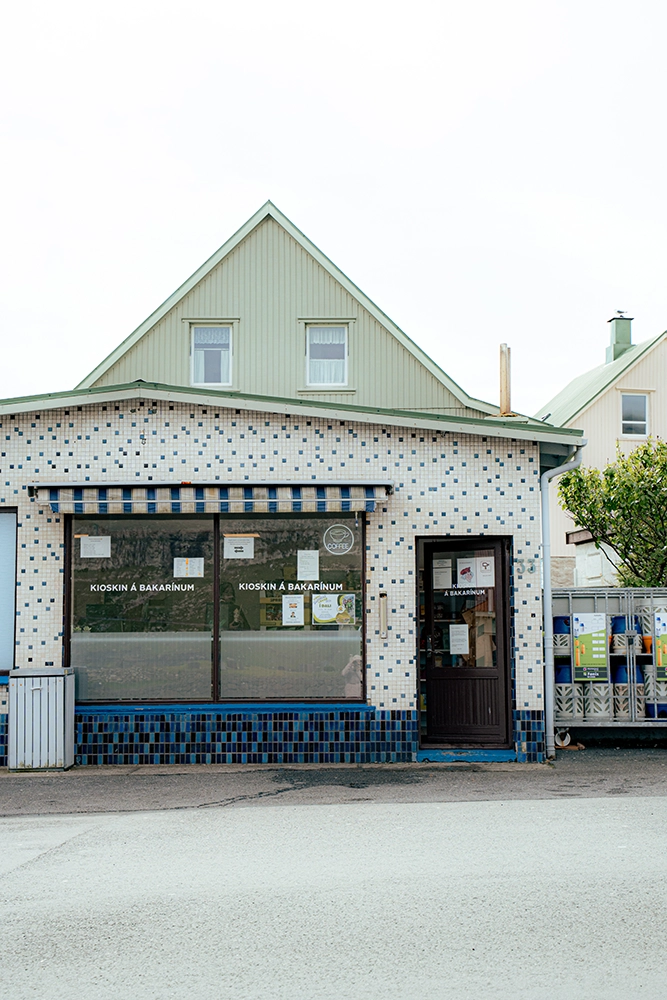
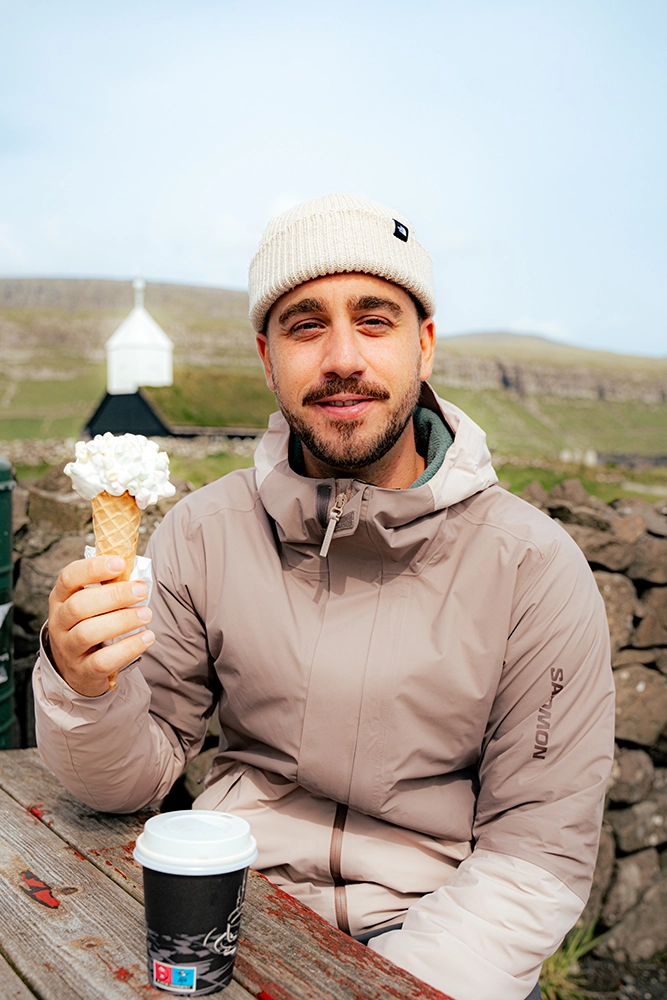
After crossing the Sandoy Tunnel, our first stop was Sandur, where we enjoyed a delicious ice cream from the small kiosk located inside the village’s former bakery. It’s a simple but charming place that still feels like a gathering point for locals.
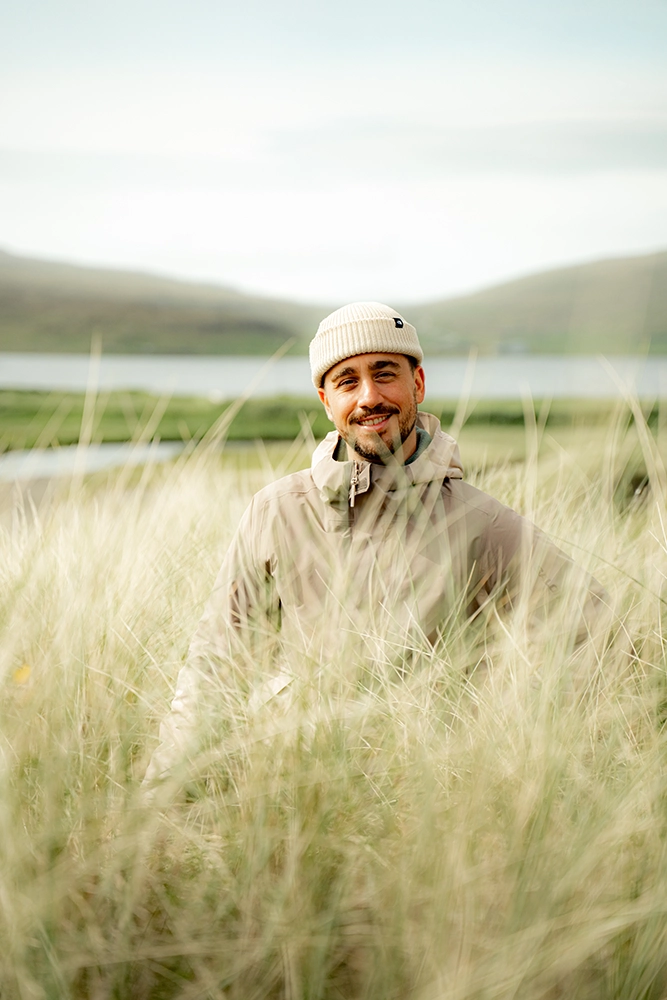
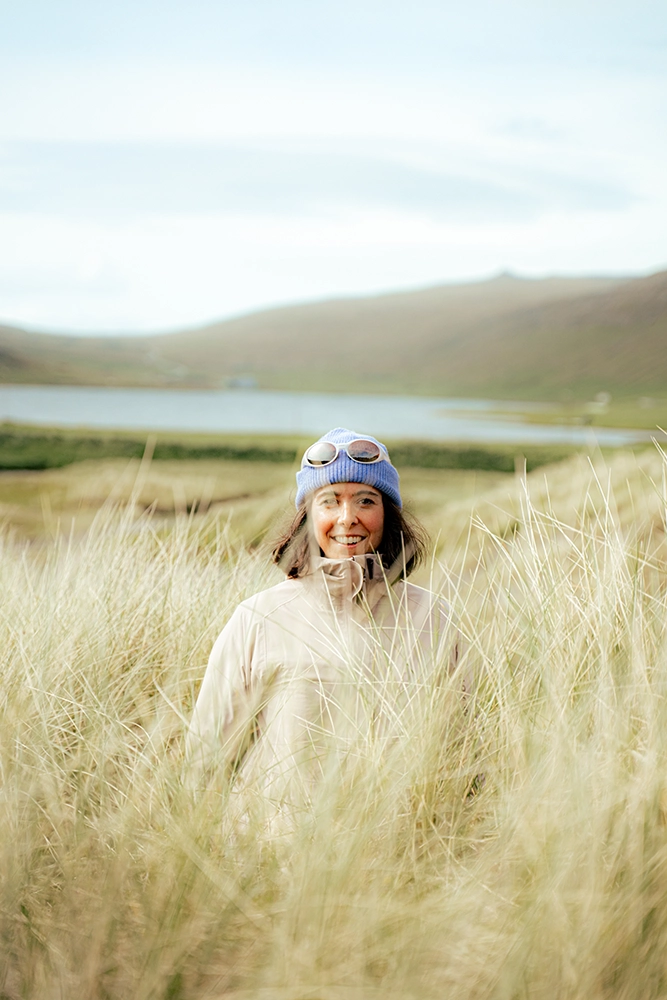
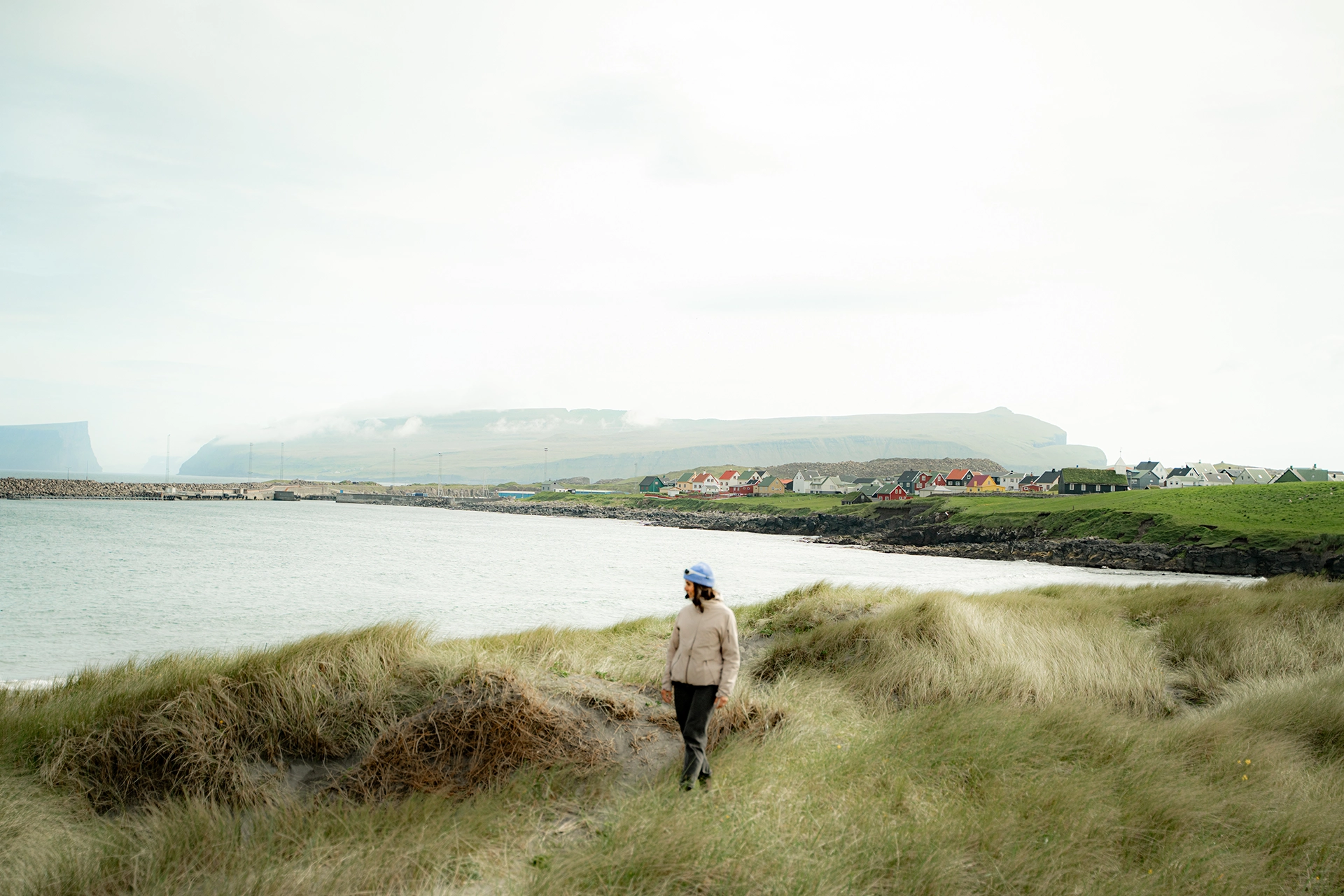
Just a few minutes away, the scenery changes completely with the dunes of Sandur. It is one of the rare places in the Faroe Islands where you’ll find real sand dunes. The contrast with the green mountains found elsewhere in the archipelago is quite surprising.
Bindisteinurin
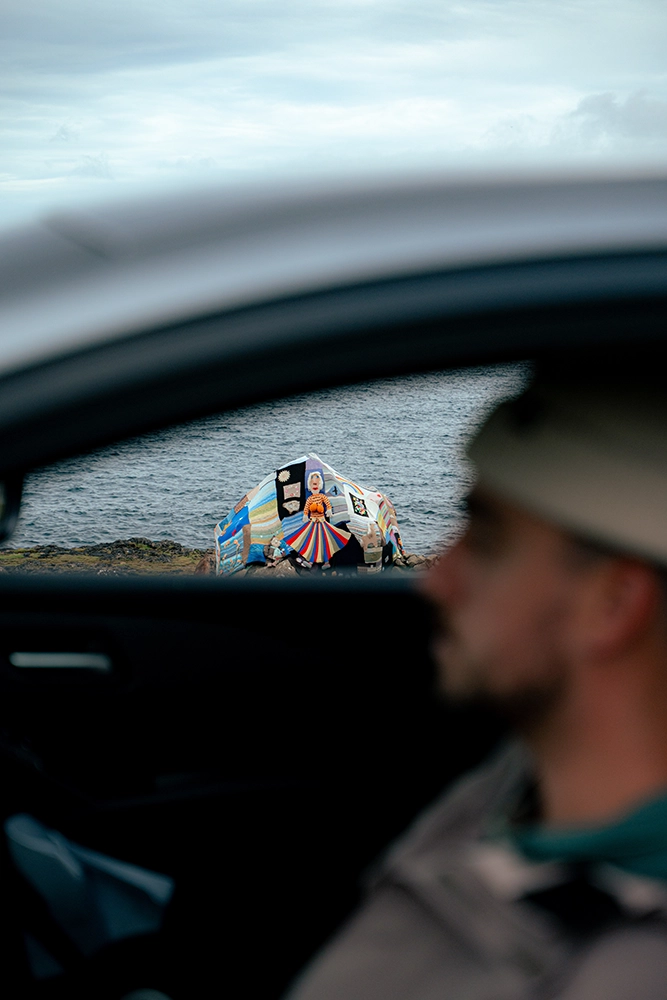
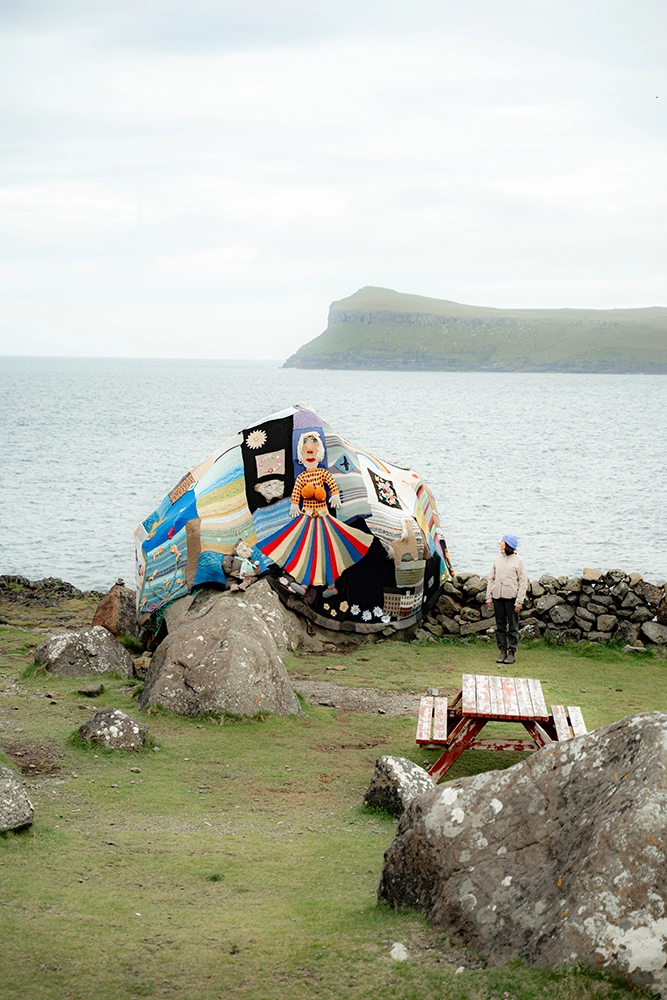
Along the roadside stands Bindisteinurin, a large rock dressed each year in knitted wool clothing made by local women. A quirky landmark that perfectly reflects the importance of knitting in Faroese culture.
Dalur
This was probably our favorite stop of the day.
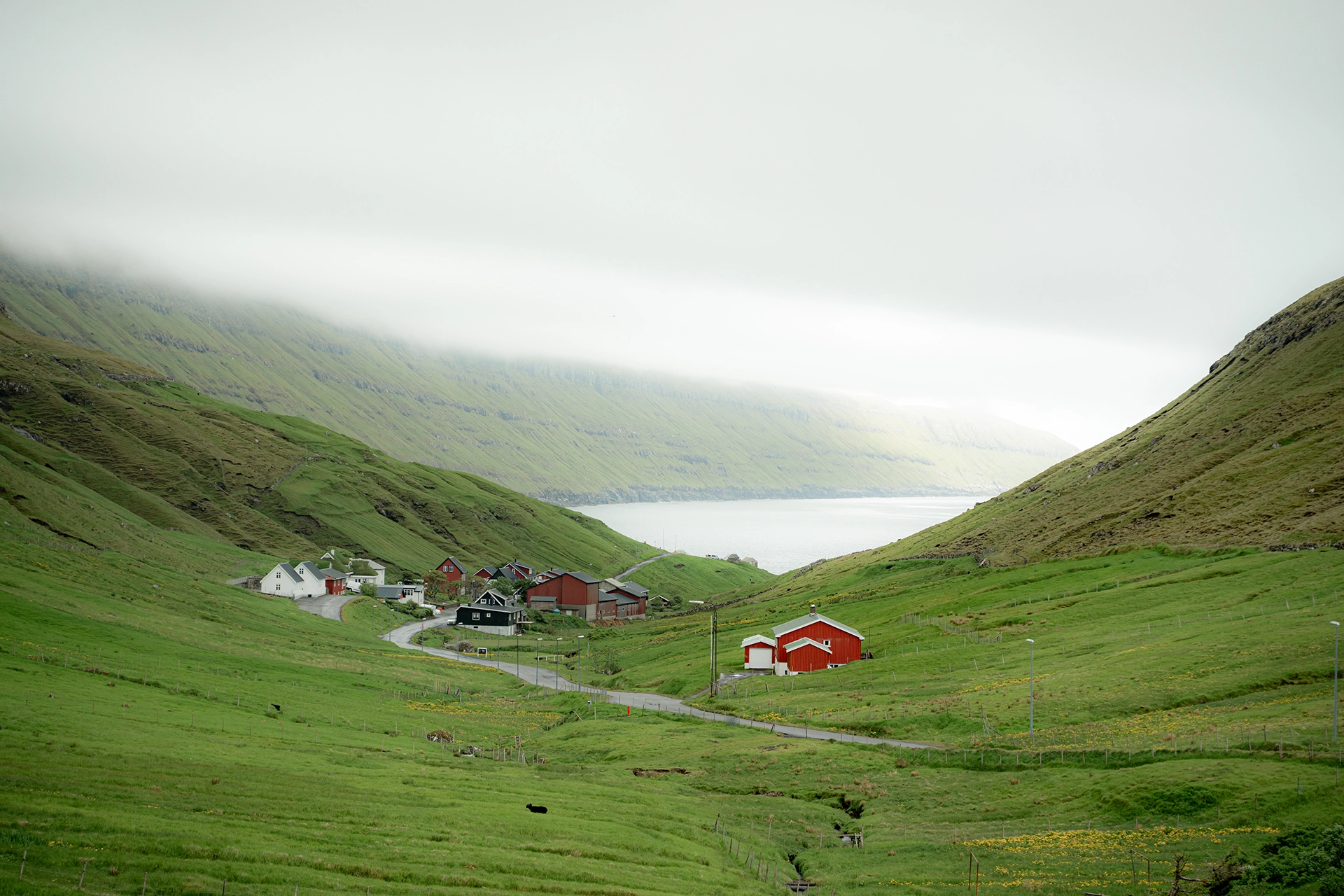
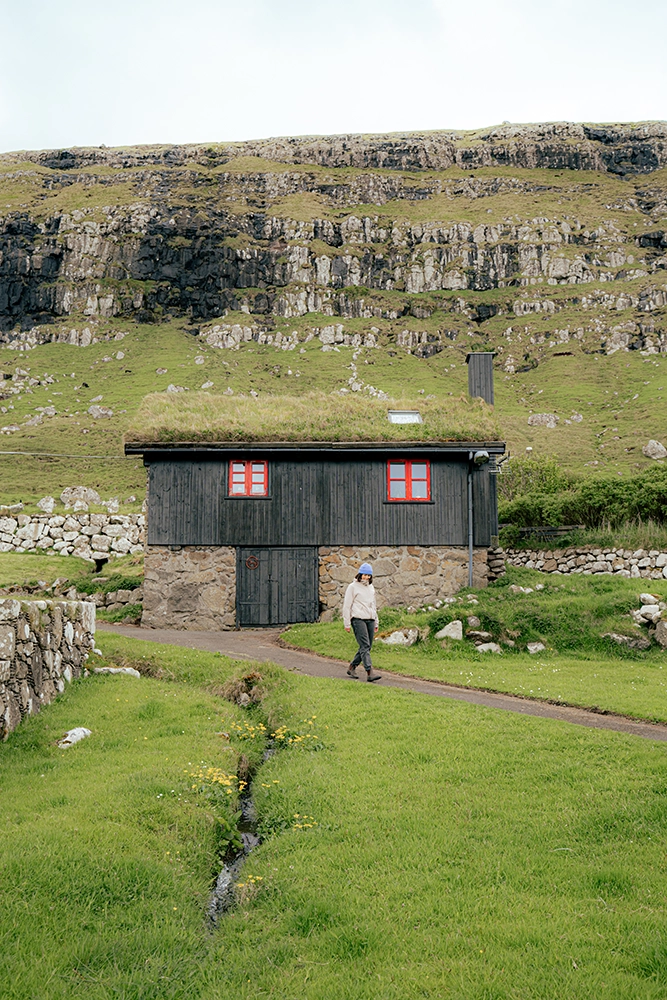
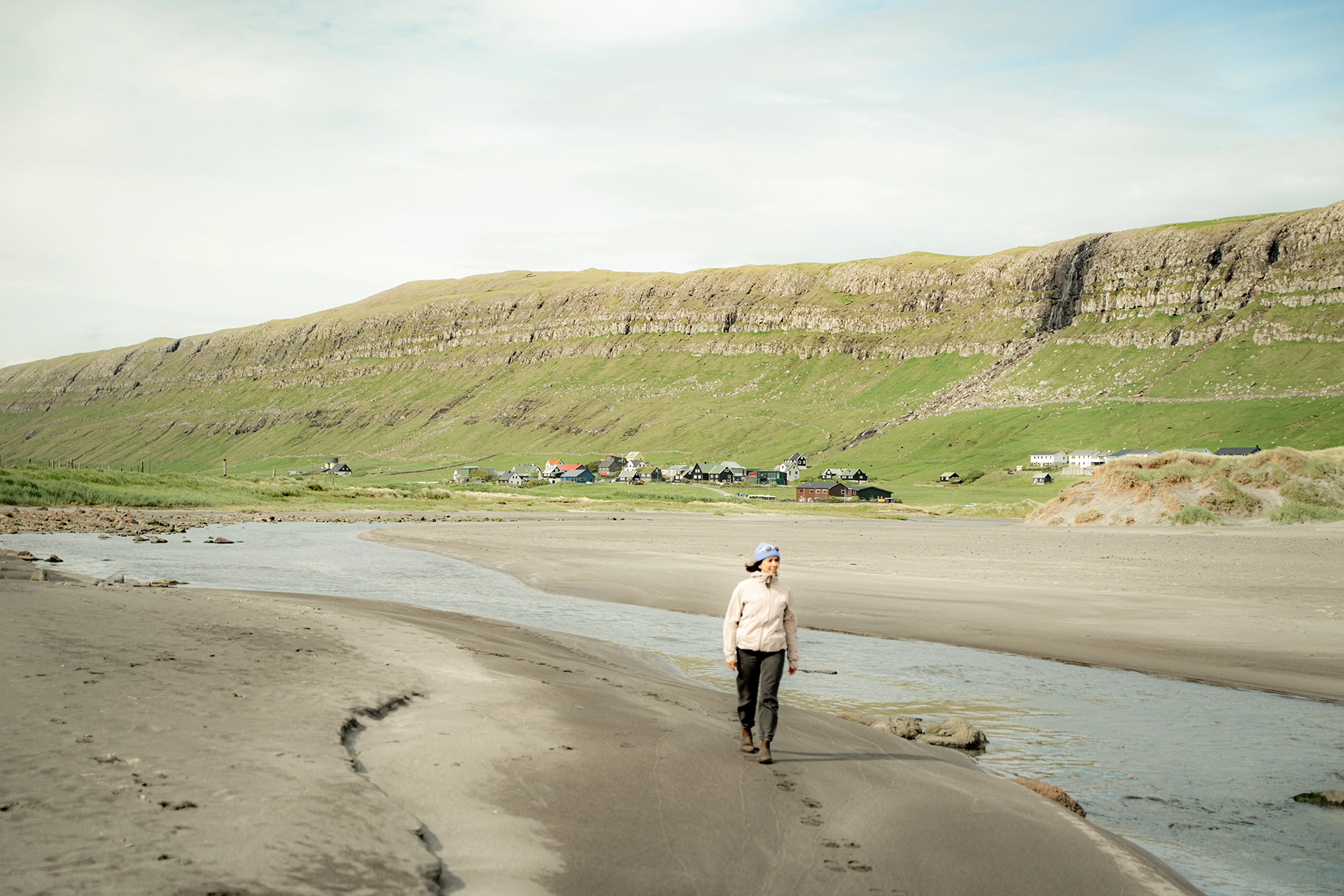
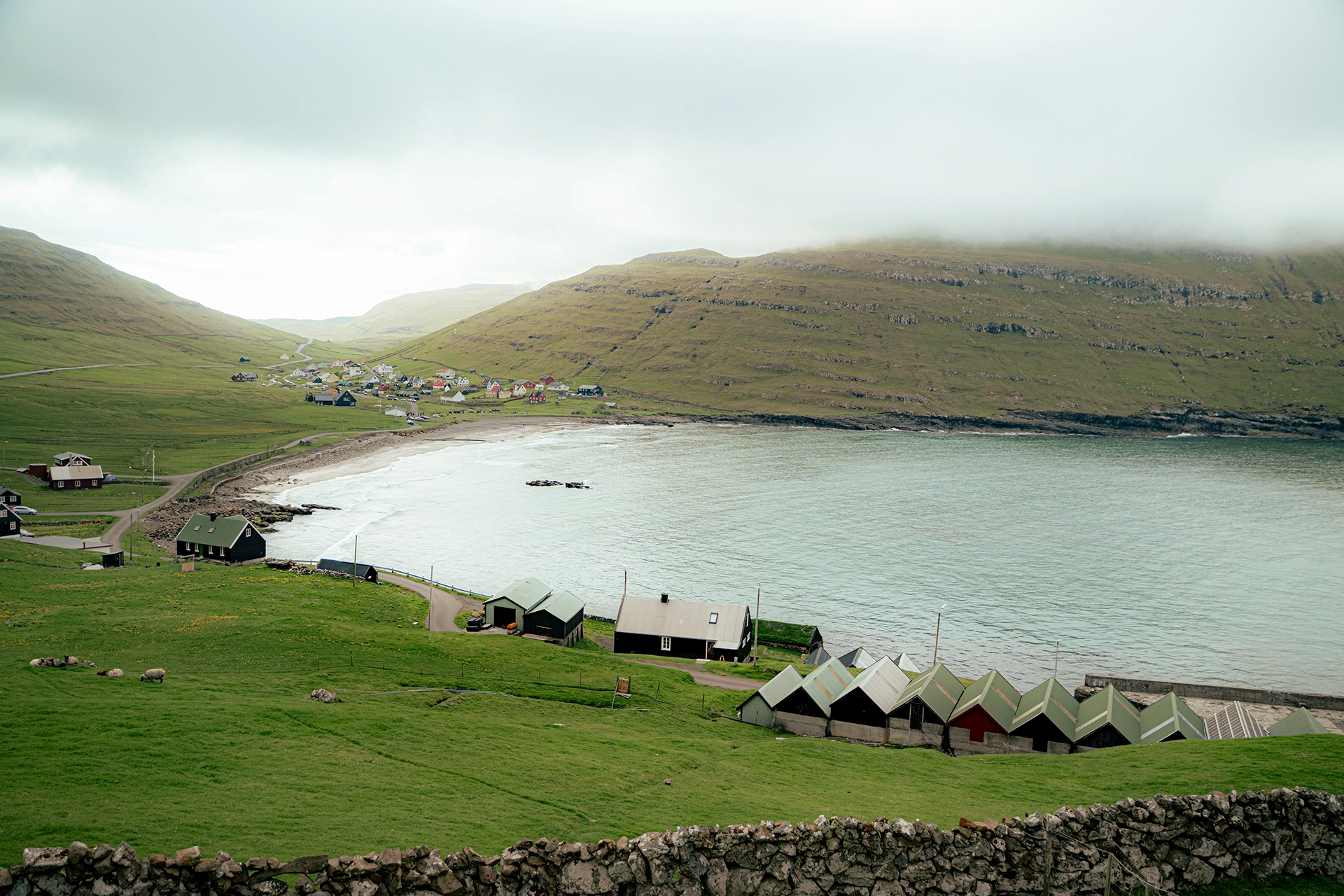
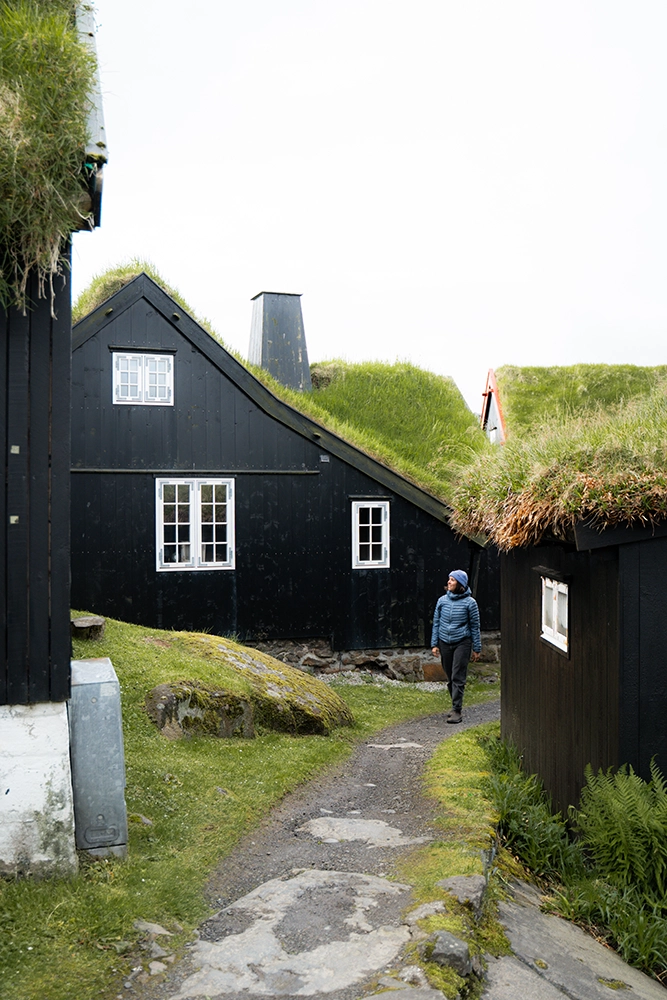
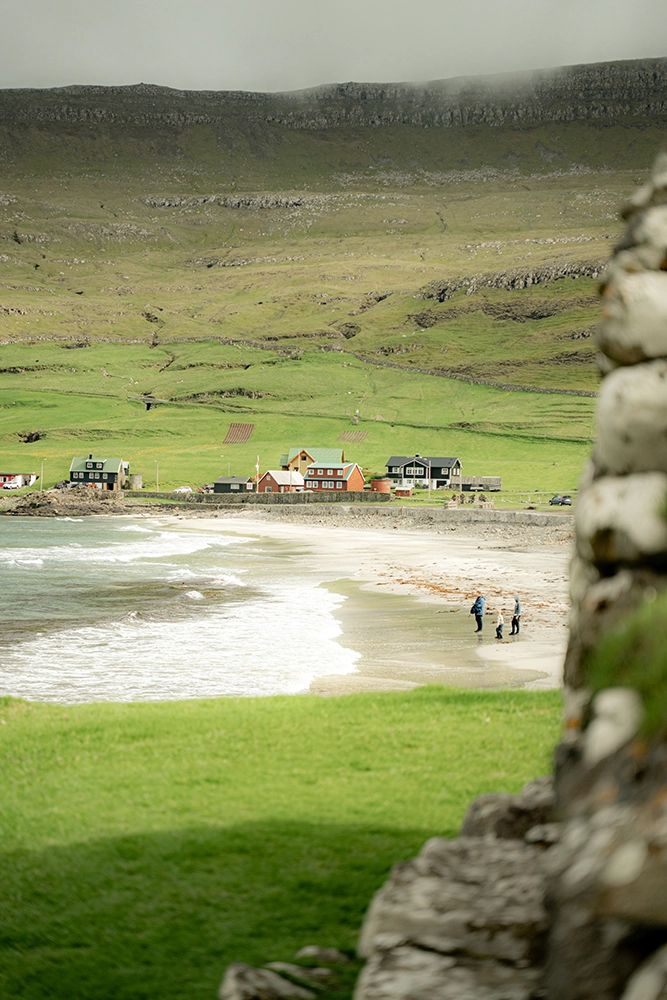
Located at the southern end of Sandoy, Dalur is a peaceful village surrounded by mountains. A pebble beach lies just below the village, and a gravel track leads to a stunning viewpoint overlooking the ocean and the island of Suðuroy.
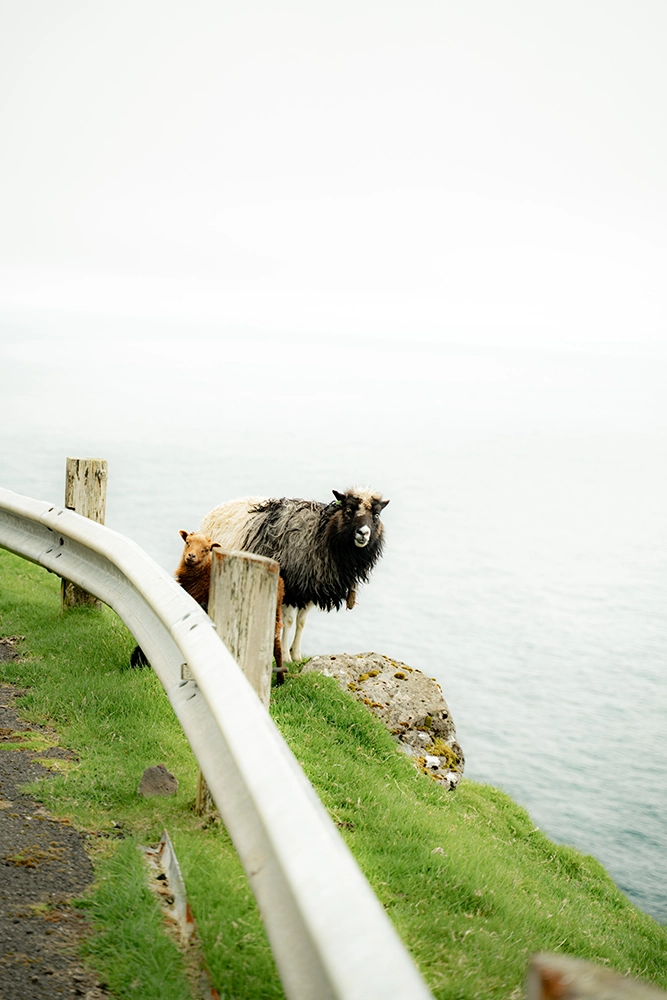
It’s exactly the kind of place where you feel completely alone in the world, surrounded only by a few sheep and the sound of the waves.
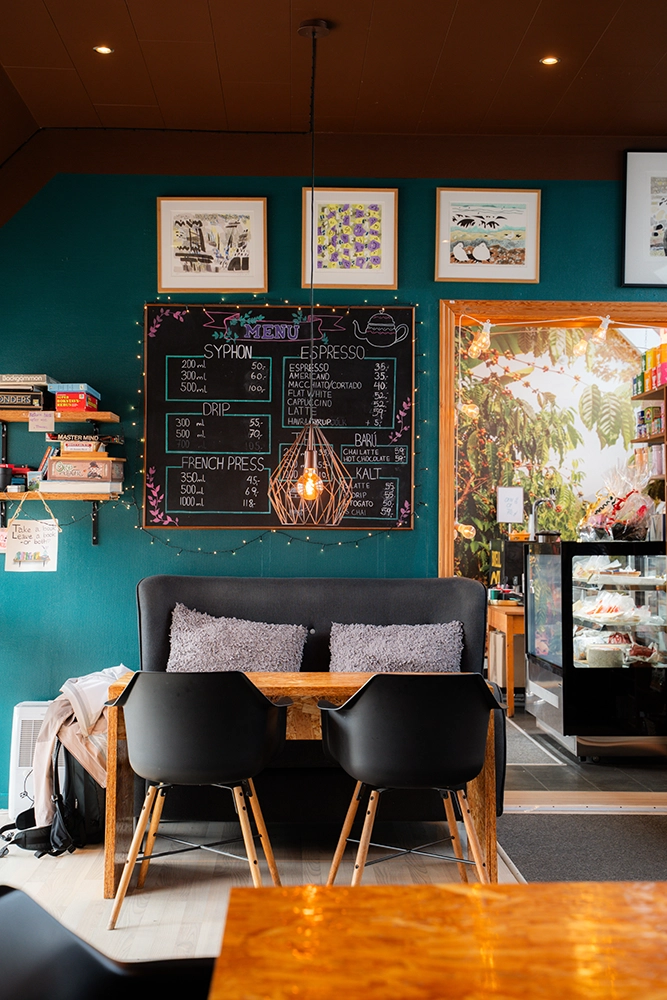
Caféin á Mølini
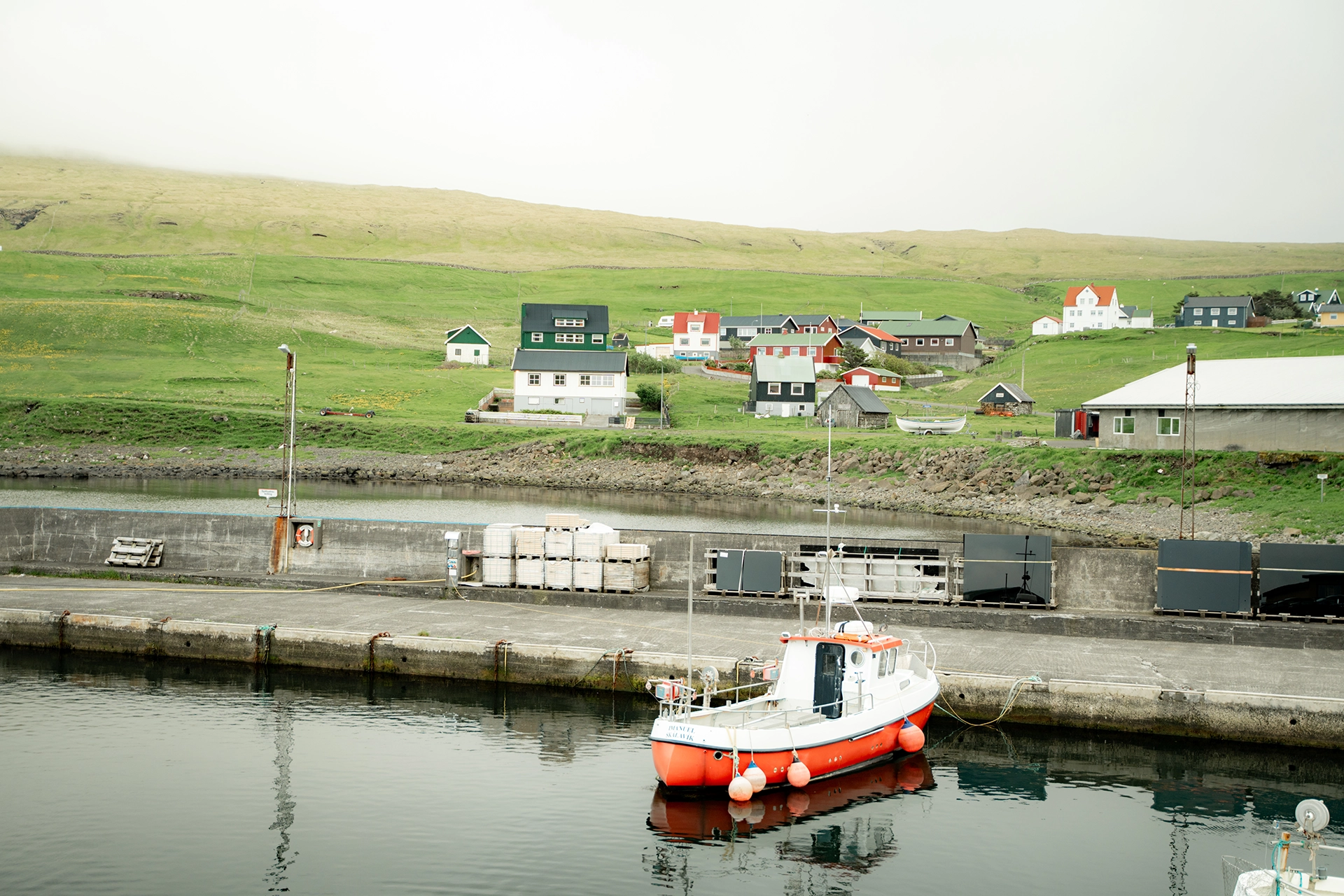
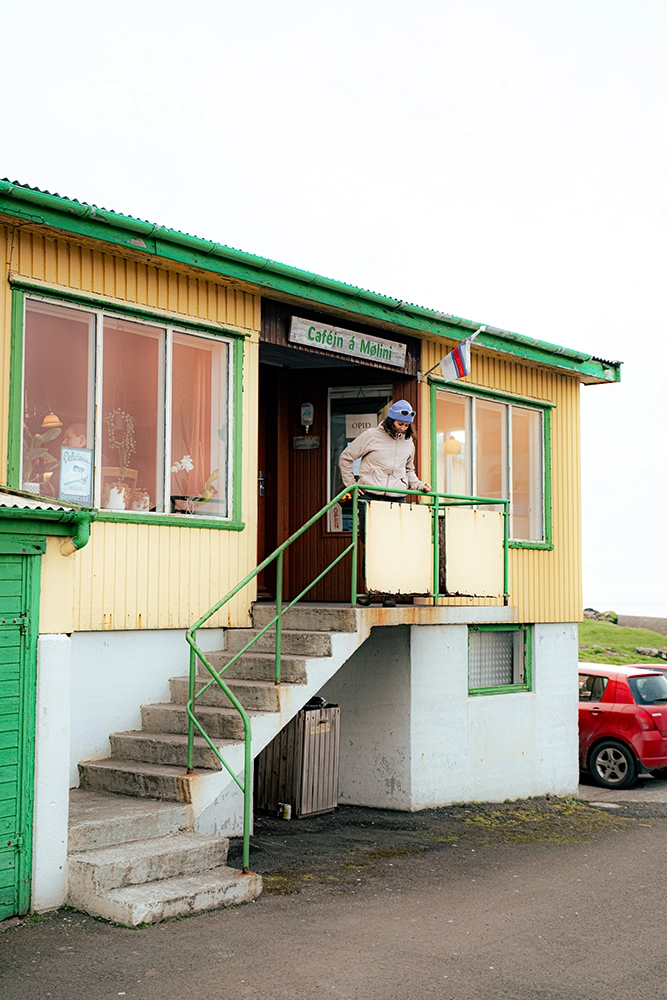
Before heading back, the route took us to Caféin á Mølini in Skálavík.
Located right by the harbor, it’s the perfect place to end the day with a coffee or a meal.
With its fjord views and relaxed atmosphere, it’s a great place to slow down before returning. Simple, welcoming, and very local, exactly the kind of place we love finding in the Faroe Islands.

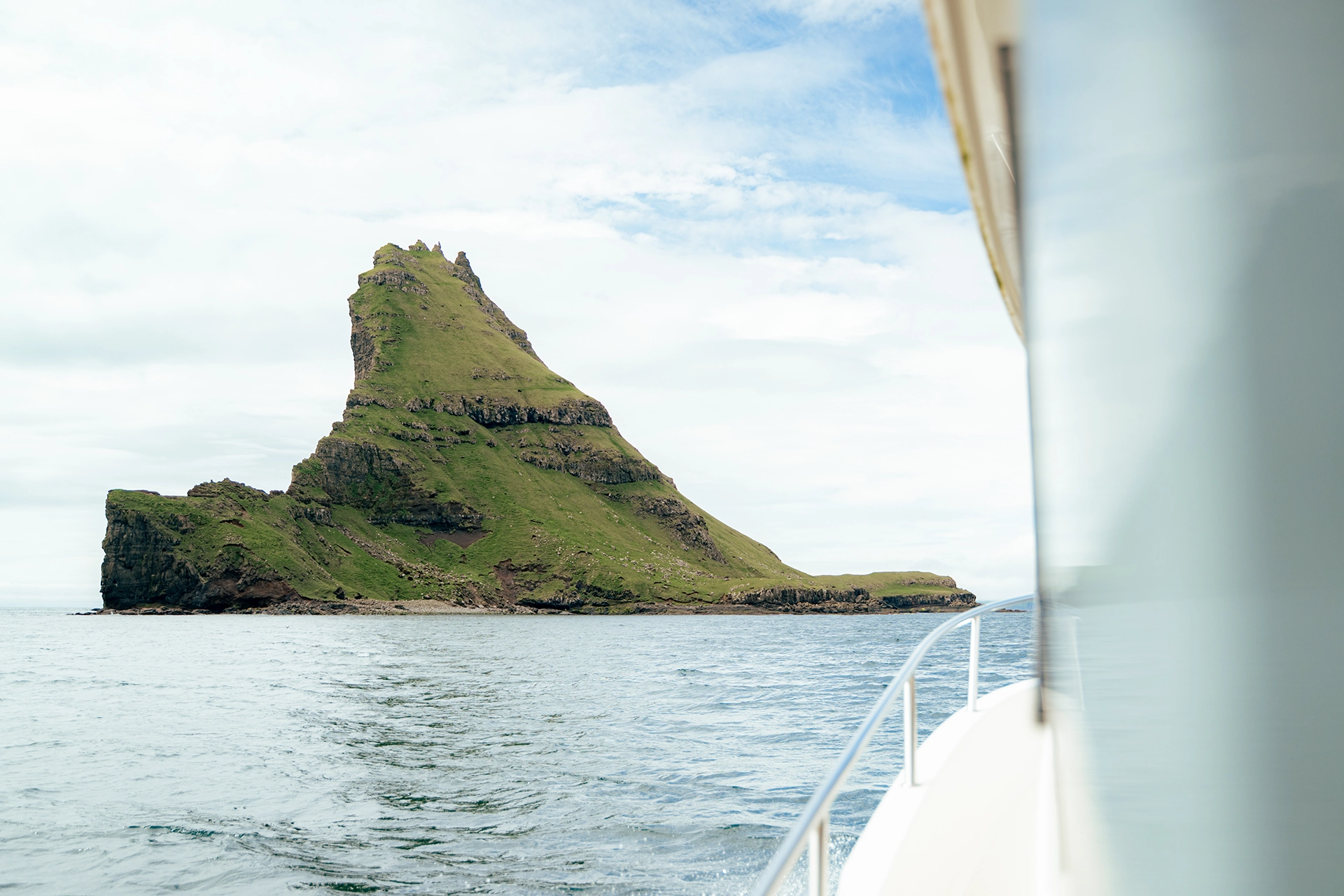
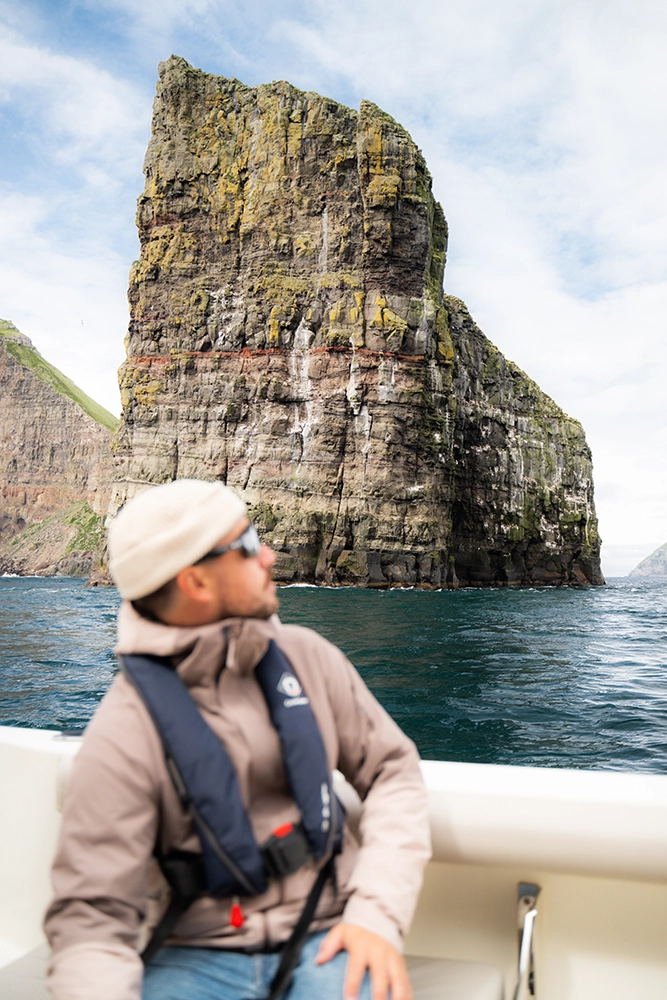
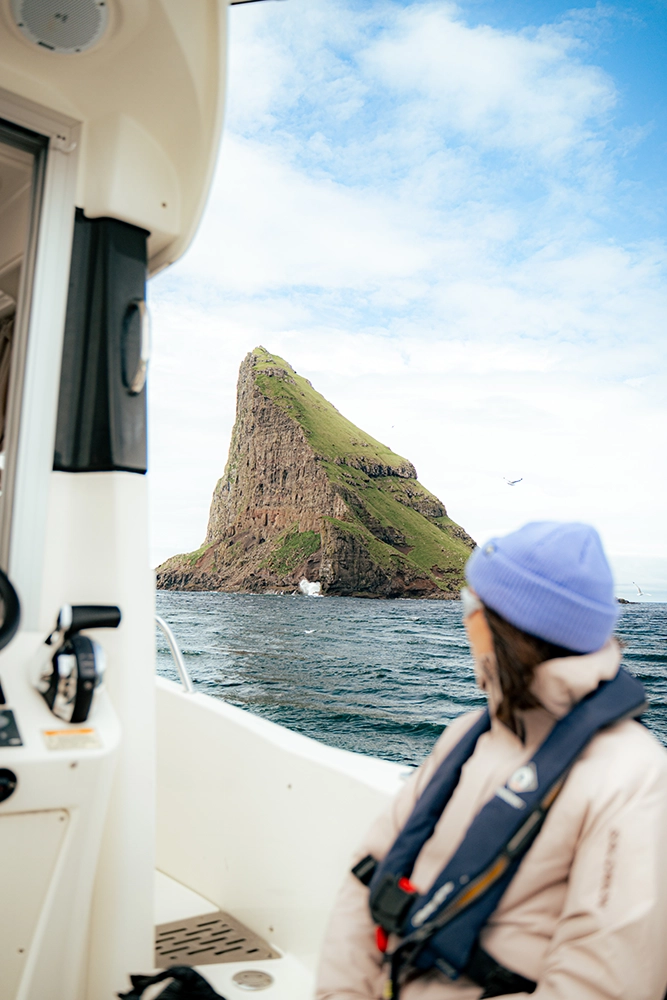
Discover Drangarnir by boat
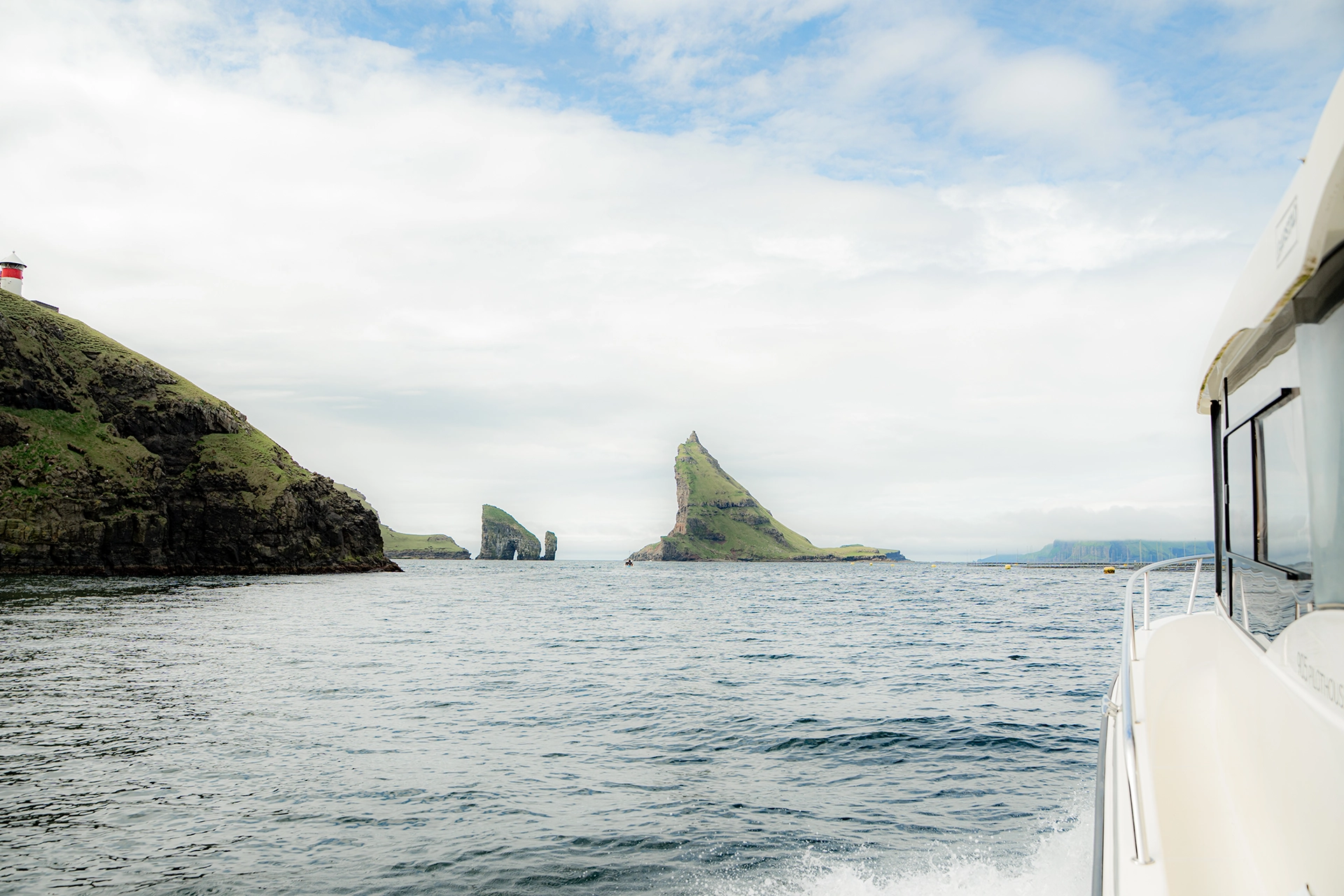
Drangarnir is probably one of the most photographed landmarks in the Faroe Islands.
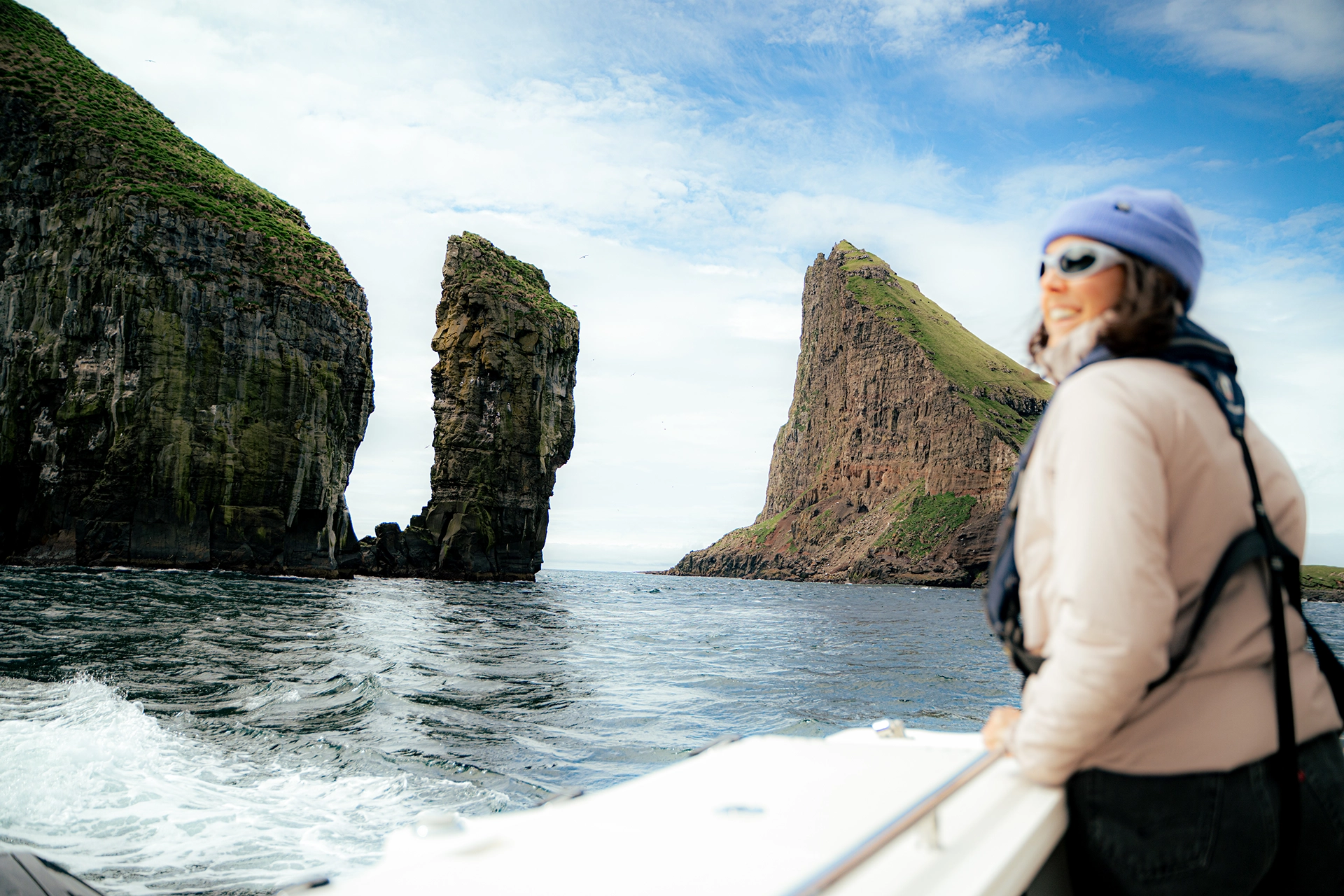
Many visitors choose the guided Dunnesdrangar hike to reach the famous viewpoint, but there is another option that we absolutely loved: seeing Drangarnir from the sea.
The tour departs from the harbor of Sørvágur on Vágar Island and costs 955 DKK (around €130) per person.
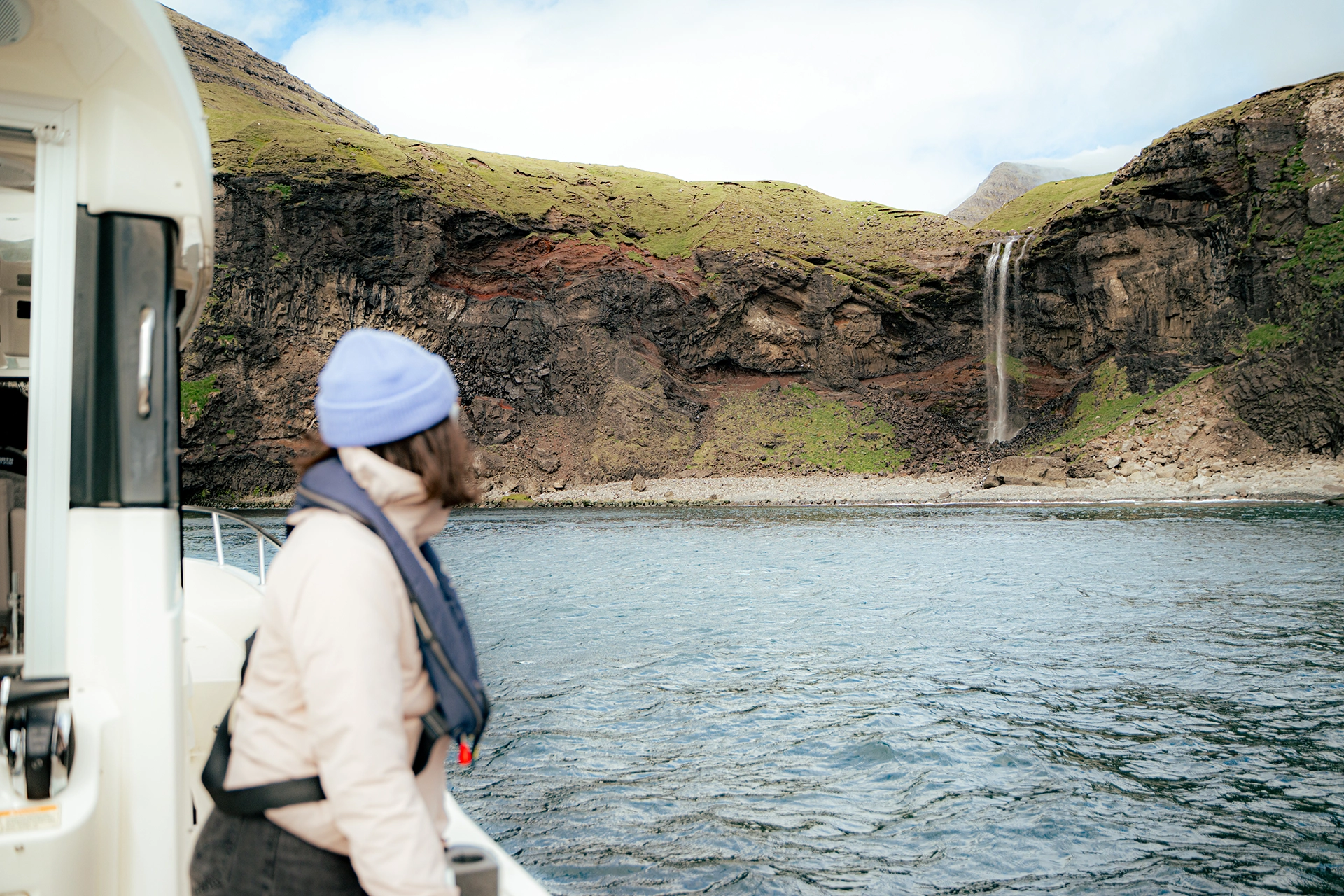
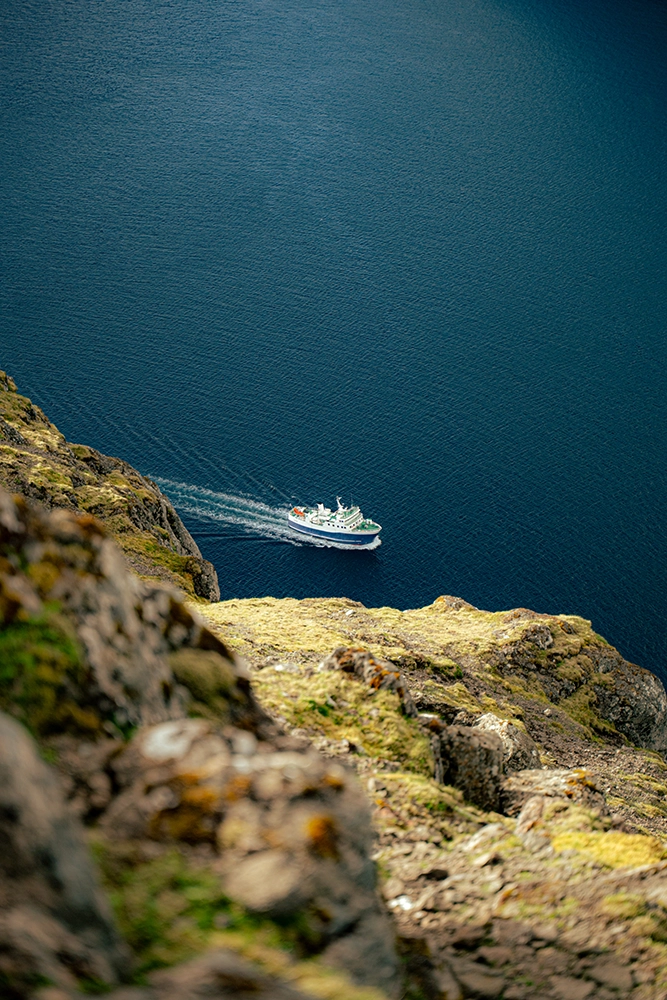
Over the course of 1.5 hours, the boat follows the dramatic coastline and reveals places that can only be seen from the water.
One of the biggest advantages of this excursion is how close you get to the sea arch. When conditions allow, the boat even passes beneath the arch itself.
The tour includes views of:
- Drangarnir
- Tindhólmur
- Akranes
- Skarðsáfossur
Another highlight is chatting with the captain, who shares stories about the region and life in the Faroe Islands.
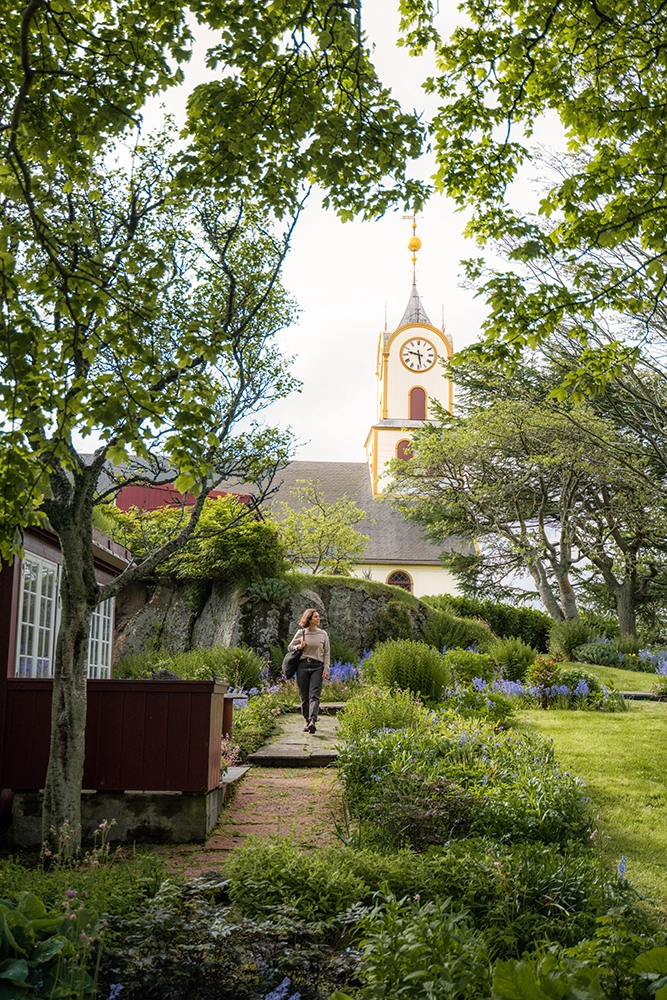
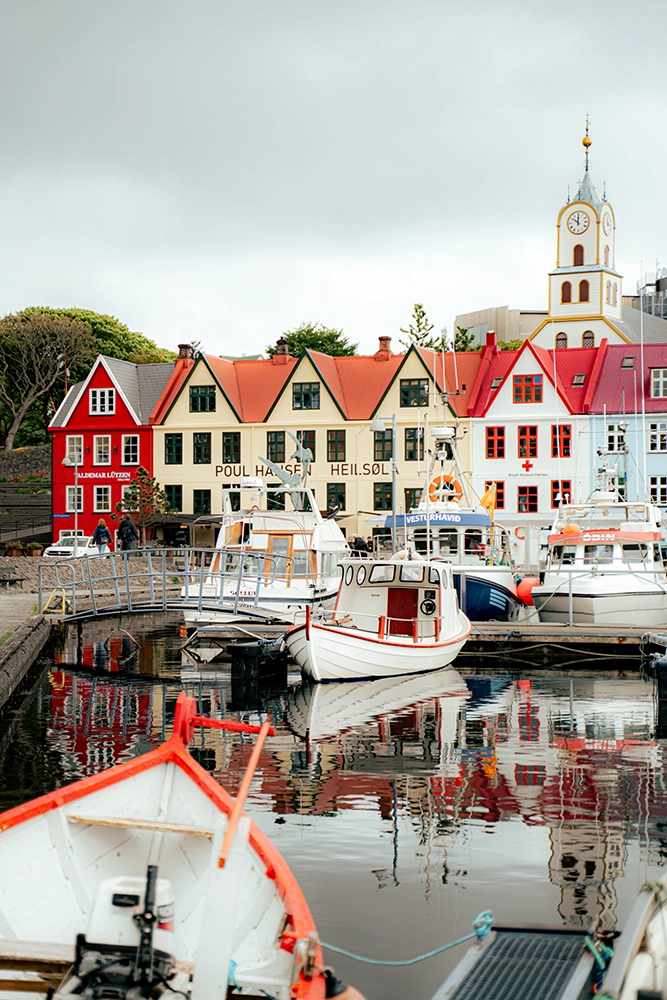
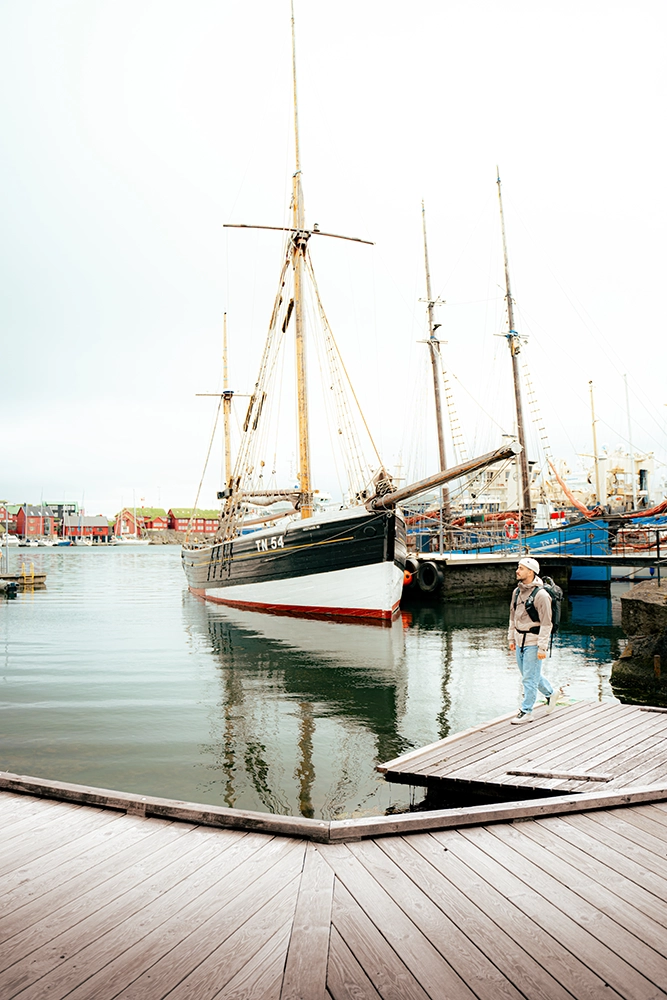
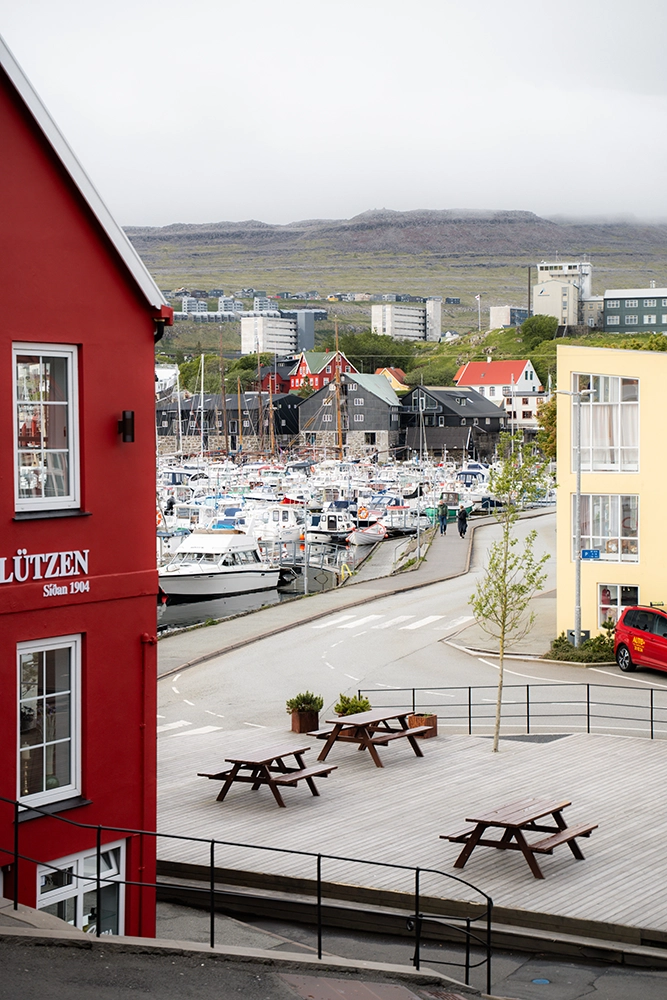
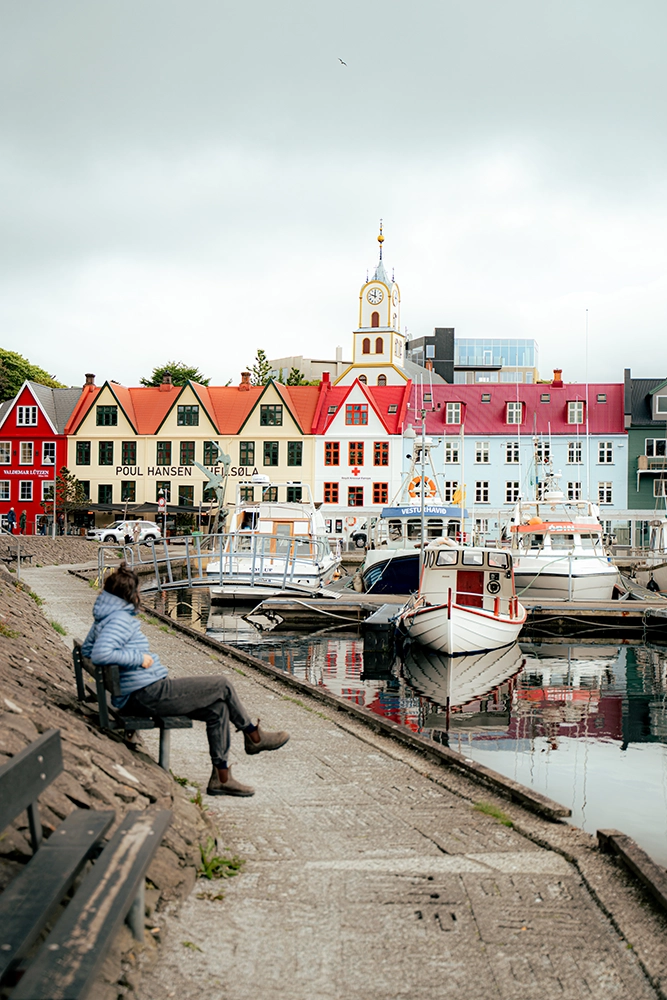
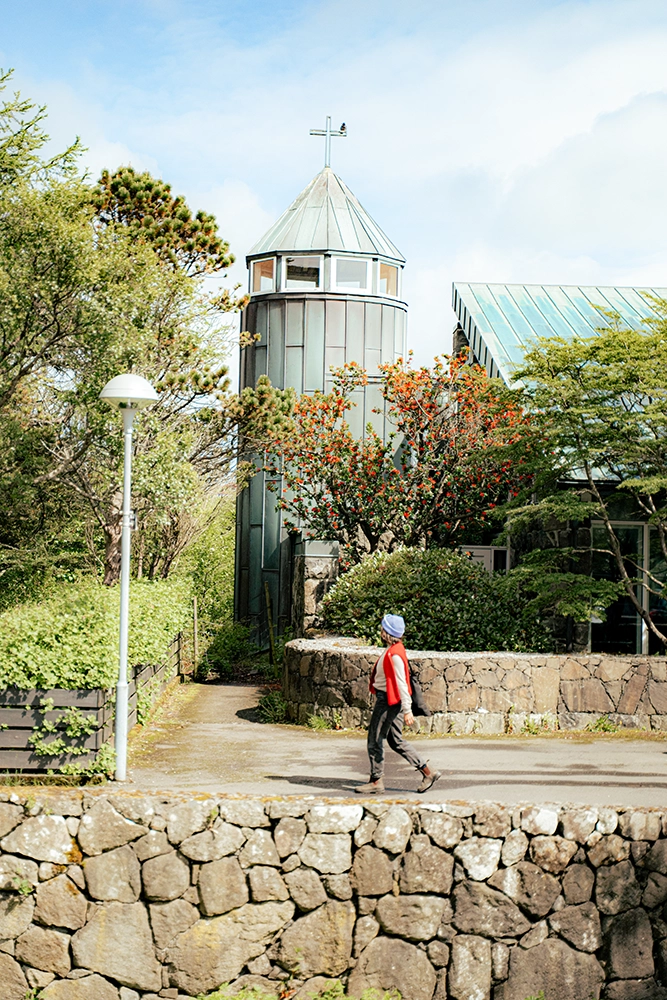
Explore Tórshavn on foot
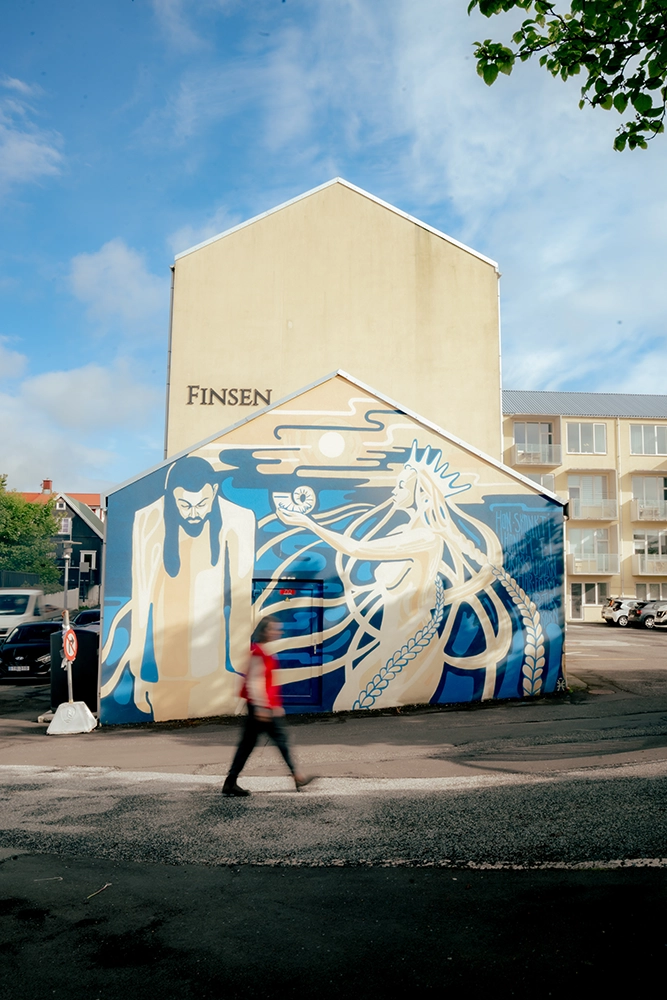
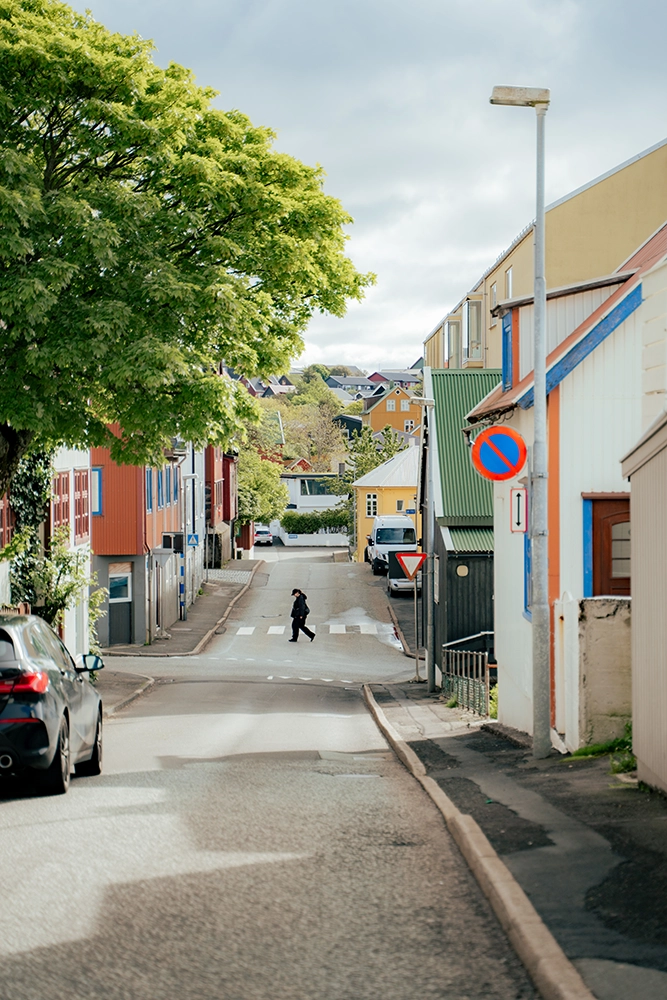
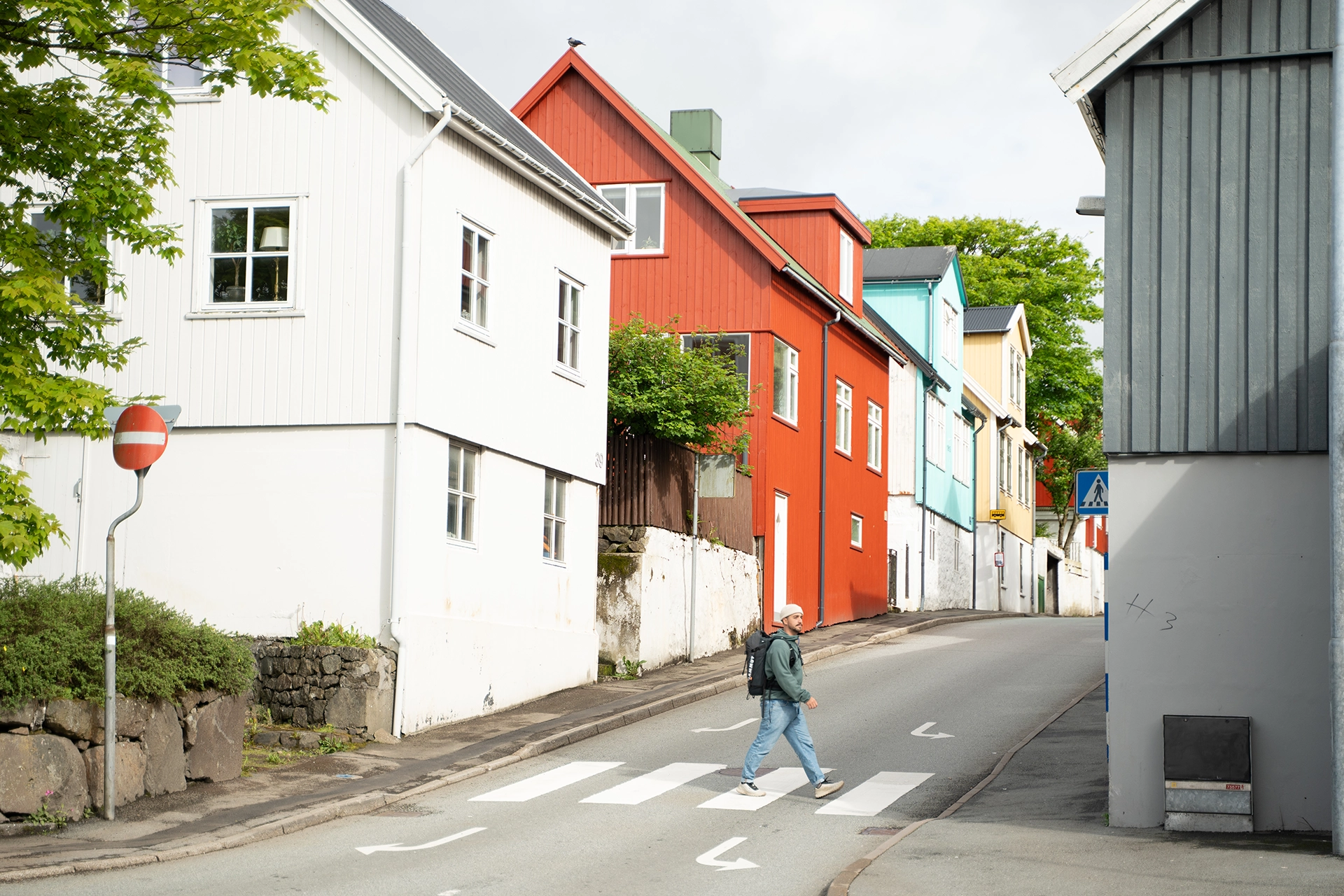
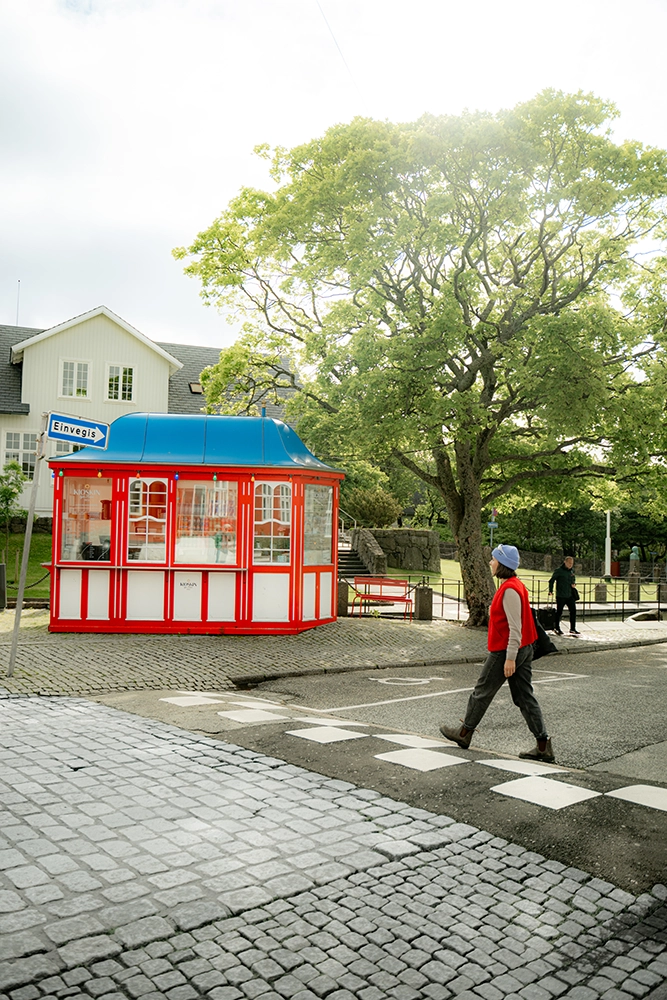
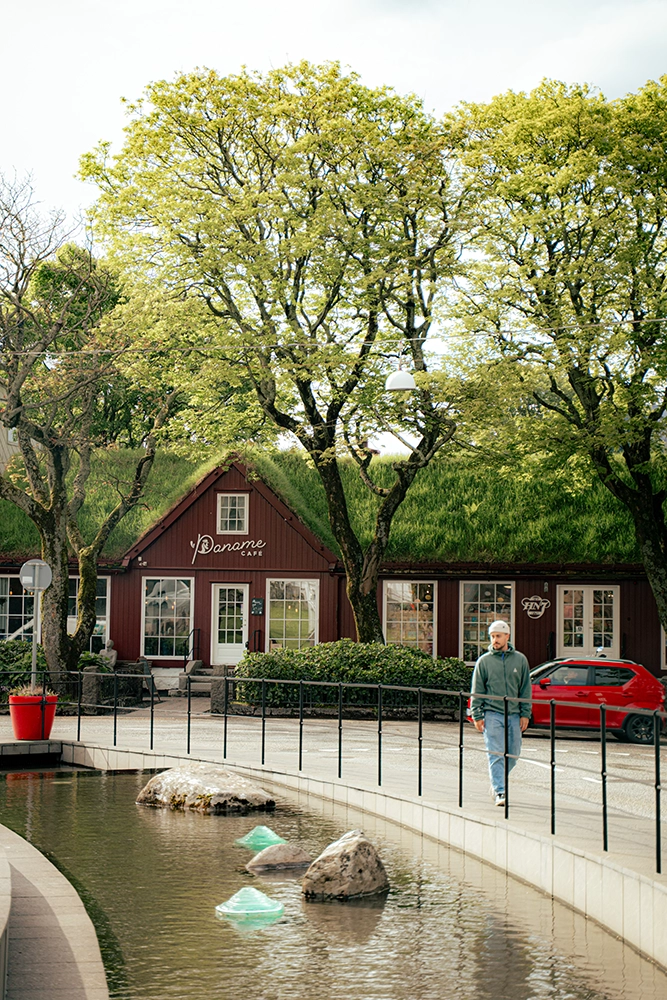
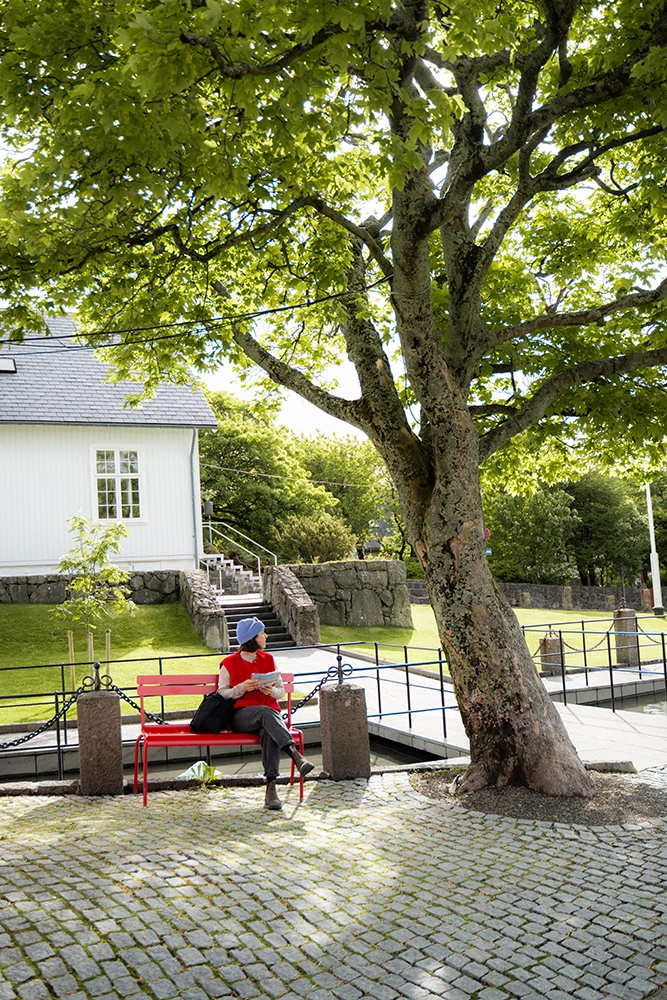
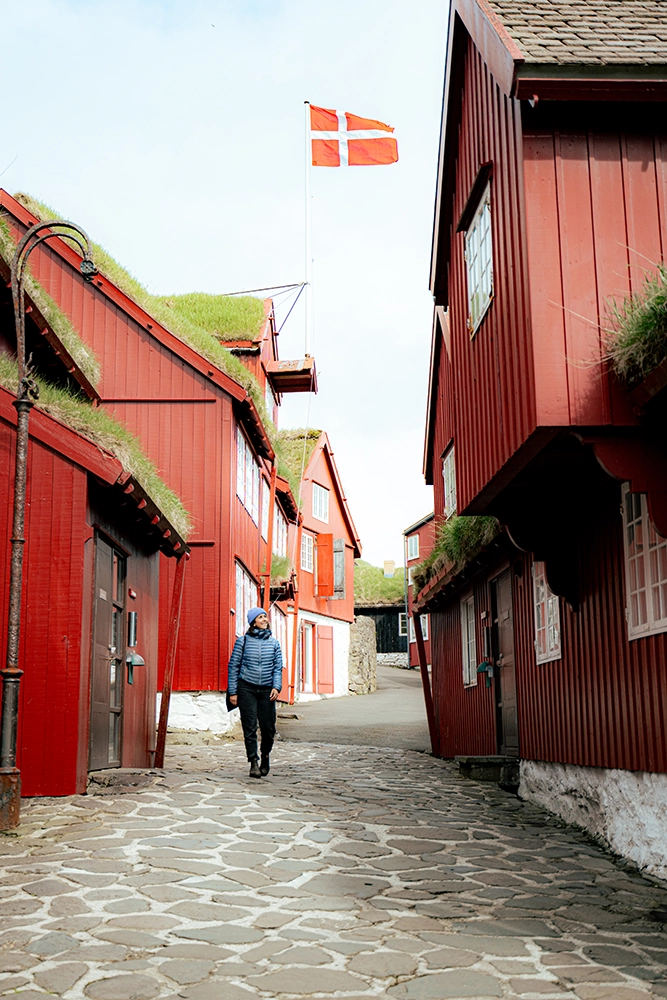
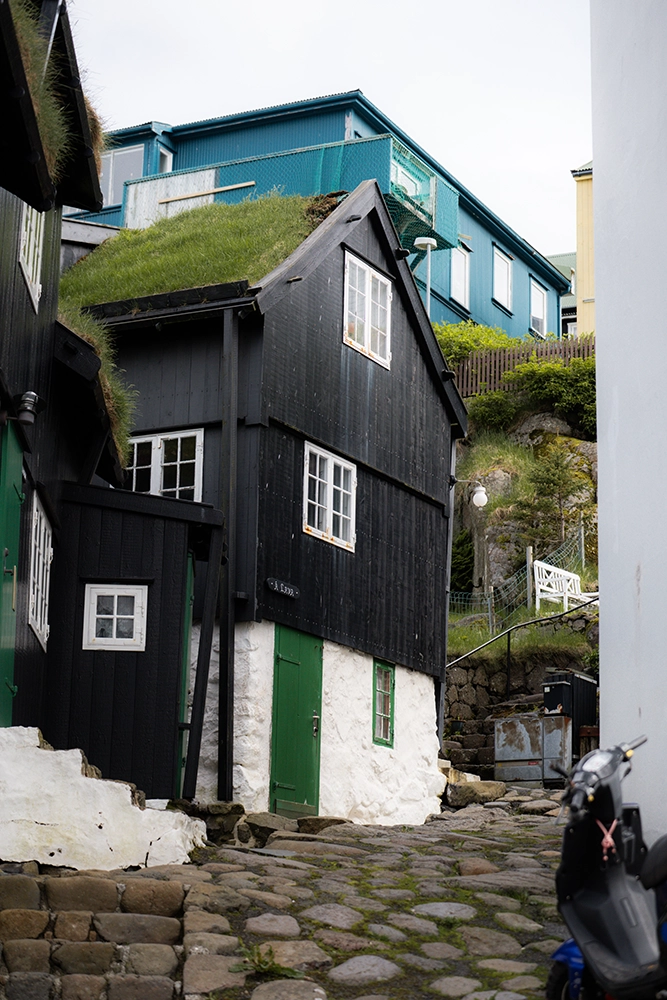
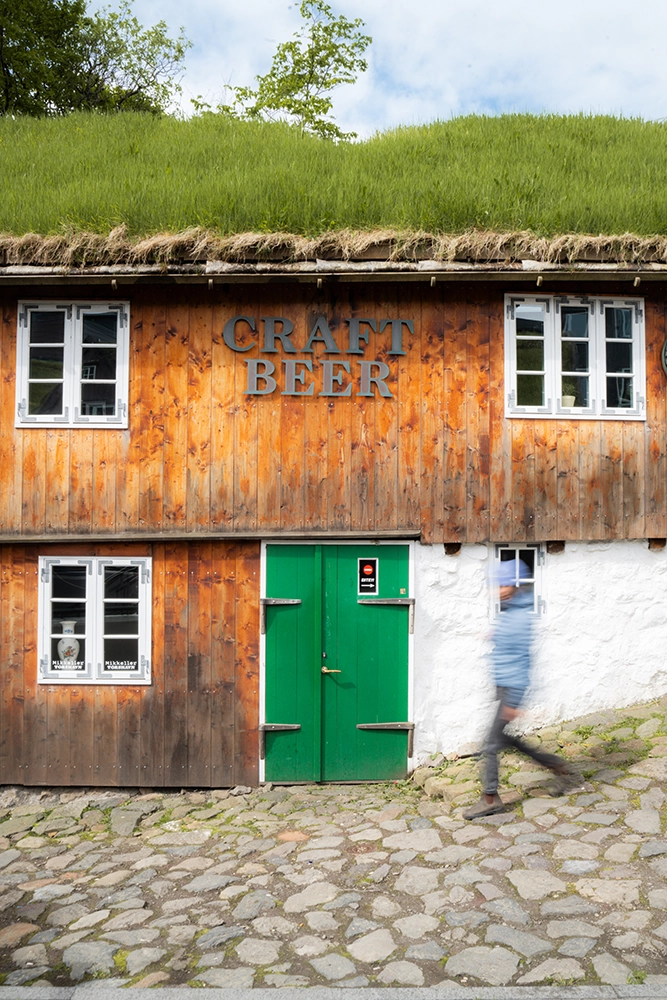
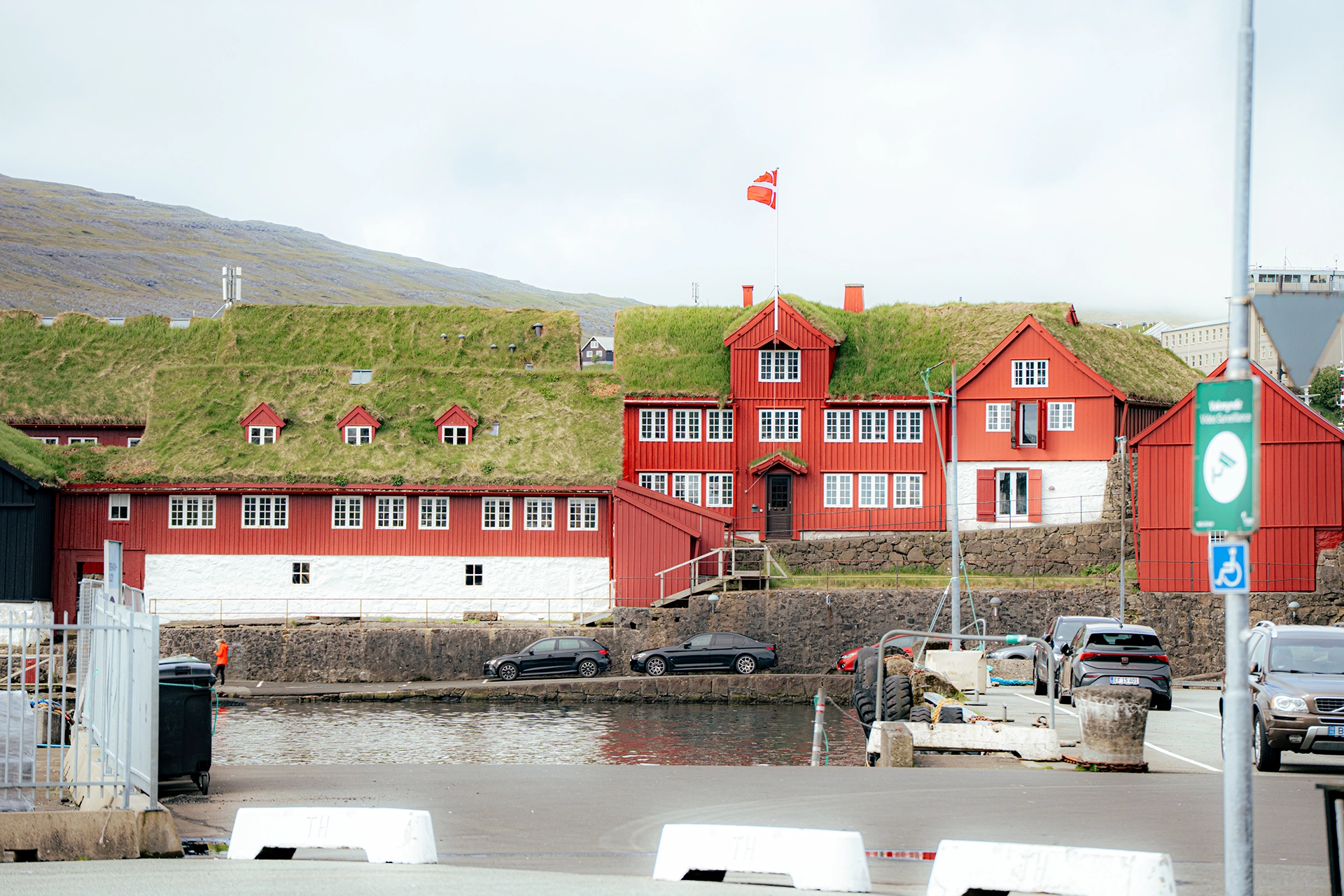
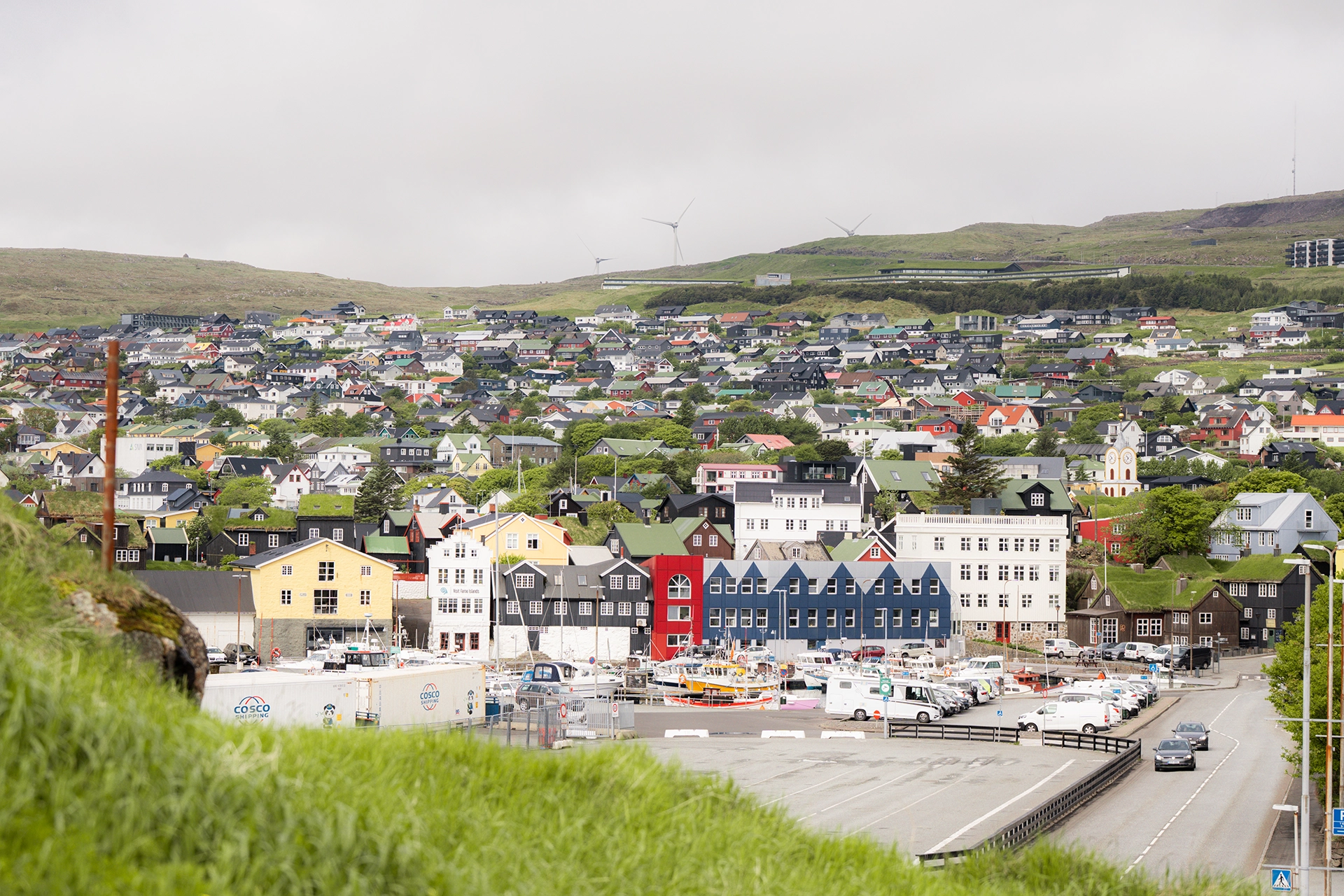
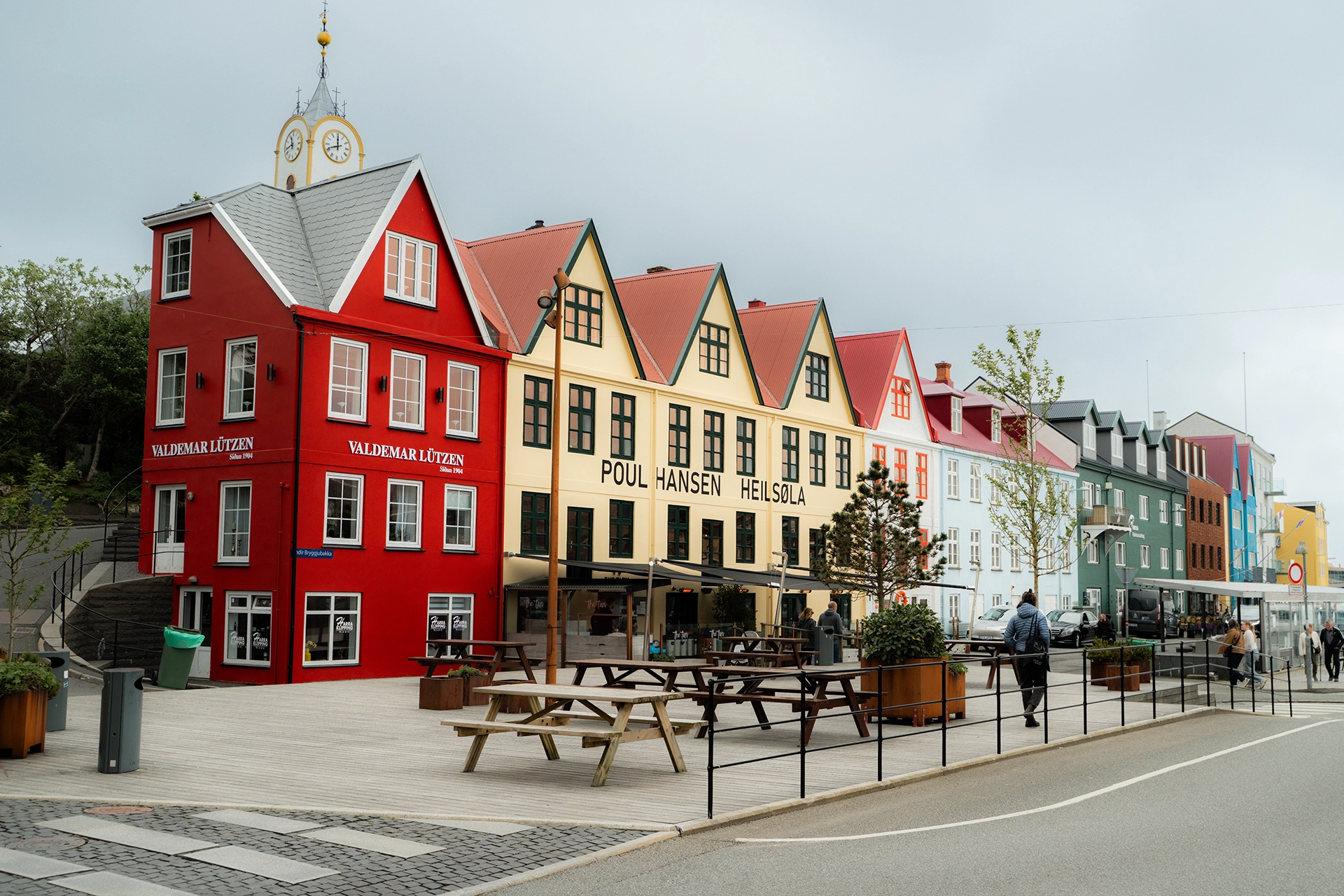
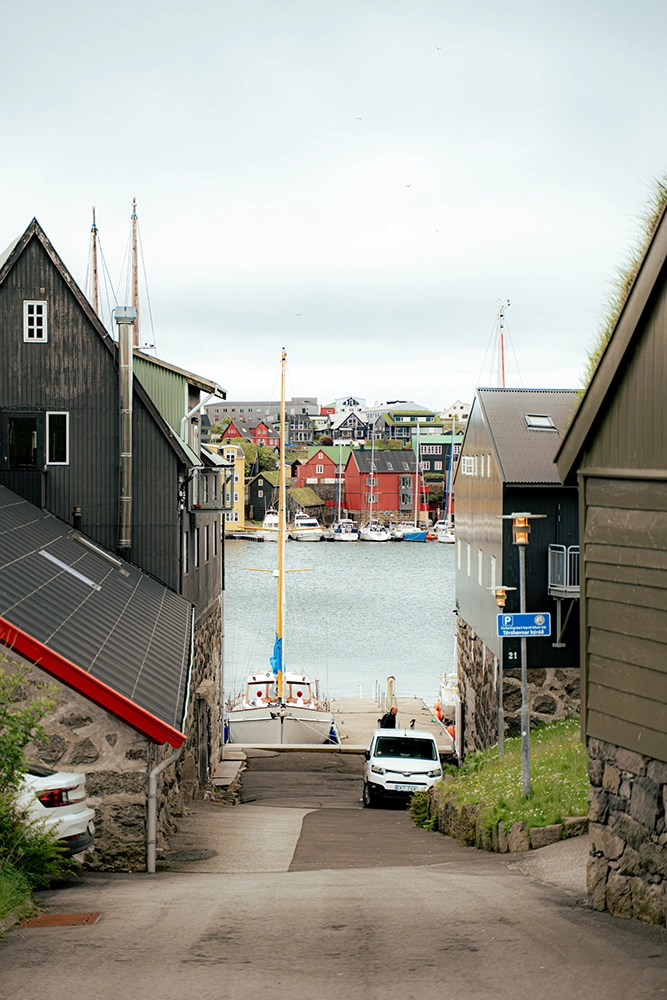
The capital of the Faroe Islands is often visited quickly before heading back out on the road. In reality, it easily deserves a few hours, if not a full day.
We recommend leaving your car at this free 8-hour parking area : 62.0106152, -6.7772586
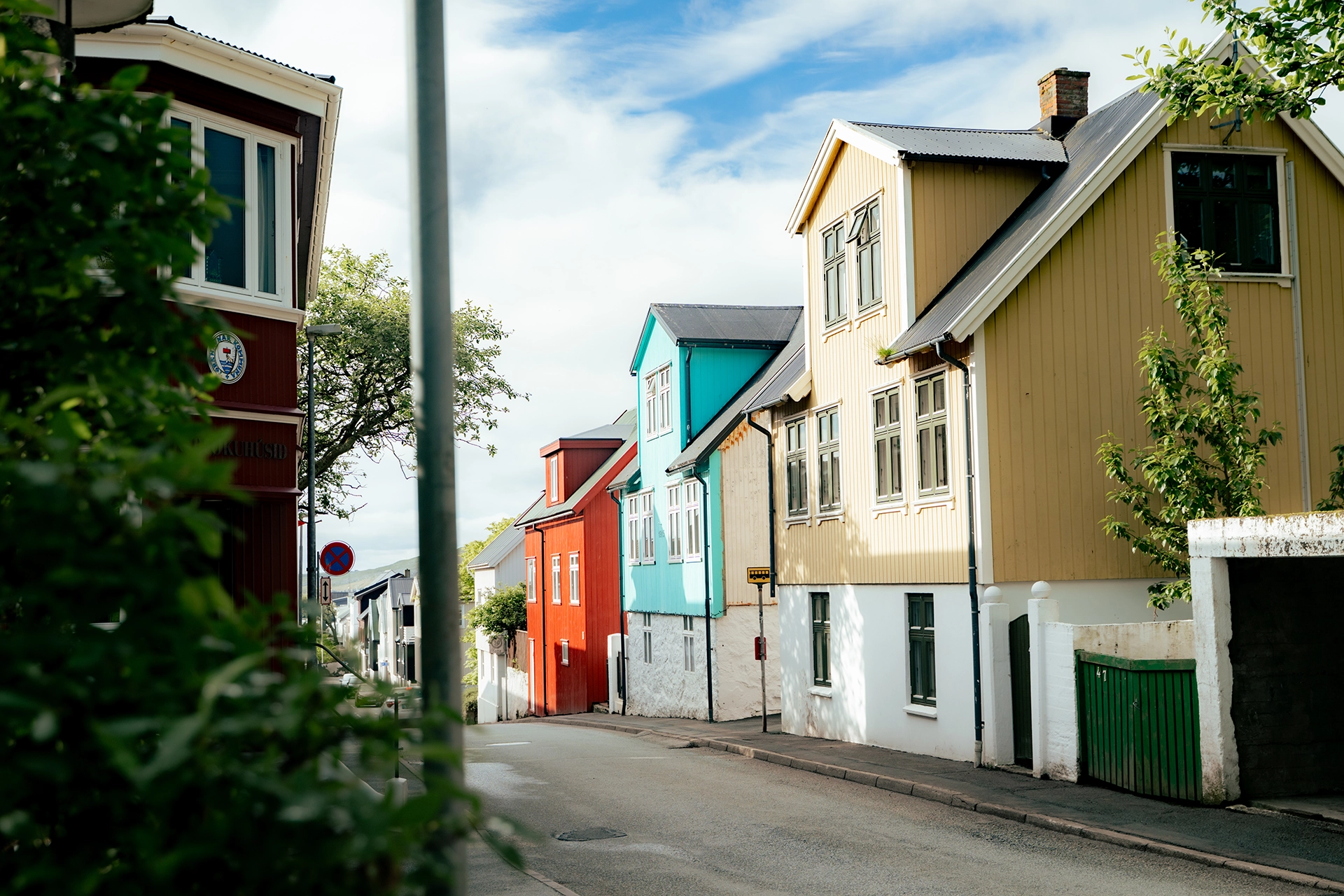
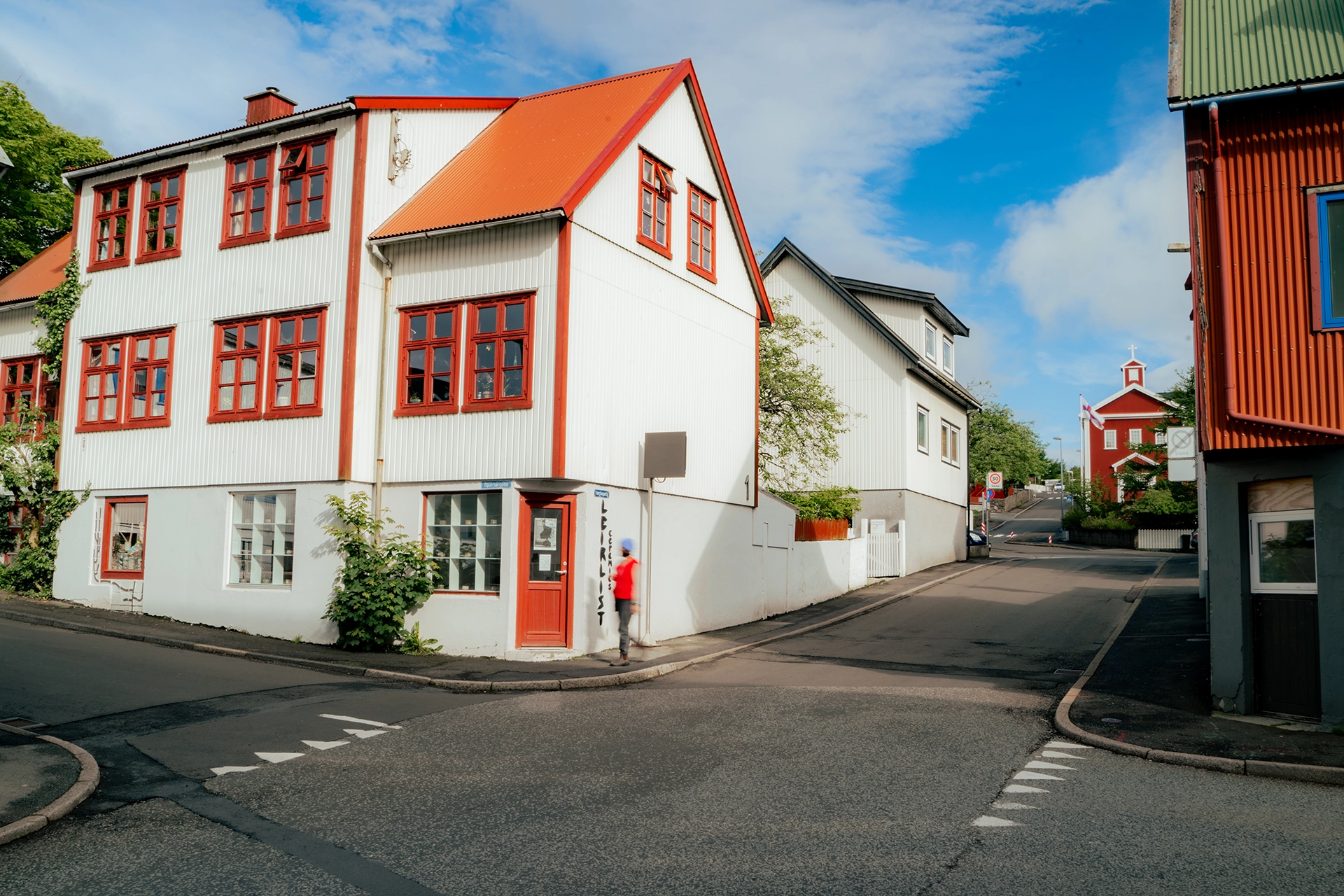
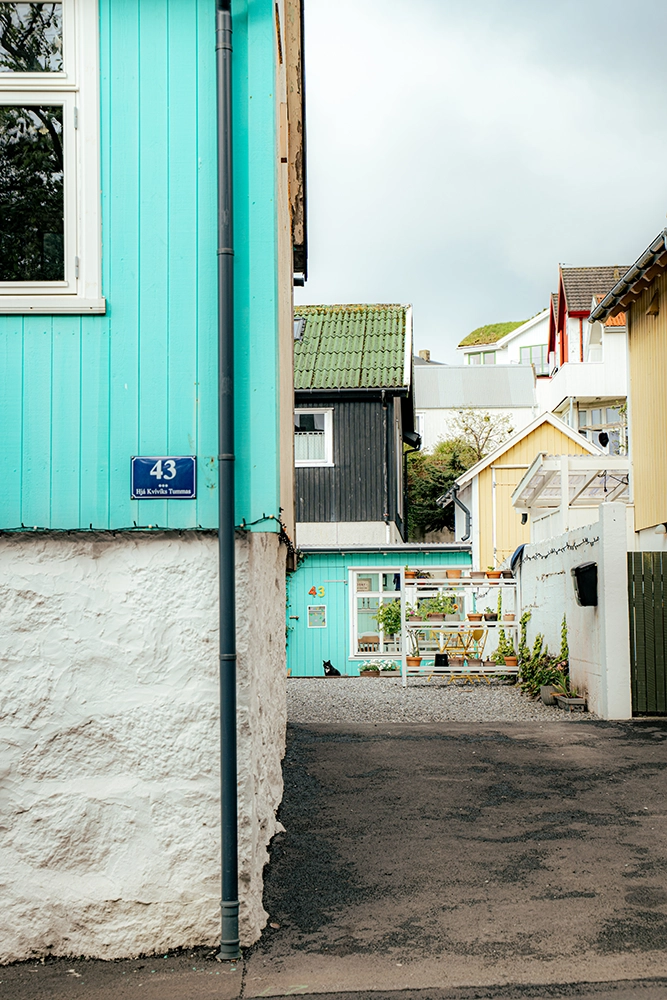
From there, start exploring the colorful district of Rabarbukvarterið.
Before heading toward the town center and stopping for a coffee at Brell Café.
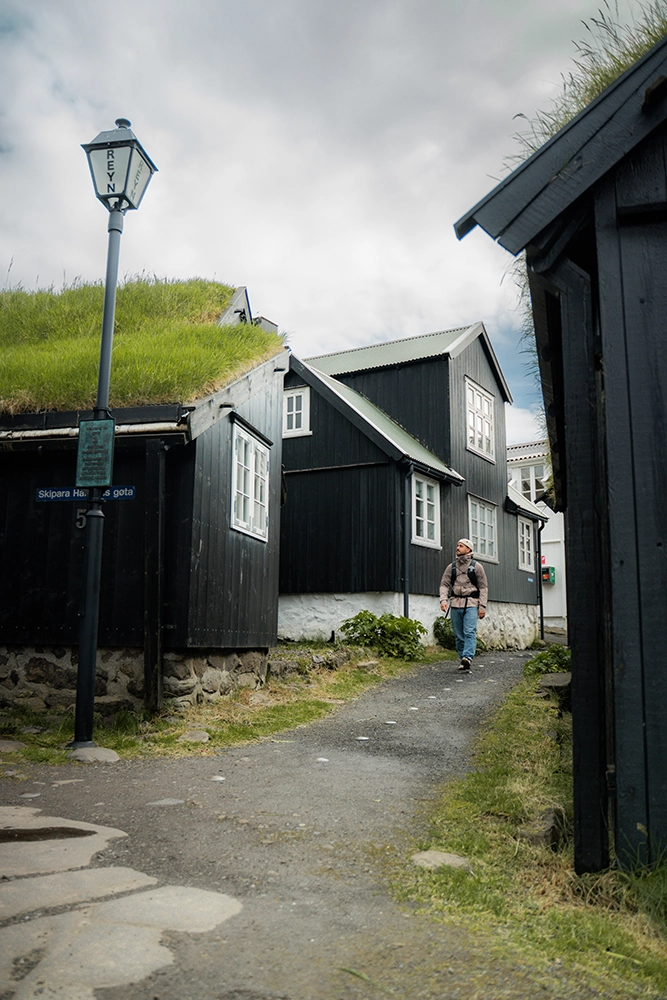
Continue to Reyngota, the oldest part of the city, before making your way to Skansin Fortress and its lighthouse.
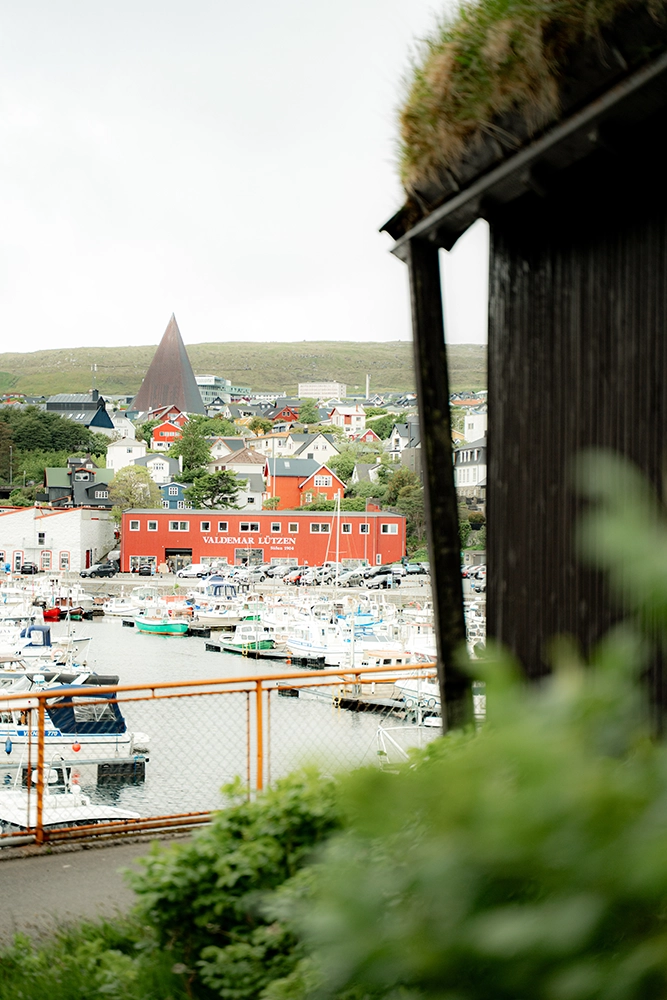
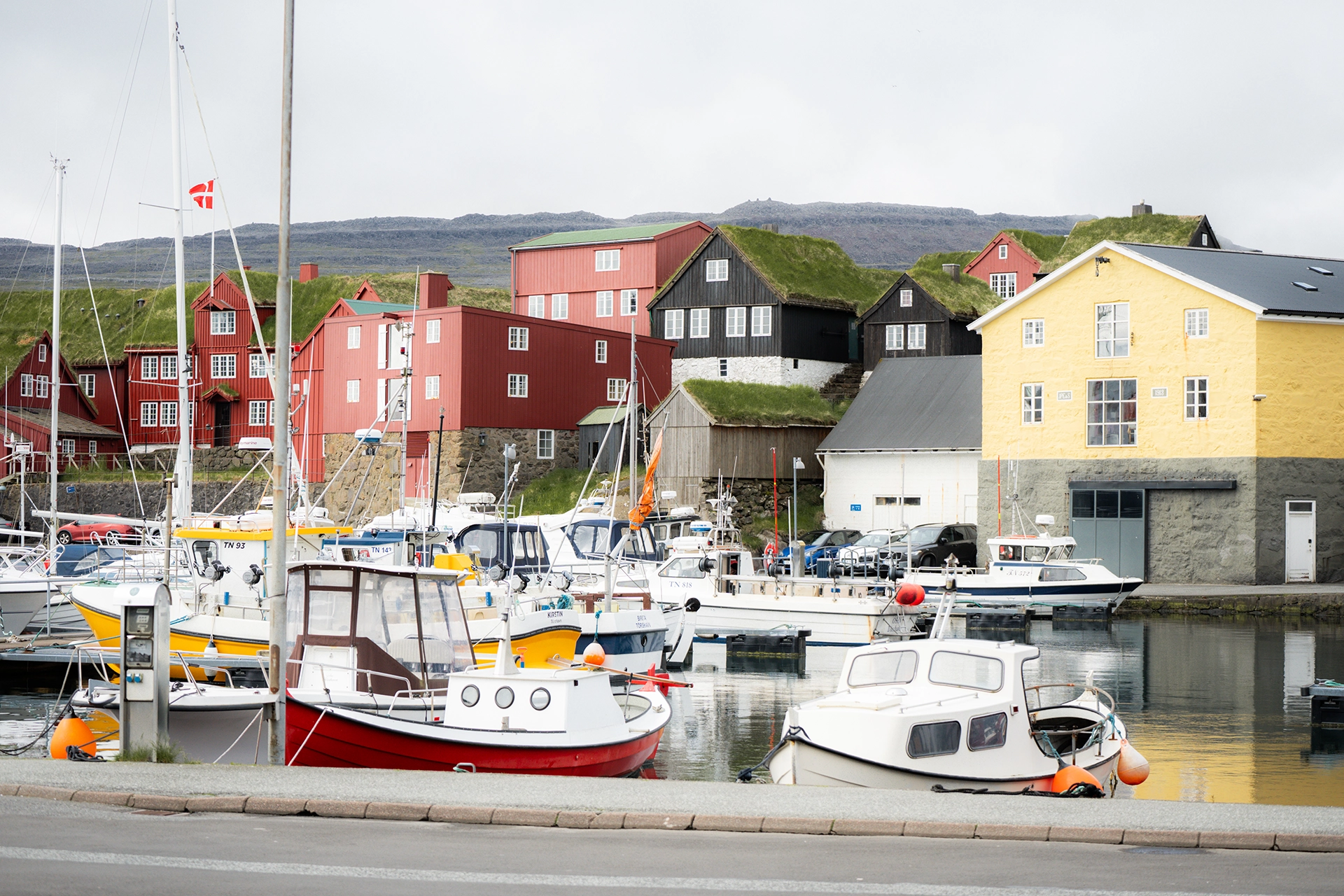
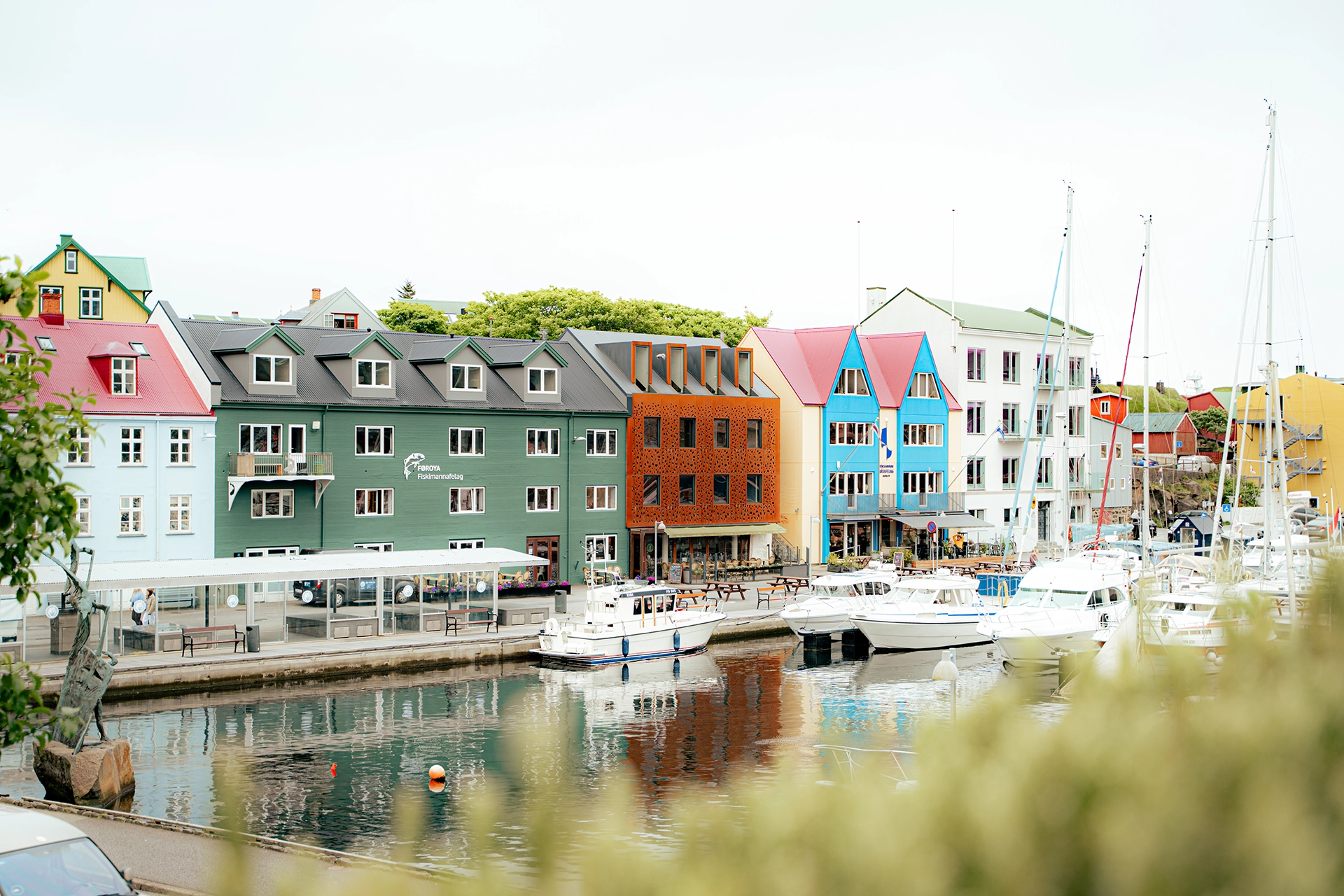
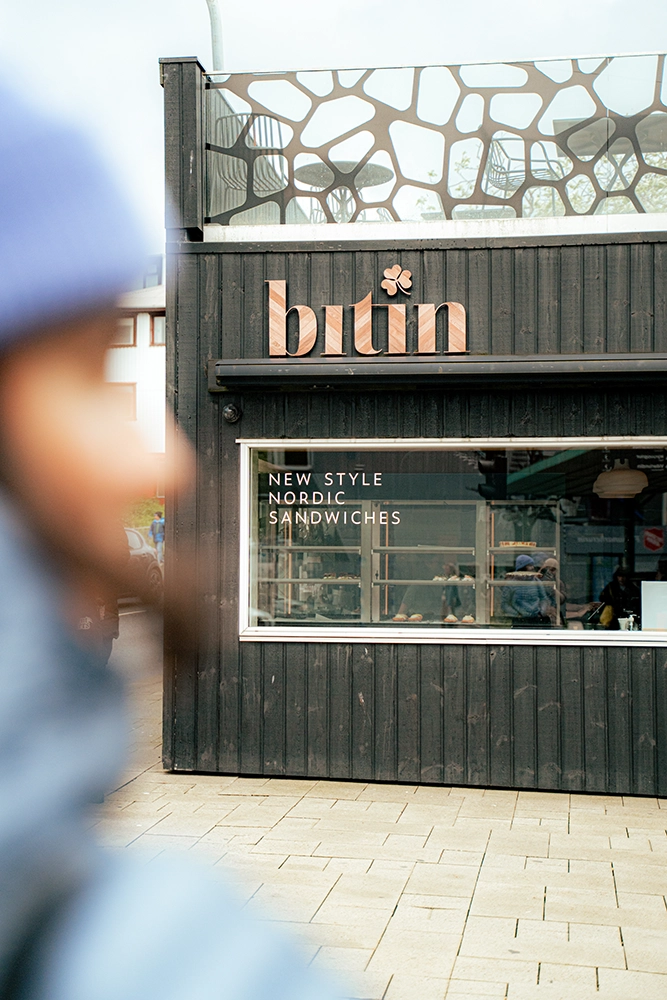
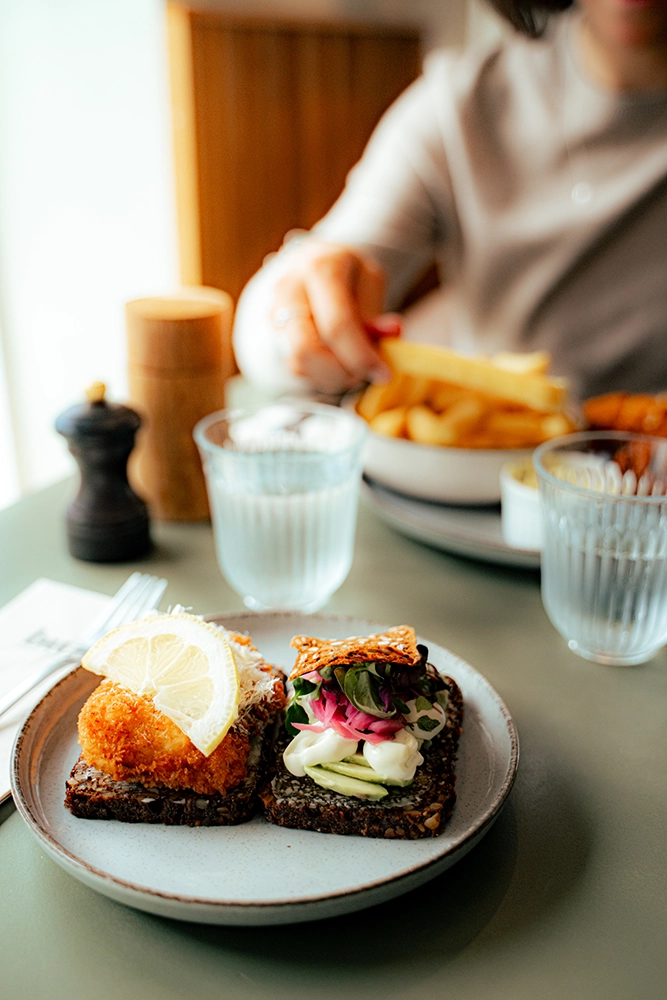
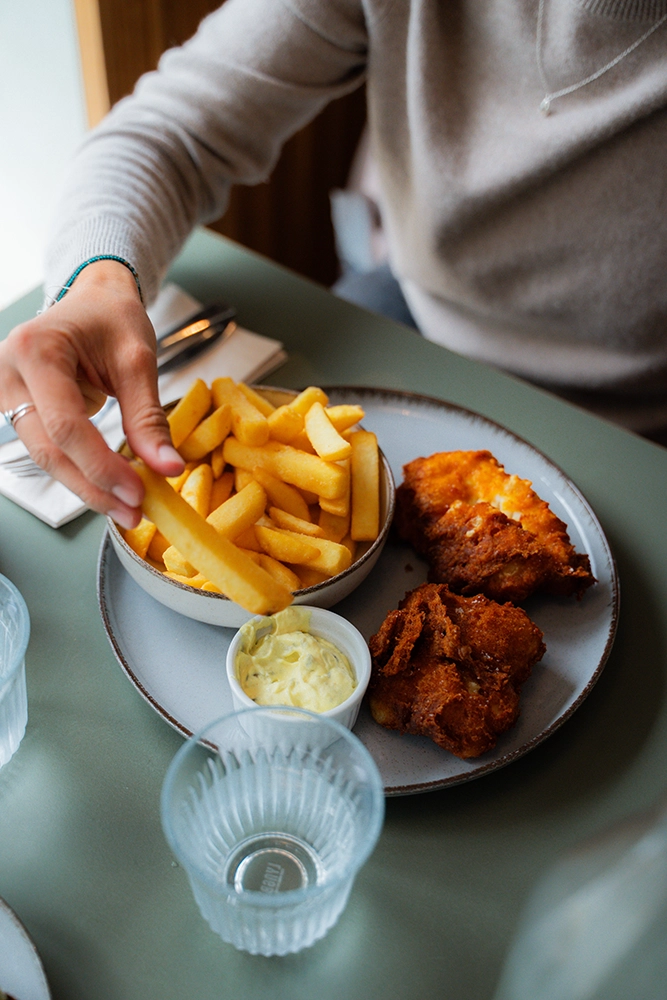
On the way back, walk through the harbor area and stop for lunch at Bitin, a great place to try Nordic-style sandwiches or fish and chips.
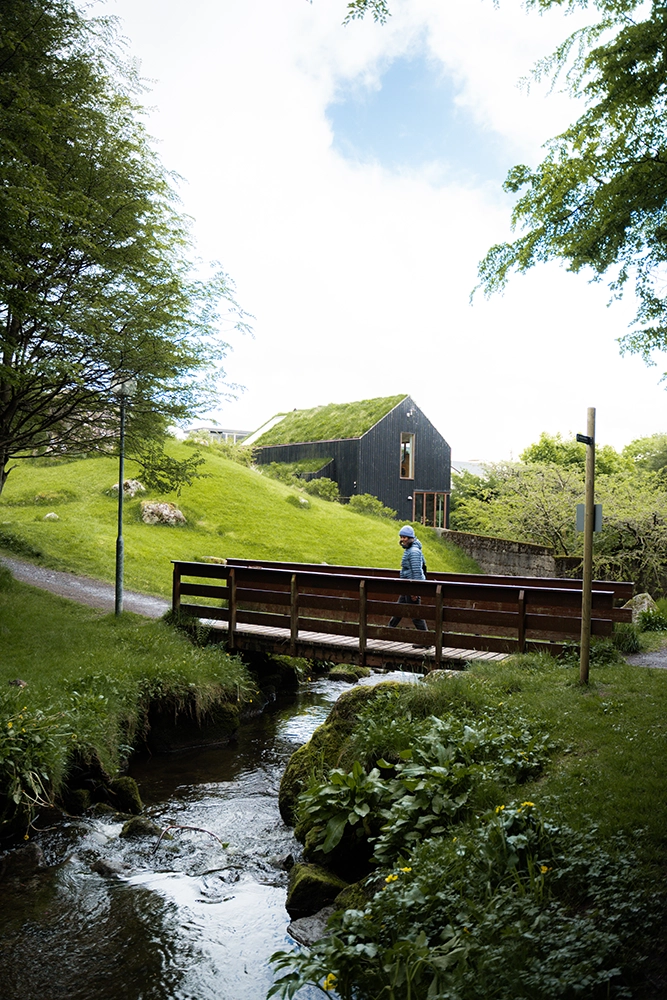
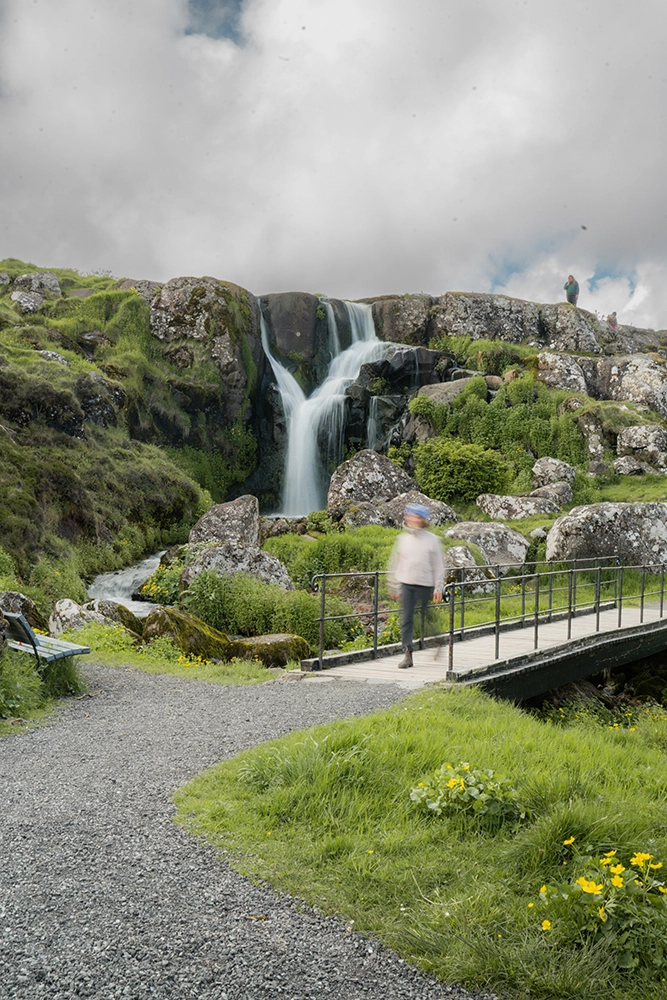
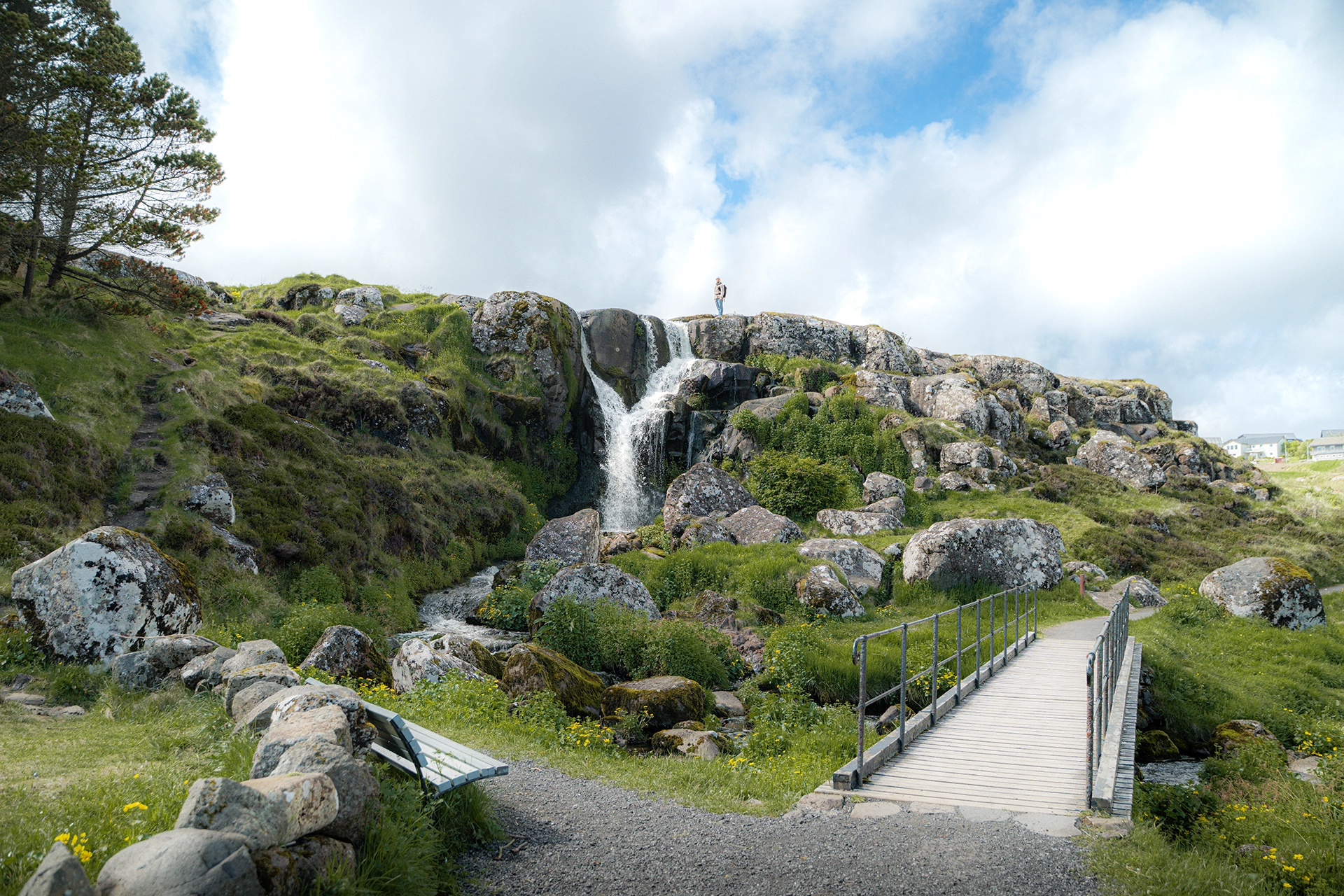
In the afternoon, head toward the central park and continue to Svartafoss Waterfall. It’s quite surprising to find so much greenery in the middle of a capital city, at times it feels like you’re walking through nature rather than a town.
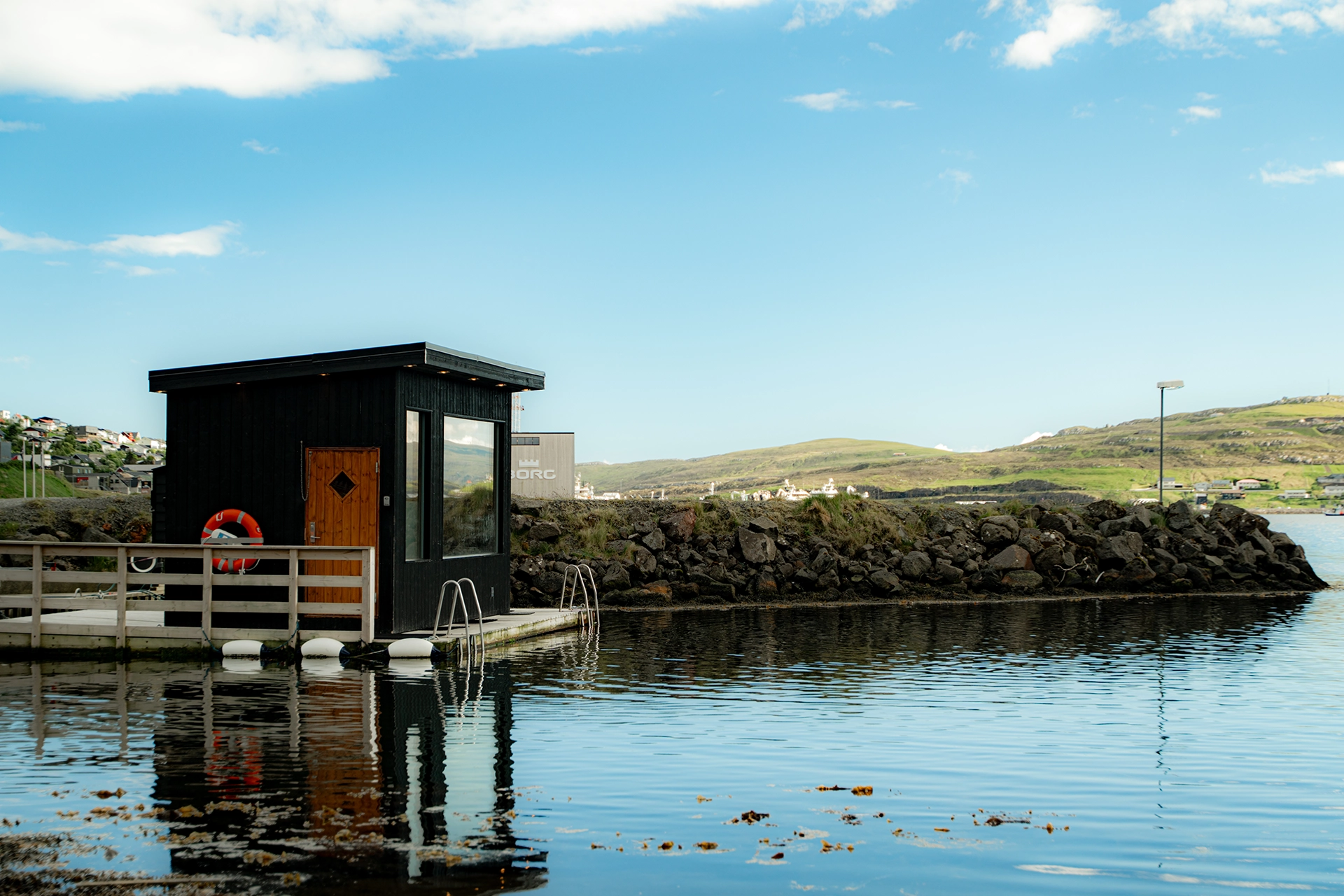
Enjoy a sauna by the ocean
Cold-water swimming is deeply rooted in Nordic culture, and the Faroe Islands are no exception.
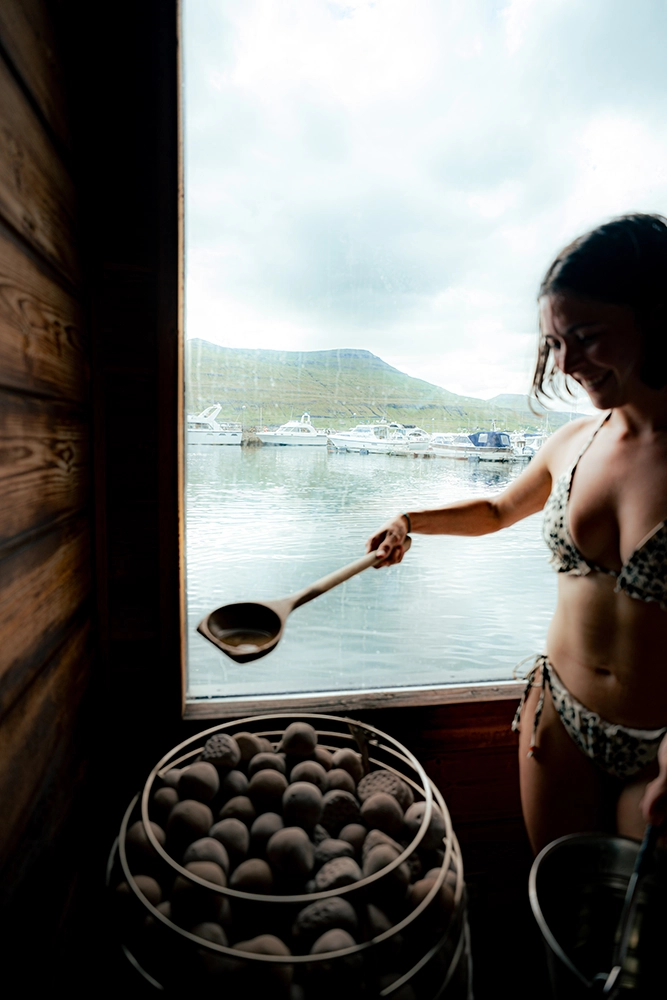
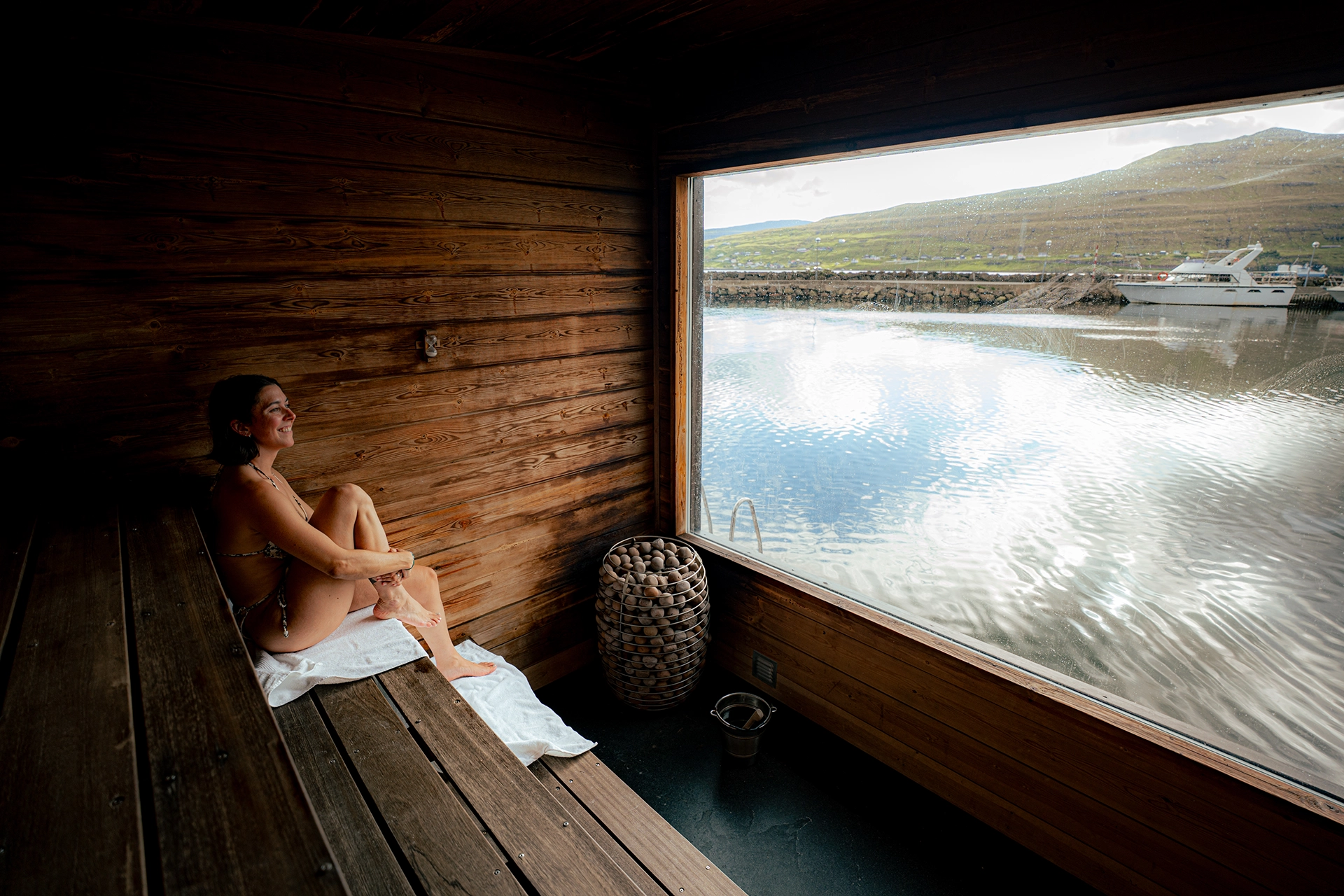
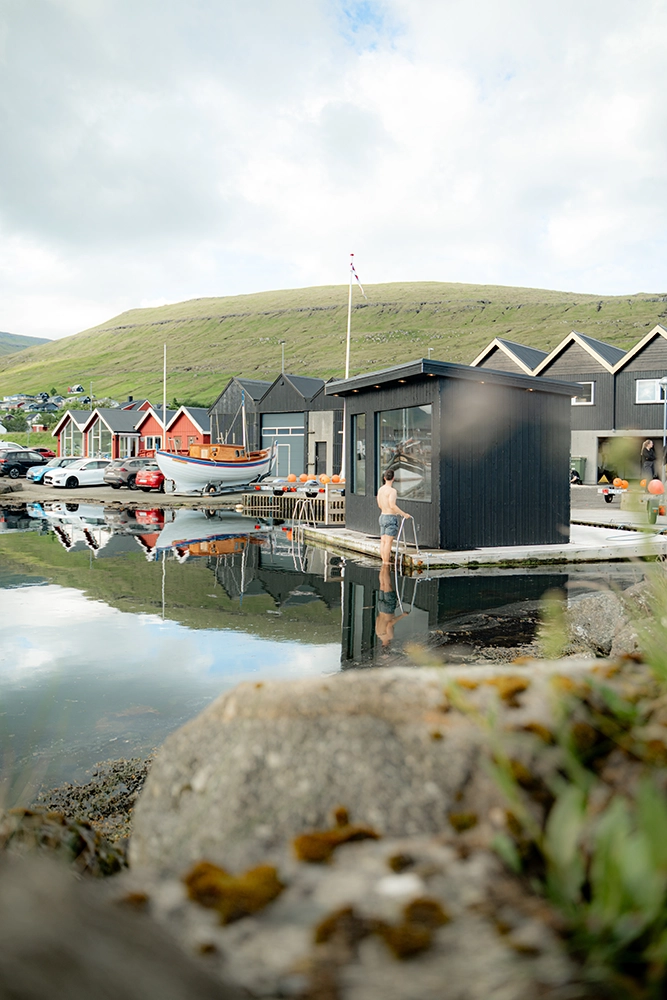
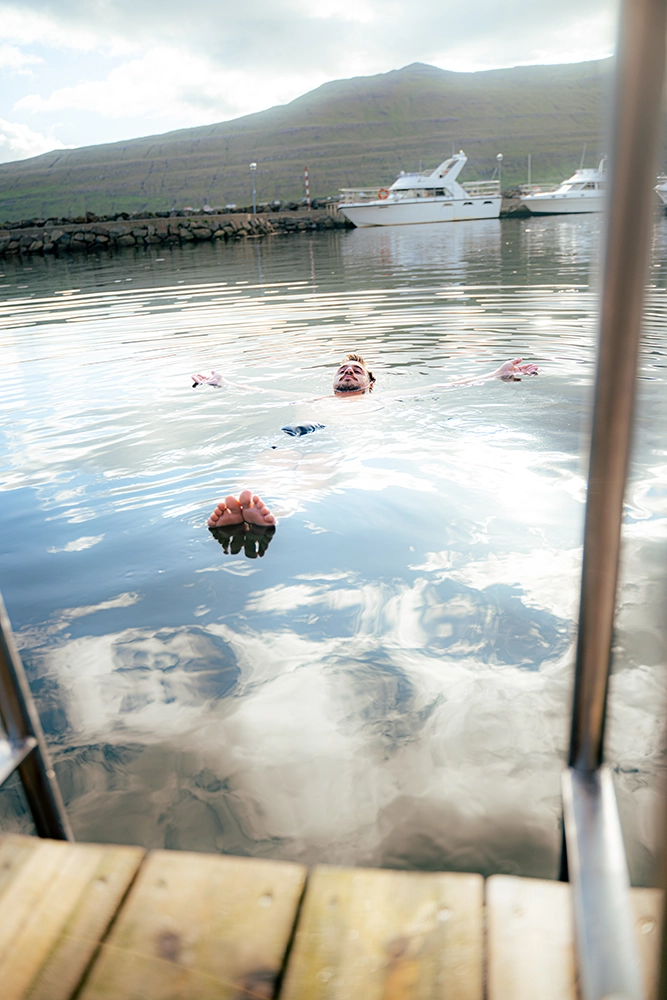
If you’d like to experience it yourself, we highly recommend Saunadypp. The concept is simple: a sauna located right by the water, with the opportunity to cool off in the ocean between sessions.
The sauna is set in a small harbor, creating a really unique atmosphere. Even though the water is cold (very cold 😅), alternating between the sauna and a cold plunge feels surprisingly good.
You can join a shared session of up to 12 people for 110 DKK (around €14) per person for 75 minutes. Alternatively, it’s possible to book the entire sauna privately for 60 to 120 minutes, with prices ranging from 1,050 DKK (around €140) to 1,900 DKK (around €250).
Whether after a day of hiking or simply to experience a part of local Nordic culture, this is an activity we really enjoyed.
Hike to Klakkur for sunset
If you’re looking for an easy hike with a huge reward at the top, Klakkur is probably one of the best options in the Faroe Islands.
The trail starts from this parking area: 62.2266289, -6.6087491
The climb is short: around 2 km with 150 m of elevation gain. It takes roughly 30 minutes to reach the summit.
Like many trails in the Faroes, the path can be a little muddy at times, but there are no real technical difficulties.
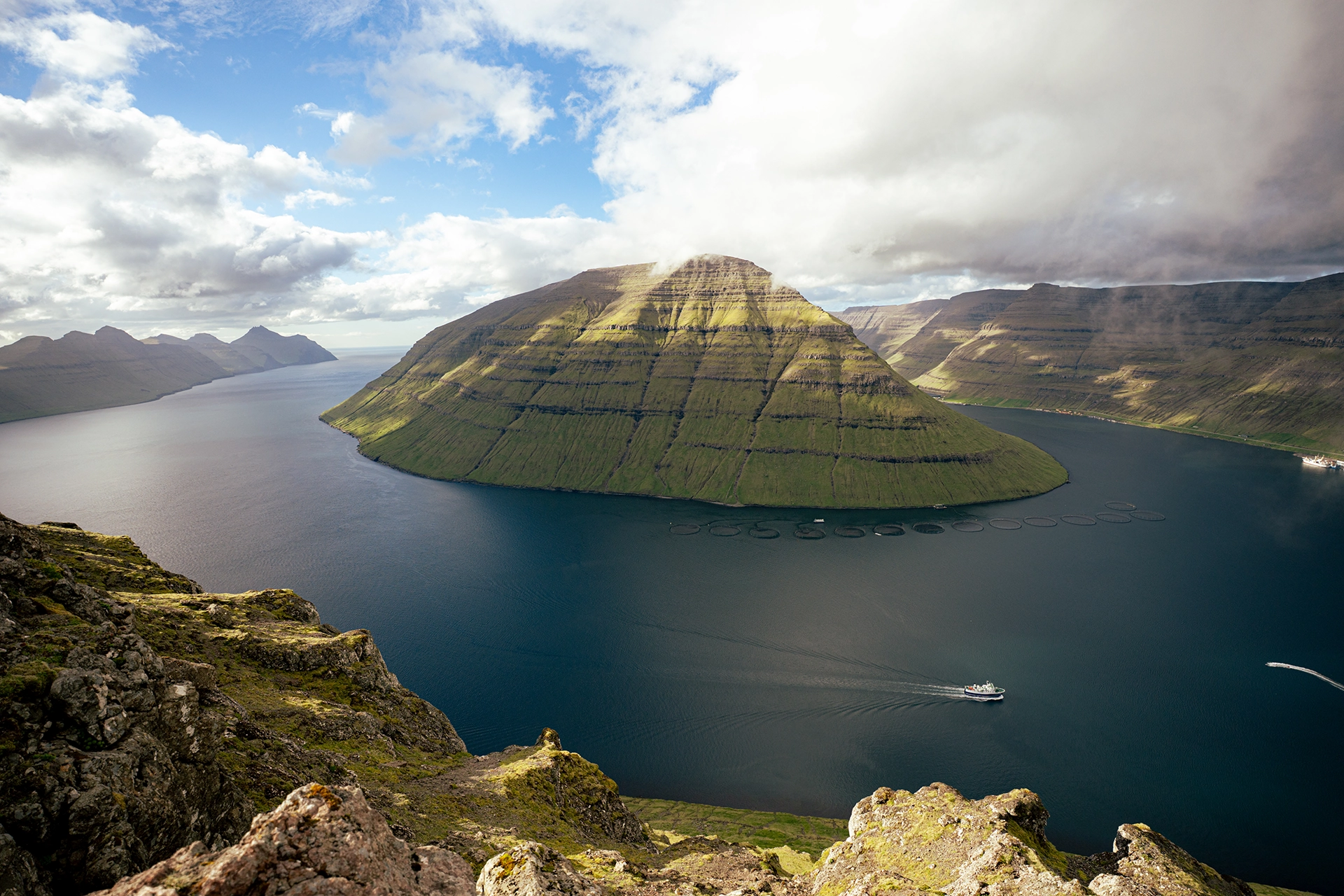
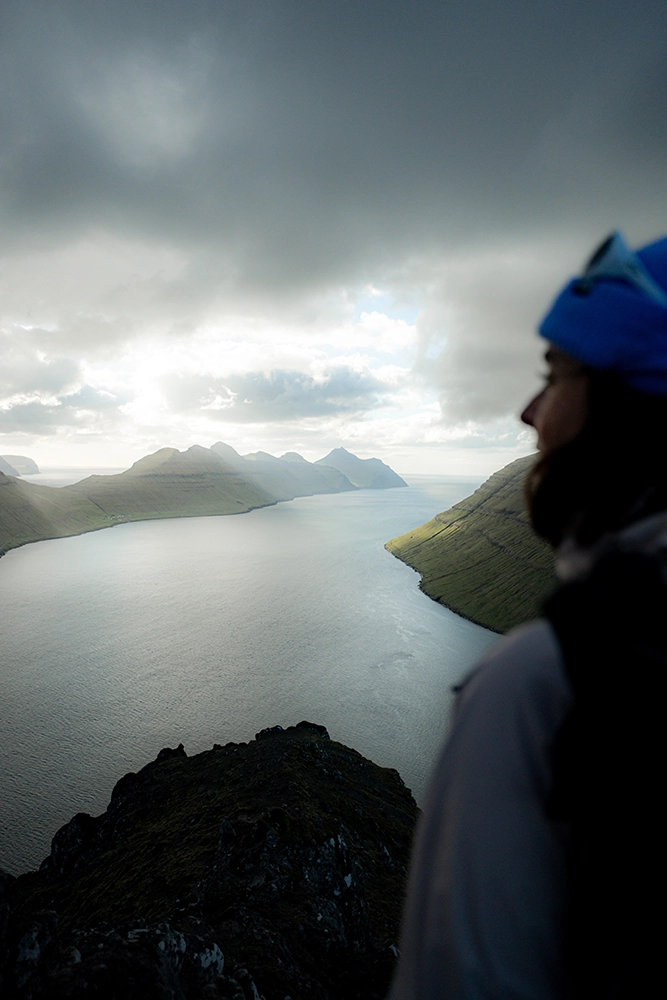
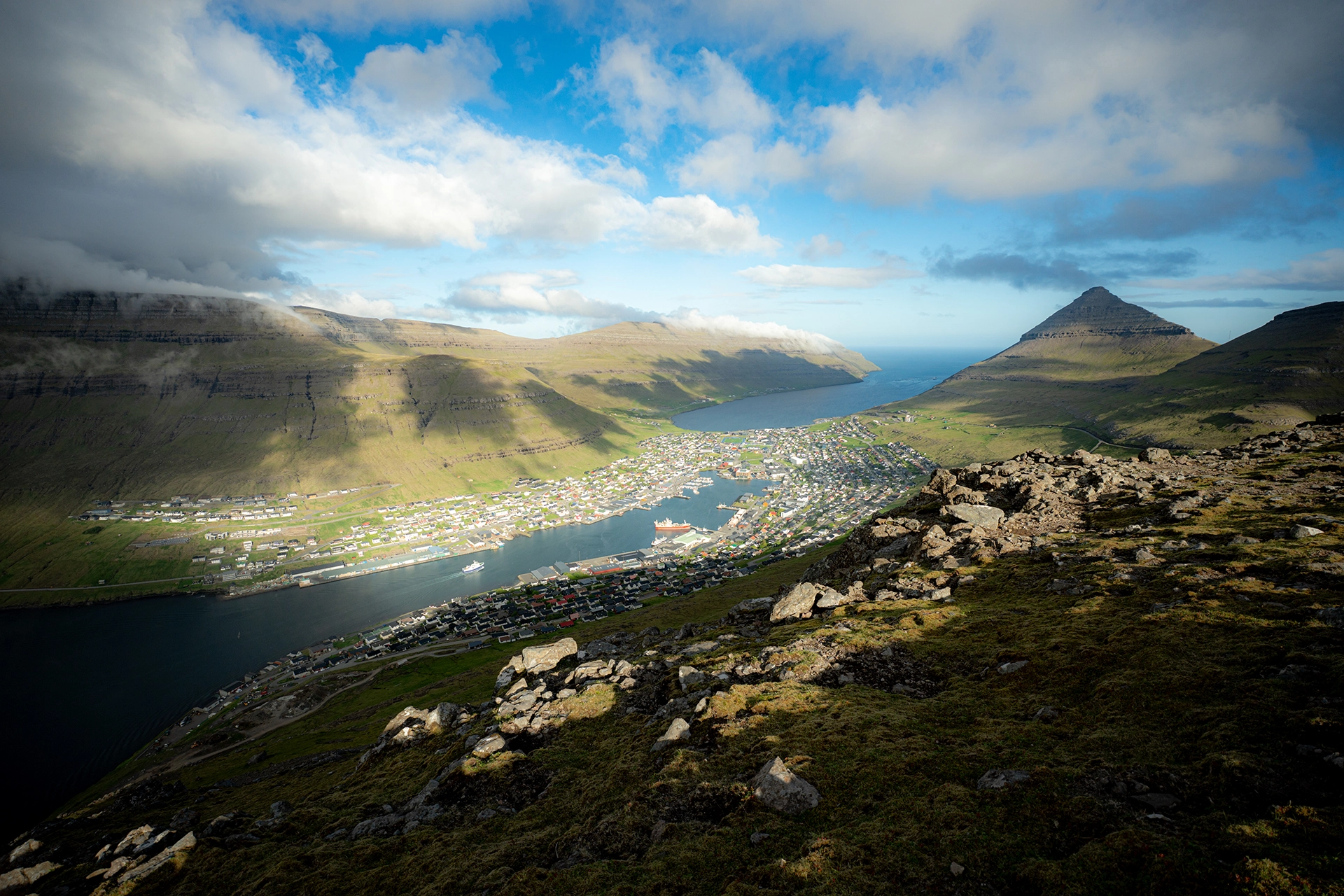
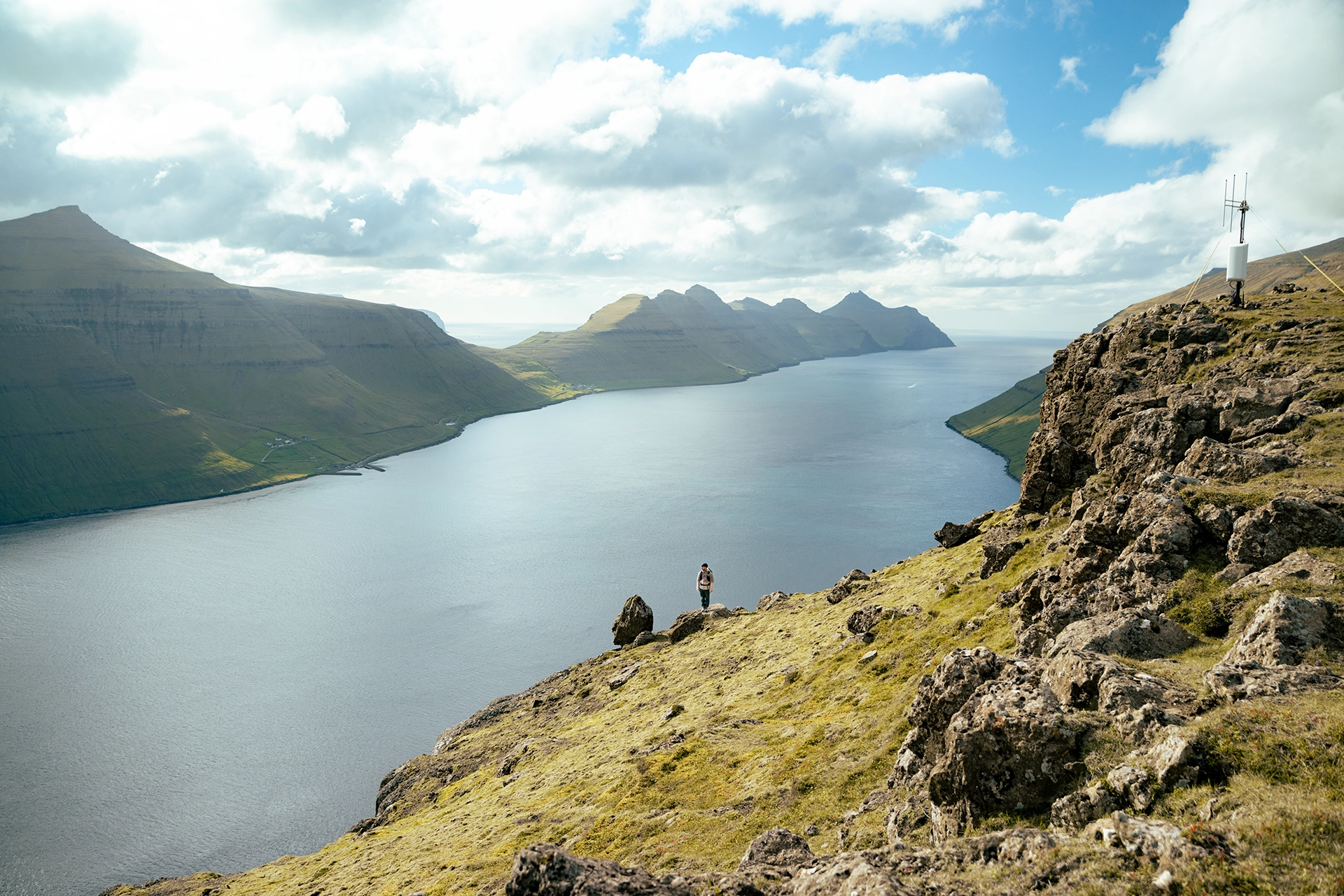
Once at the top, the views are incredible. You’ll overlook the entire town of Klaksvík, the surrounding fjords, and the mountains beyond, all with a stunning 360° panorama.
If the weather cooperates, we highly recommend timing your hike for sunset. The light changes constantly and can create completely different moods from one minute to the next.
It’s easily one of our favorite viewpoints in the entire archipelago.
An almost secret hike above Runavík
If you enjoy getting off the beaten path, this is probably the least-known activity featured in this article.
Between Runavík and Rituvík lies a small hike that very few visitors seem to know about. We had barely heard of it before our trip.
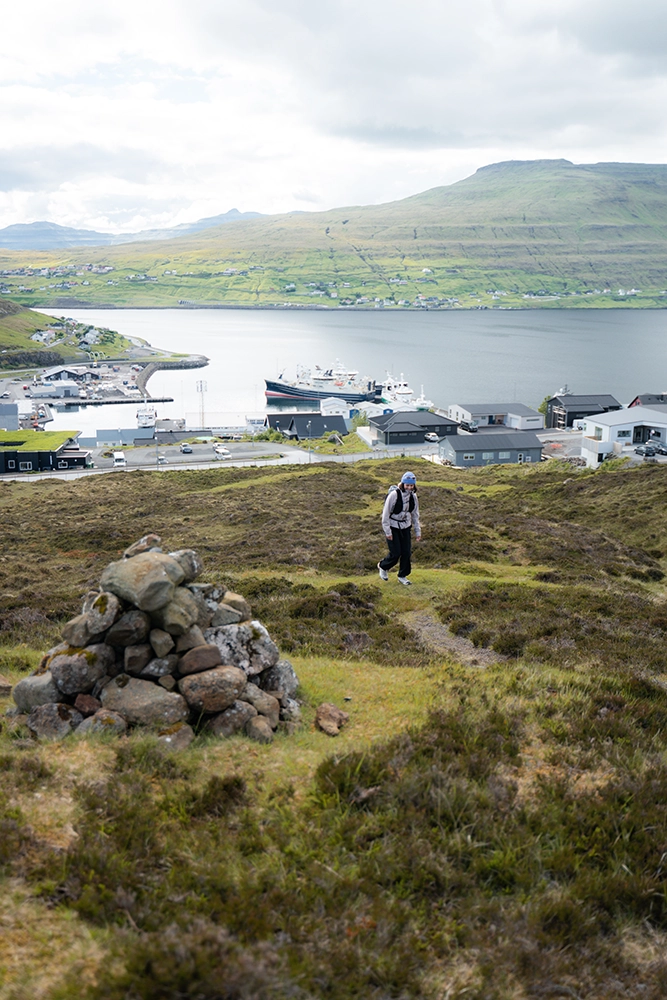
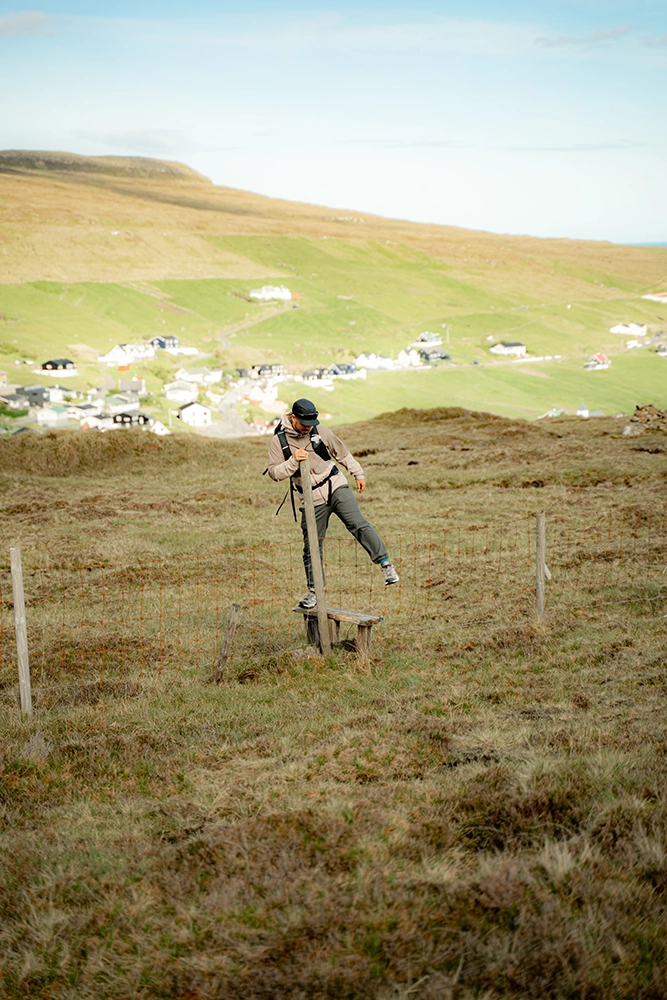
Unlike the more popular hikes in the Faroe Islands, the trail isn’t really signposted. You’ll need to follow a few cairns and pay attention to stay on the right path.
The starting point is here: 62.11041362, -6.71723958
The round trip takes around one hour and the climb is relatively easy.
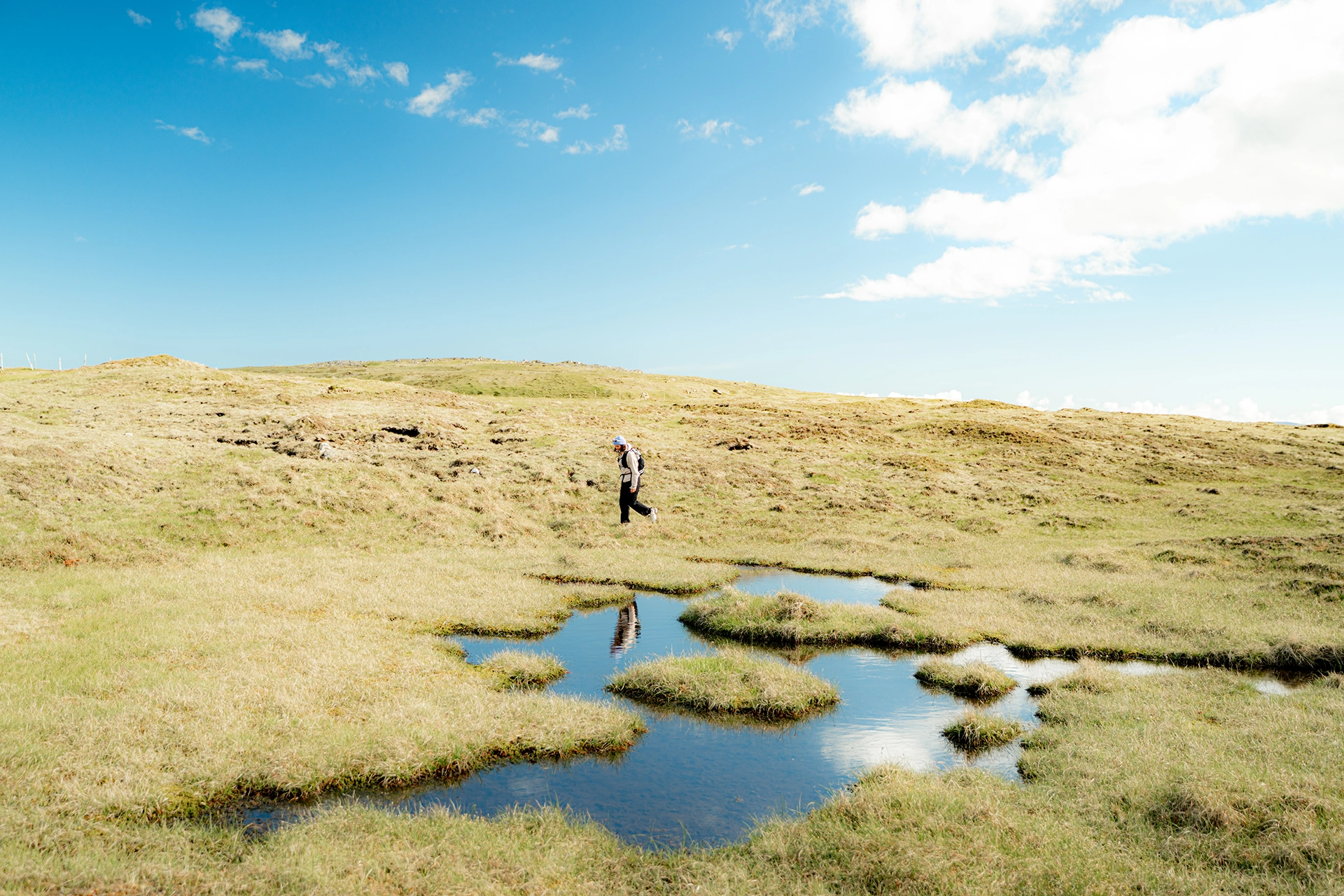
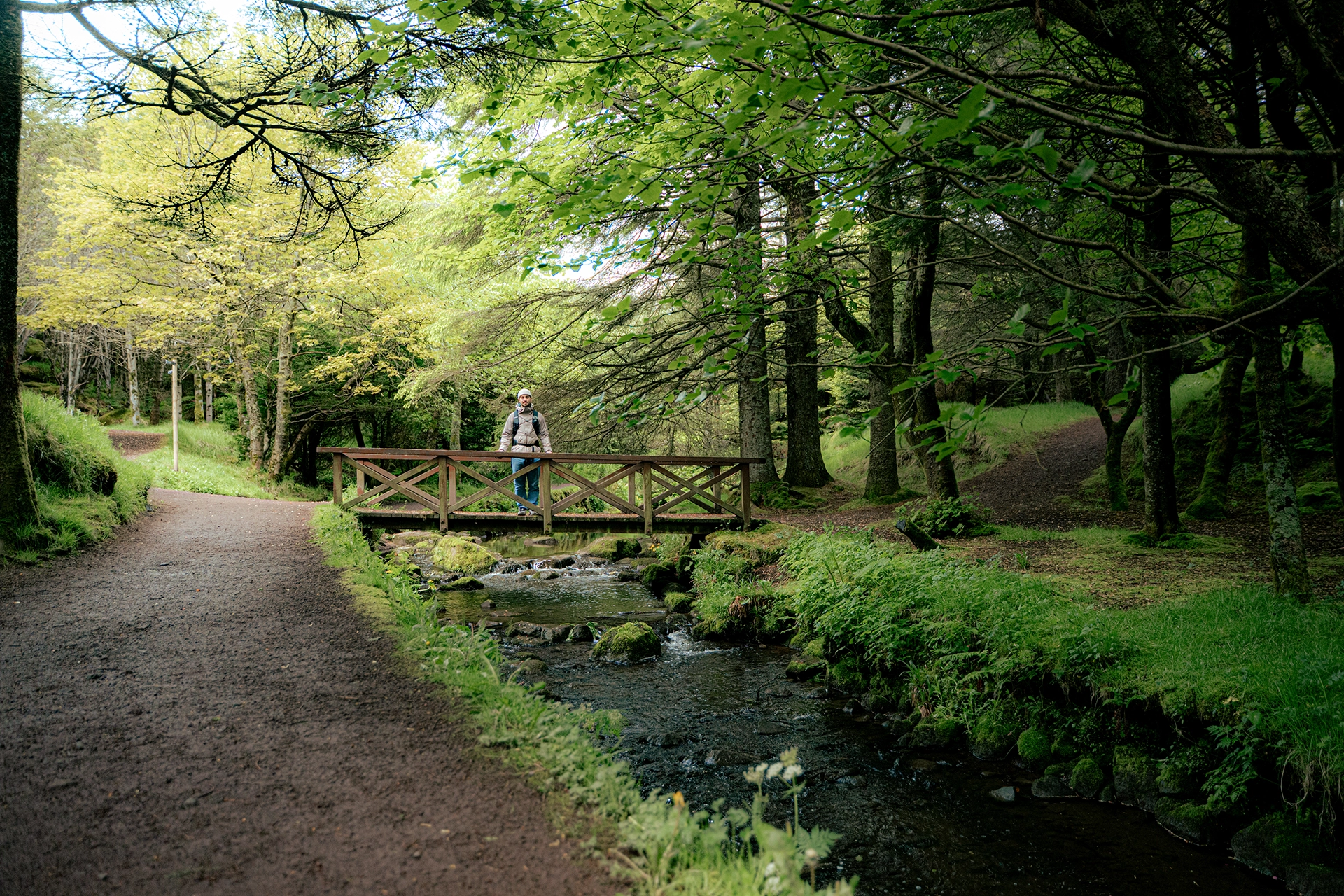
The biggest highlight of this walk is the solitude. During the entire hike, we didn’t meet a single person.
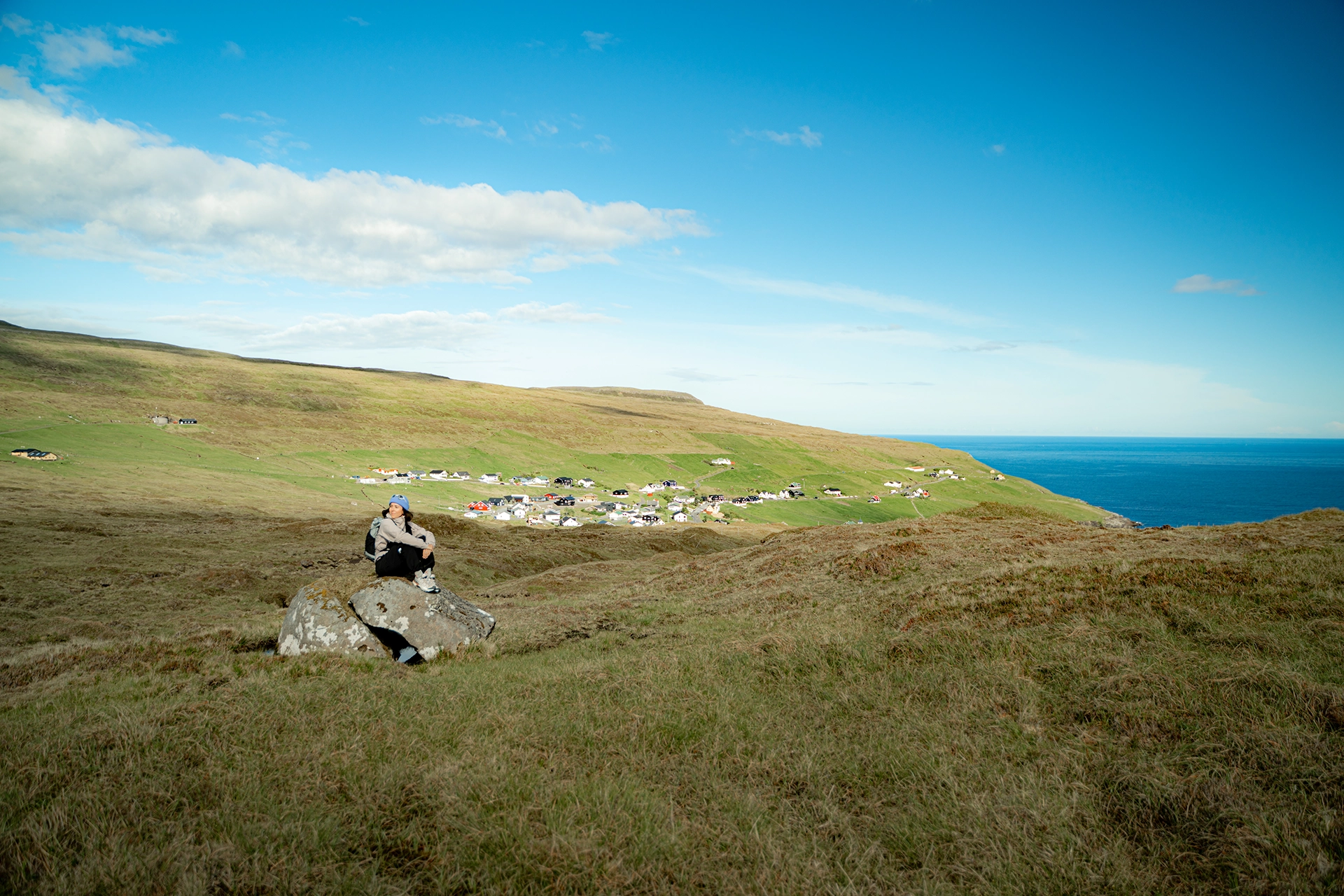
Once you reach the higher ground, the views open up over Runavík, Rituvík, and several surrounding fjords. A beautiful panorama for a relatively small effort.

If you’re looking for an easy hike in the Faroe Islands away from the crowds, this is an excellent option.
A different side of the Faroe Islands
The Faroe Islands’ famous attractions are famous for a reason: they’re absolutely stunning.
But taking the time to explore a few lesser-known places often leads to some of the most memorable moments of the trip.
Whether it’s following a surprise route created by locals through the Self-Navigating Car project, discovering tiny villages where you see more sheep than tourists, enjoying a sauna by the ocean, or heading out on a nearly deserted hike, these experiences add a completely different dimension to a visit.
And that’s ultimately what we loved most about the Faroe Islands: even after several days on the road, it always feels like there’s another valley, another fjord, or another tiny village waiting to be discovered.
Did you like the article ?
Pin it !
Leave a Reply