Bikepacking gear list: what we packed for 1000+ km

Bikepacking gear list: what we packed for 1000+ km

Article updated on 08.10.26

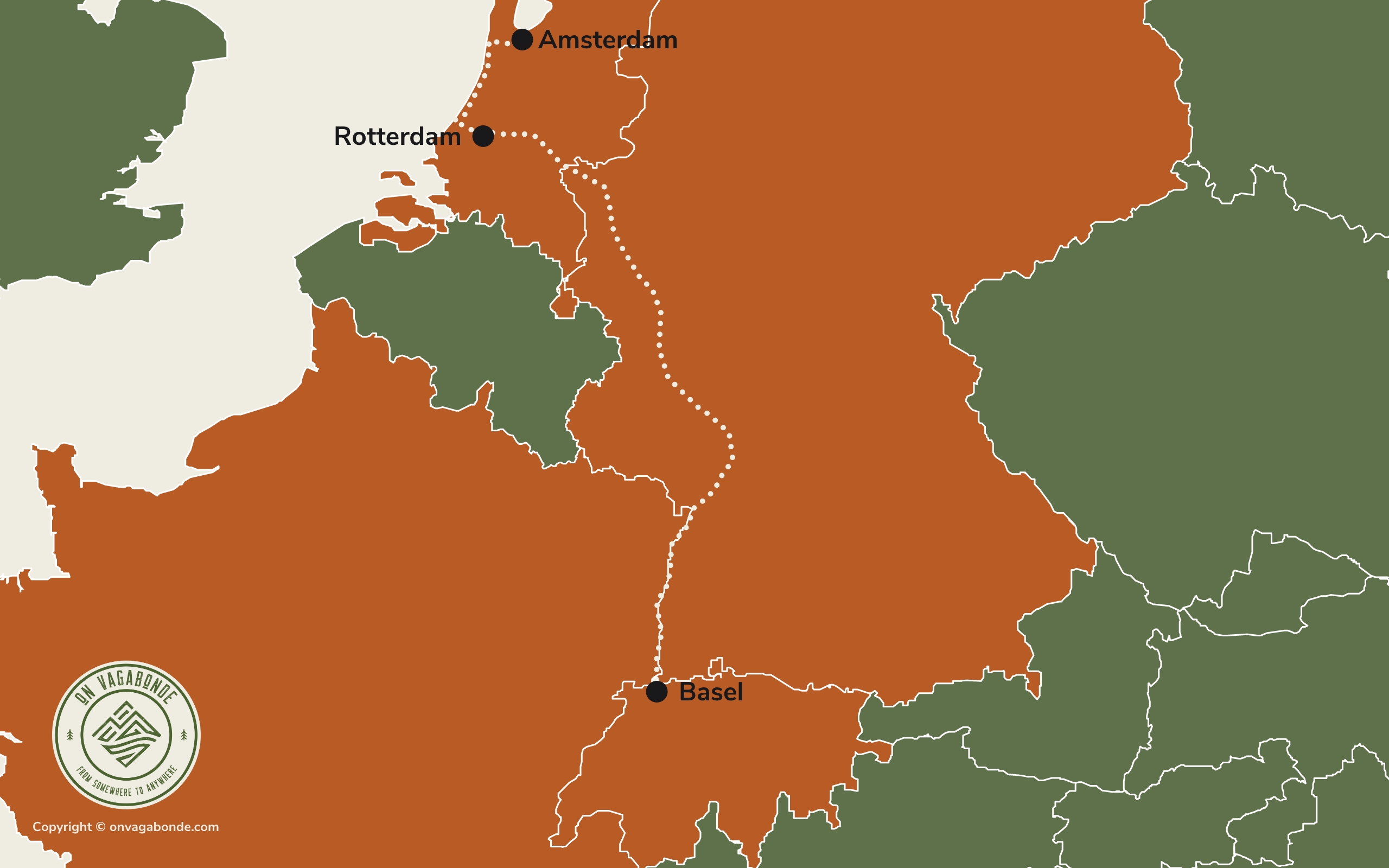
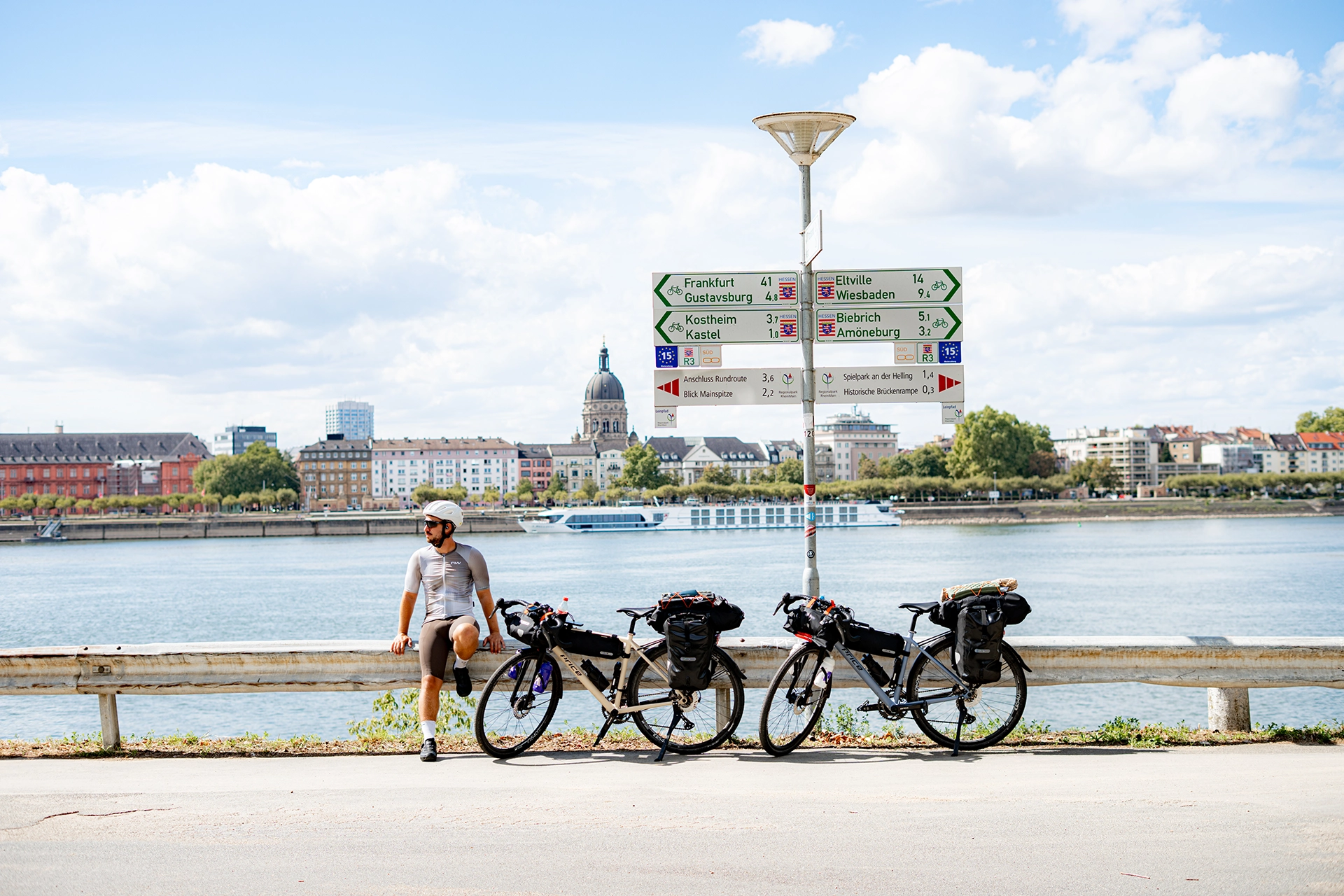
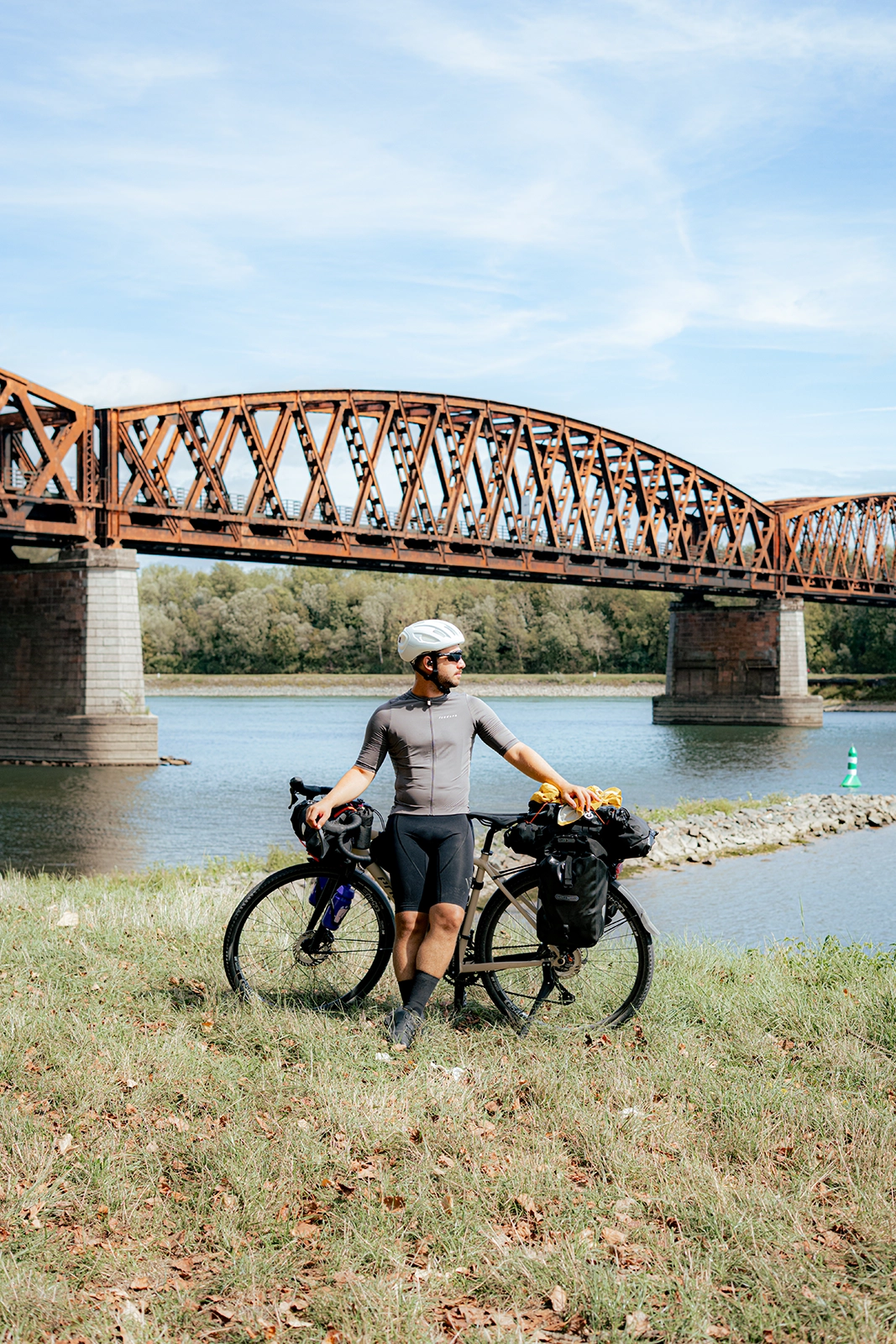
For our first proper bikepacking adventure, we set off from Basel with one goal: follow the Rhine all the way to the North Sea, then continue on to Amsterdam.

For a little over two weeks, we carried everything on our bikes: our tent, sleeping bags, clothes, cooking gear, repair kit, and even all our photography and video equipment.

After more than 1000 km and 16 nights in a tent, here’s our complete bikepacking packing list, including everything we brought, what we actually used, and what we’d change for our next trip.


Transparency: Some of the gear featured in this article was provided by our partners Price, TST-GPR AG, Snowleader, POC, Sea to Summit, ORTLIEB, Isadore, and CooknRun. We’re sharing our experience after putting everything to the test over more than 1000 km of cycling. A huge thank you to all of them for their support ☺️

Our bikes for bikepacking

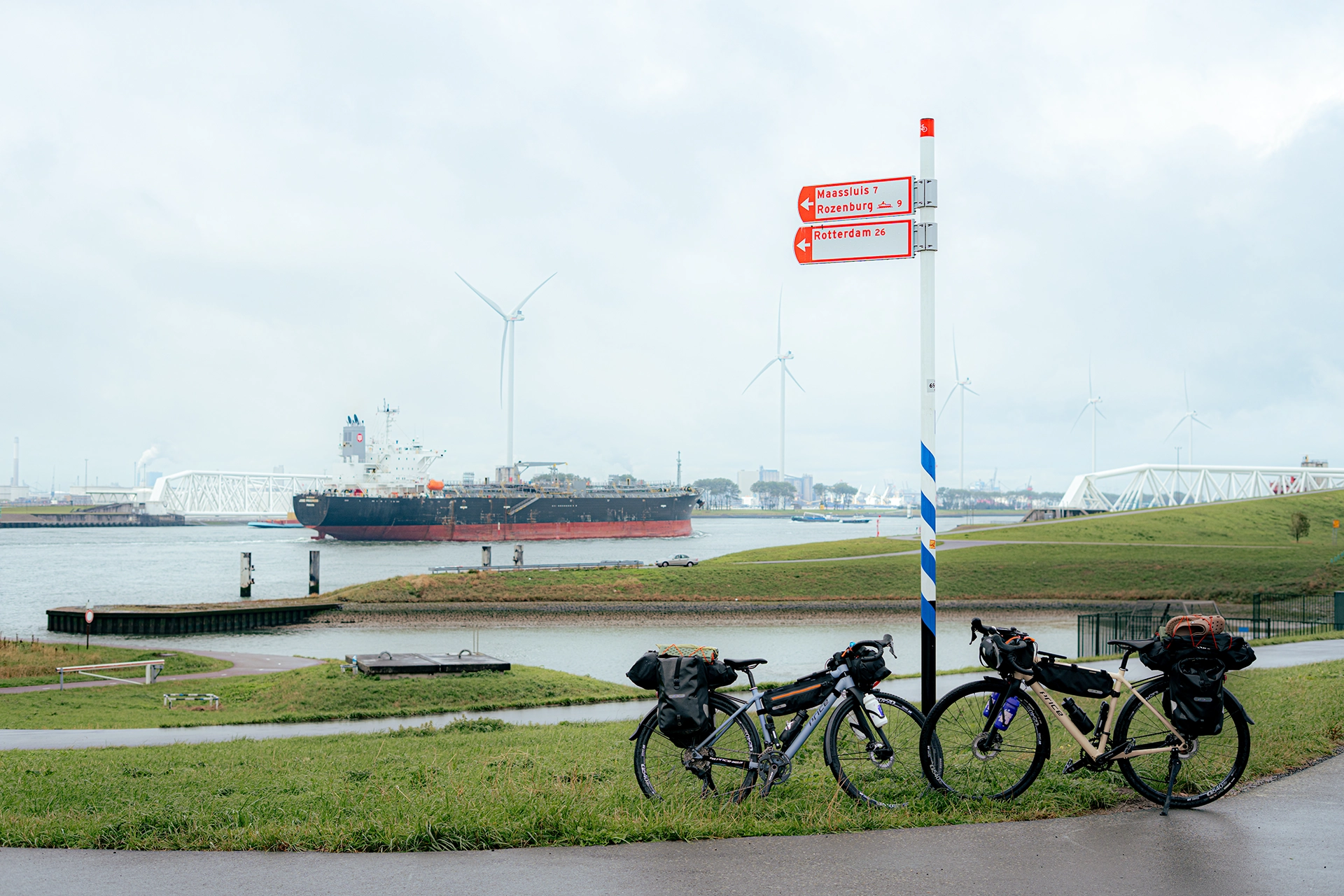
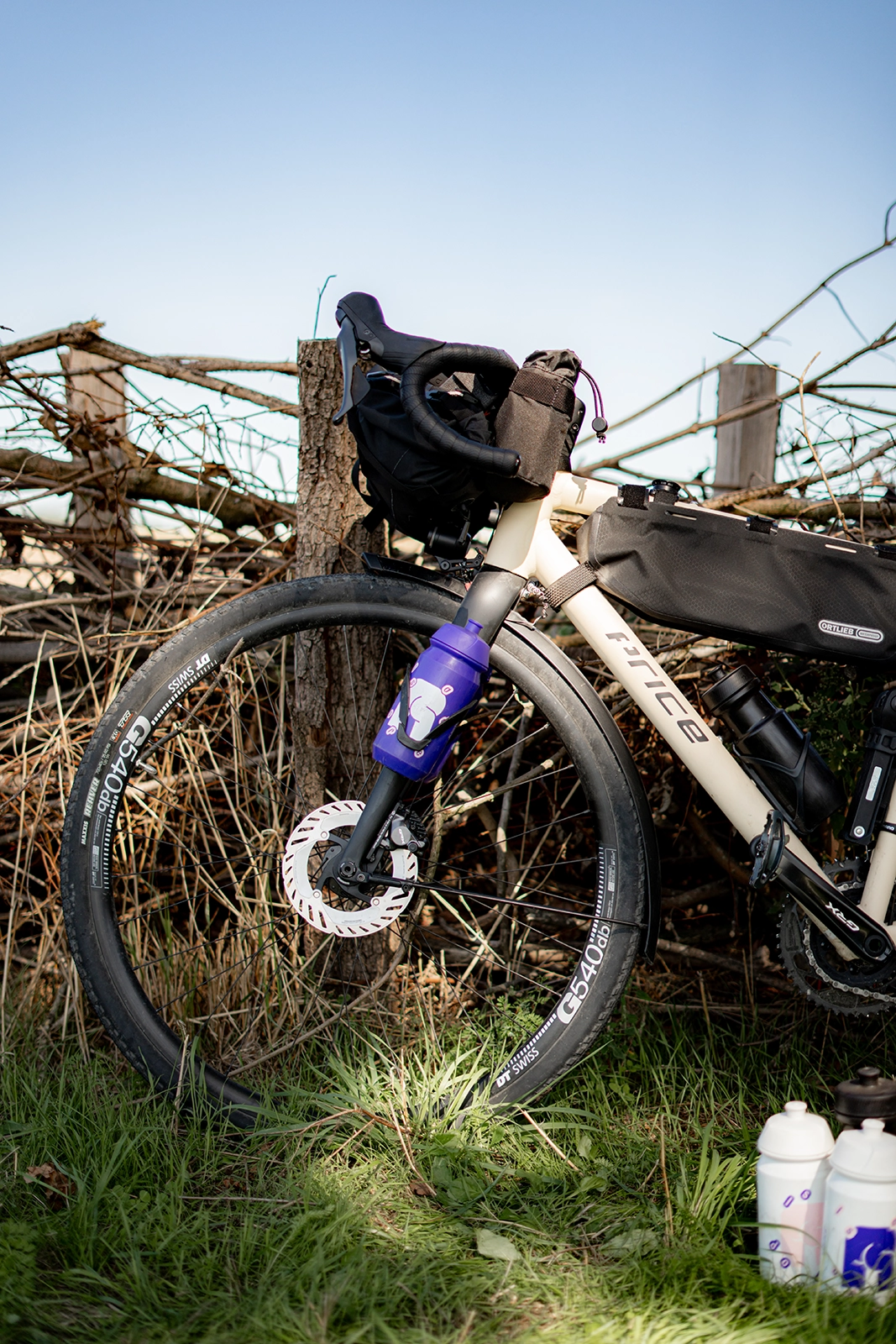
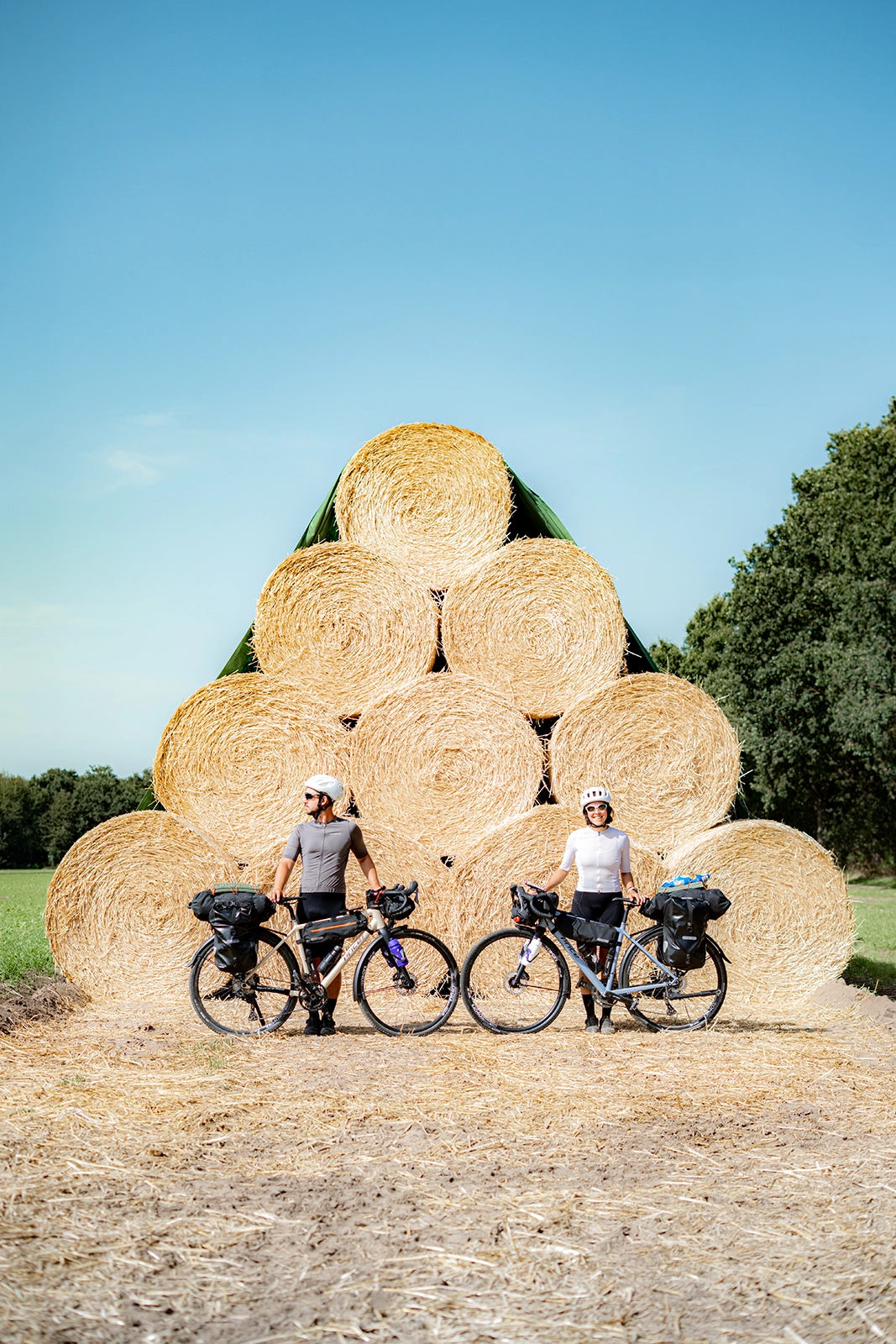
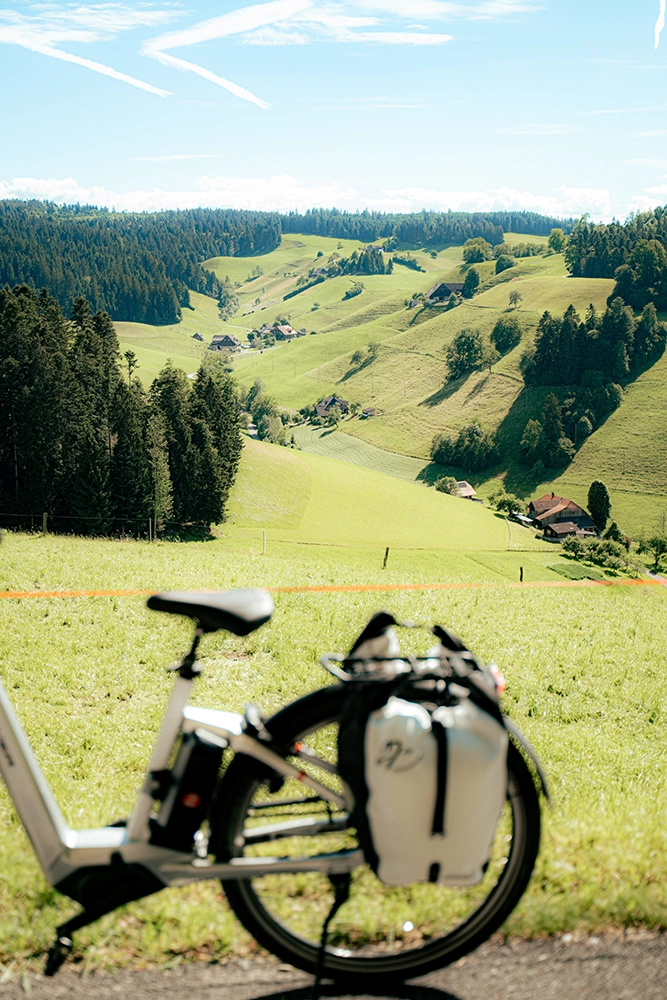
We were both riding a 2026 Price Allroad.

For our route along the Rhine, gravel bikes were definitely the right choice. We rode approximately 60% on paved roads and 40% on gravel and unpaved trails, with quite a few forest sections during the first few days.

Our bike setup

Per bike:

  • 1 × Price Allroad 2026
  • Carbon Gravel/Allroad fork
  • City Kit
  • Shimano GRX820 170 mm FC-RX8202 crankset, 12-speed, 31/48
  • Shimano Ultegra CS-R8101 cassette, 12-speed, 11-34
  • Ritchey New Comp 4-Axis 80 mm stem
  • Ritchey Comp Butano 40 cm handlebar
  • Ritchey Comp 27.2 mm / 300 mm seatpost
  • Prologo Dimension saddle
  • Gravel/Trekking UR705 / DT G540 Disc HG wheels
  • Maxxis Reaver 700x40C tires

For us, the 40 mm tires were the perfect balance: fast-rolling on paved roads and bike paths, but still comfortable and stable whenever we hit gravel or rougher trails.

And after more than 1000 km? Just one flat tire between the two bikes!

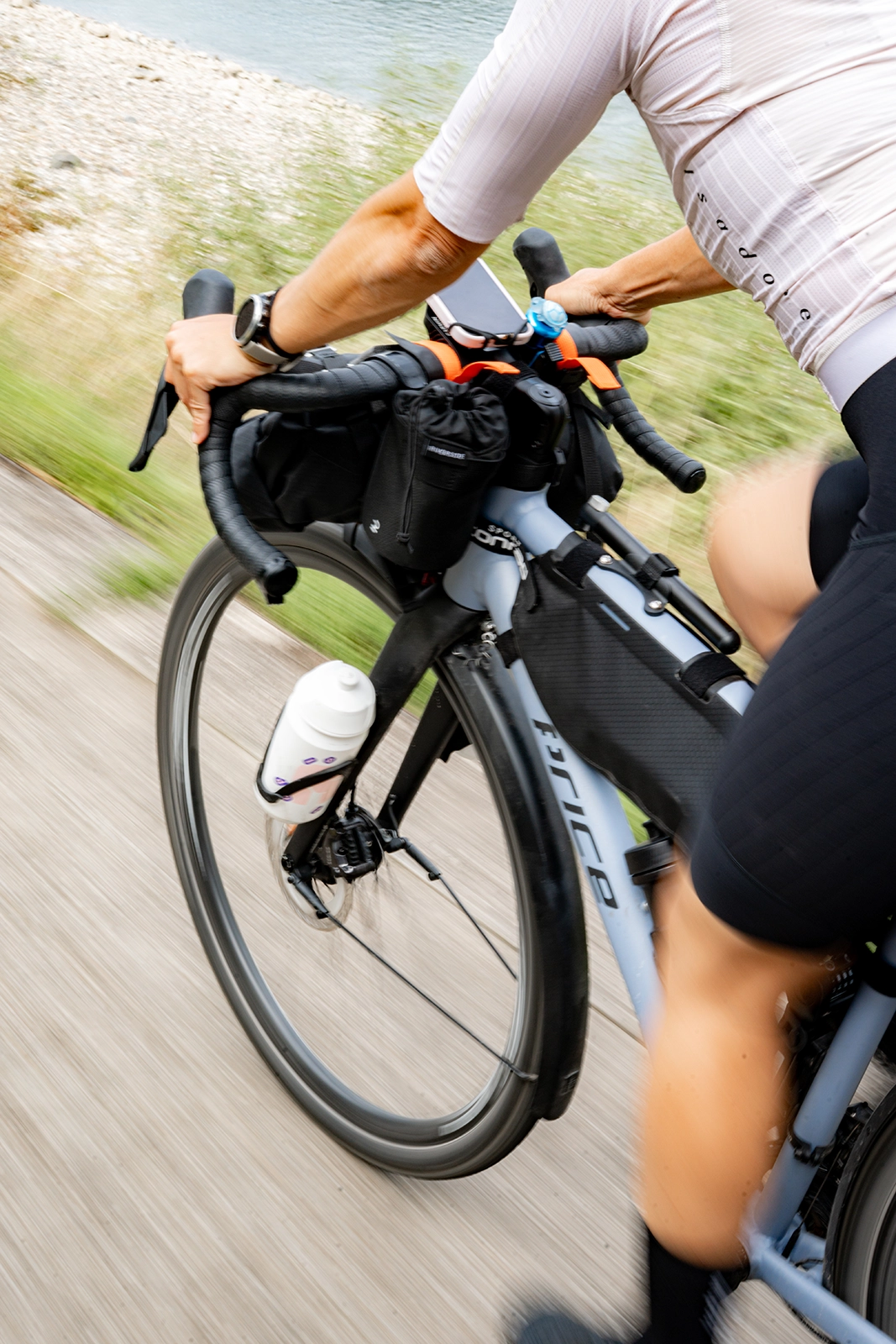
Helmets, bike locks, and water bottles

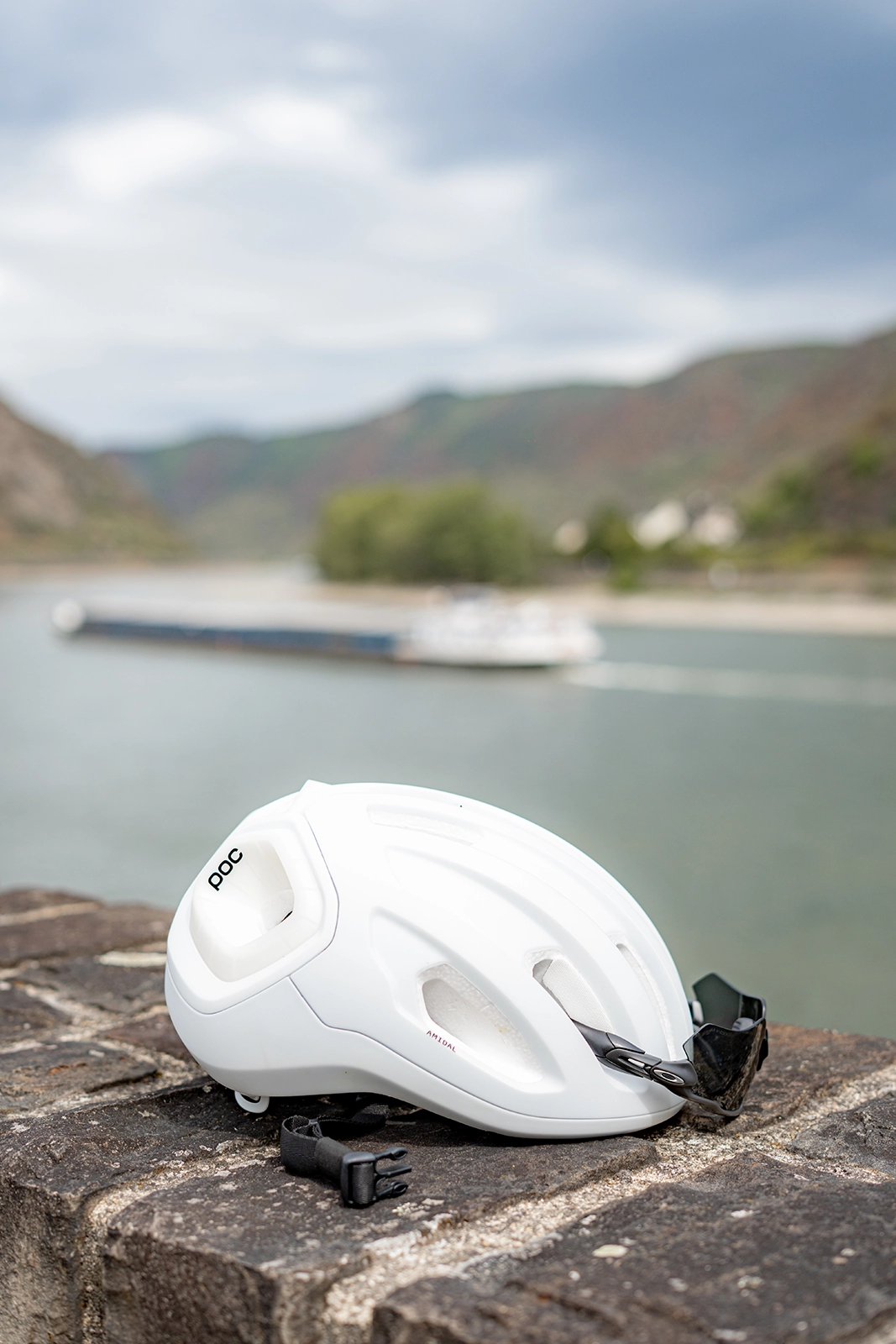
We also carried the following on each bike:

This gave us a total water capacity of around 1.75 liters per bike.

We expected to find more public drinking water fountains along the Rhine, but they turned out to be surprisingly rare on our route. On hotter days, we’d usually take advantage of a coffee stop to refill our bottles.

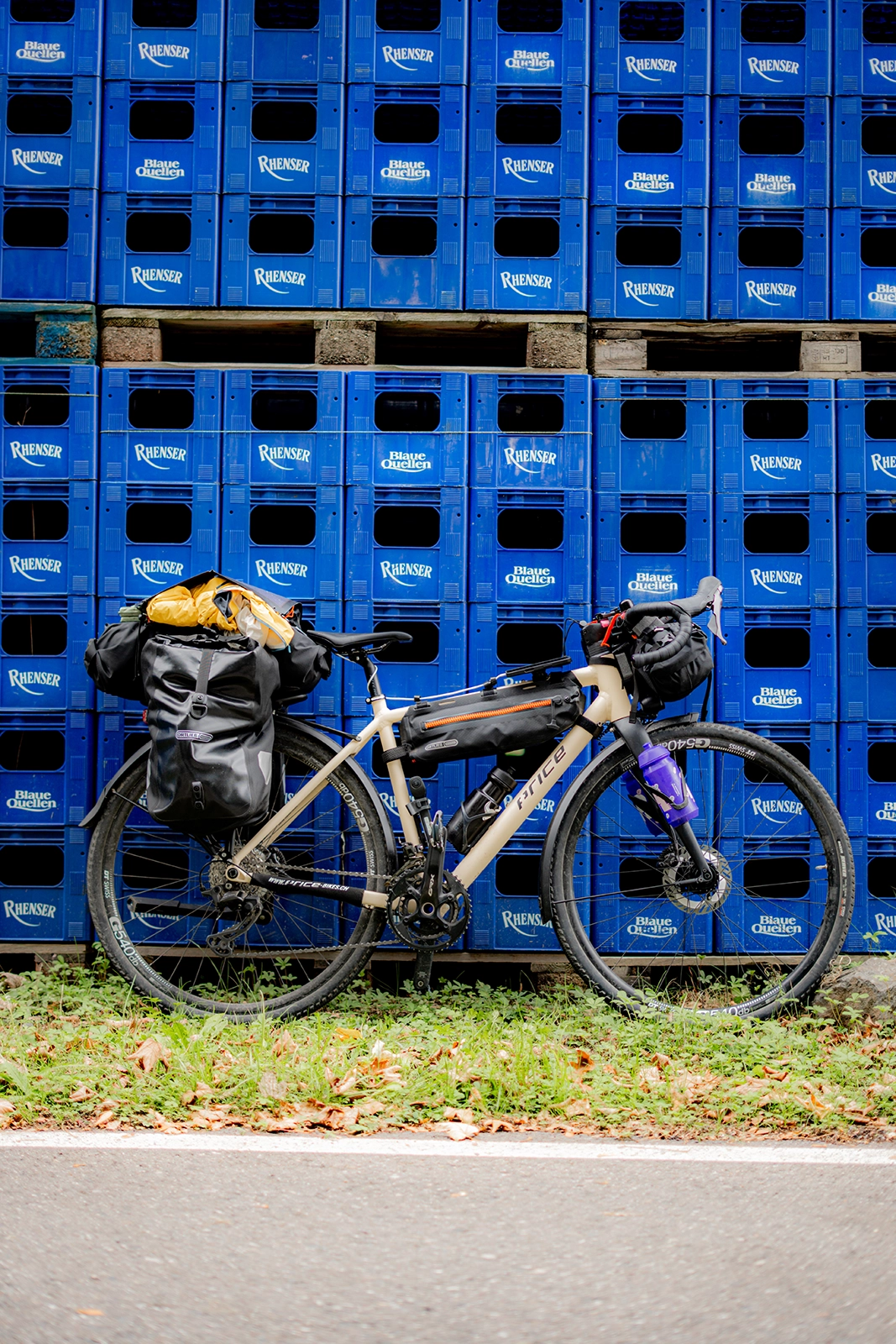
Our bikepacking bags: 57 liters per bike

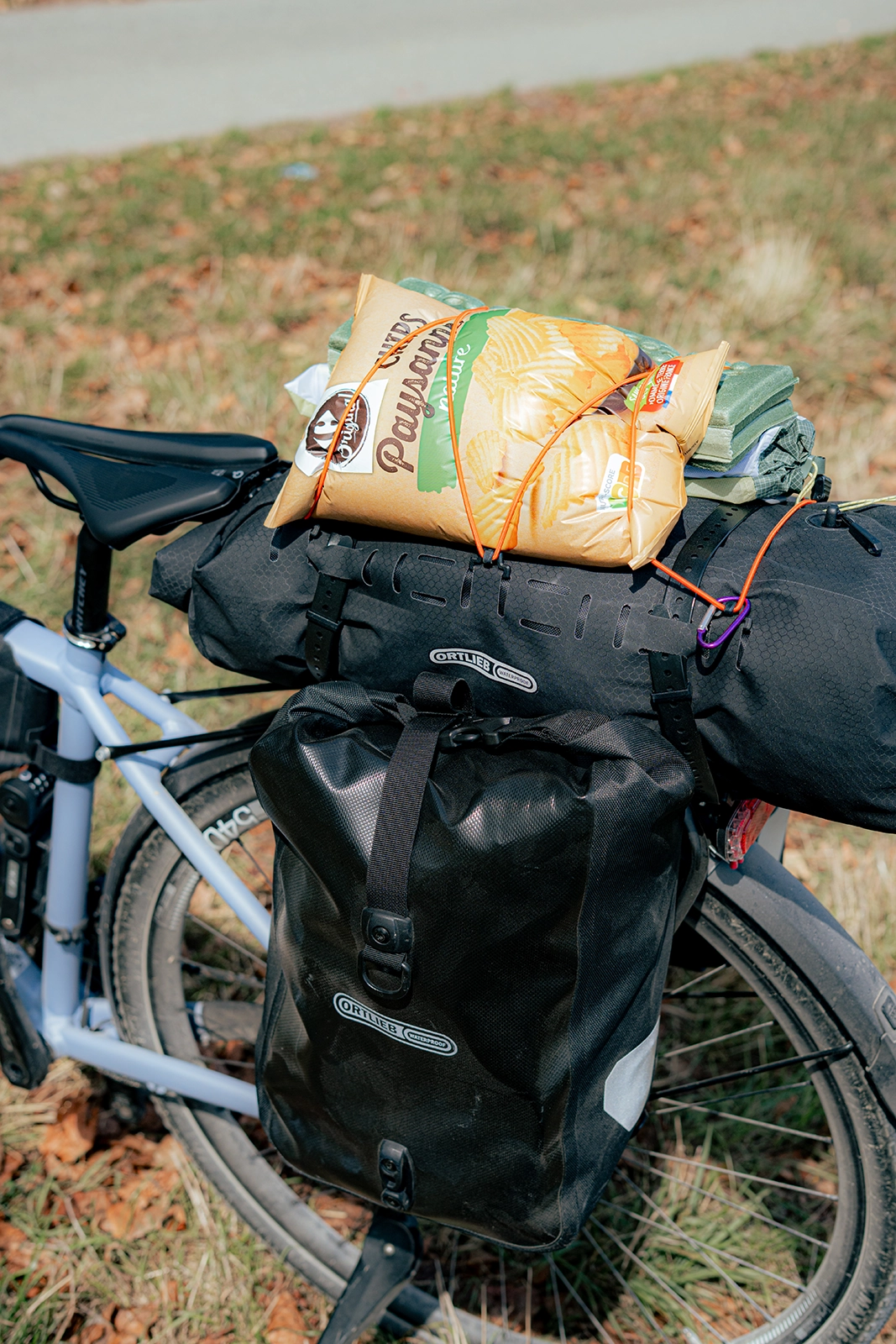
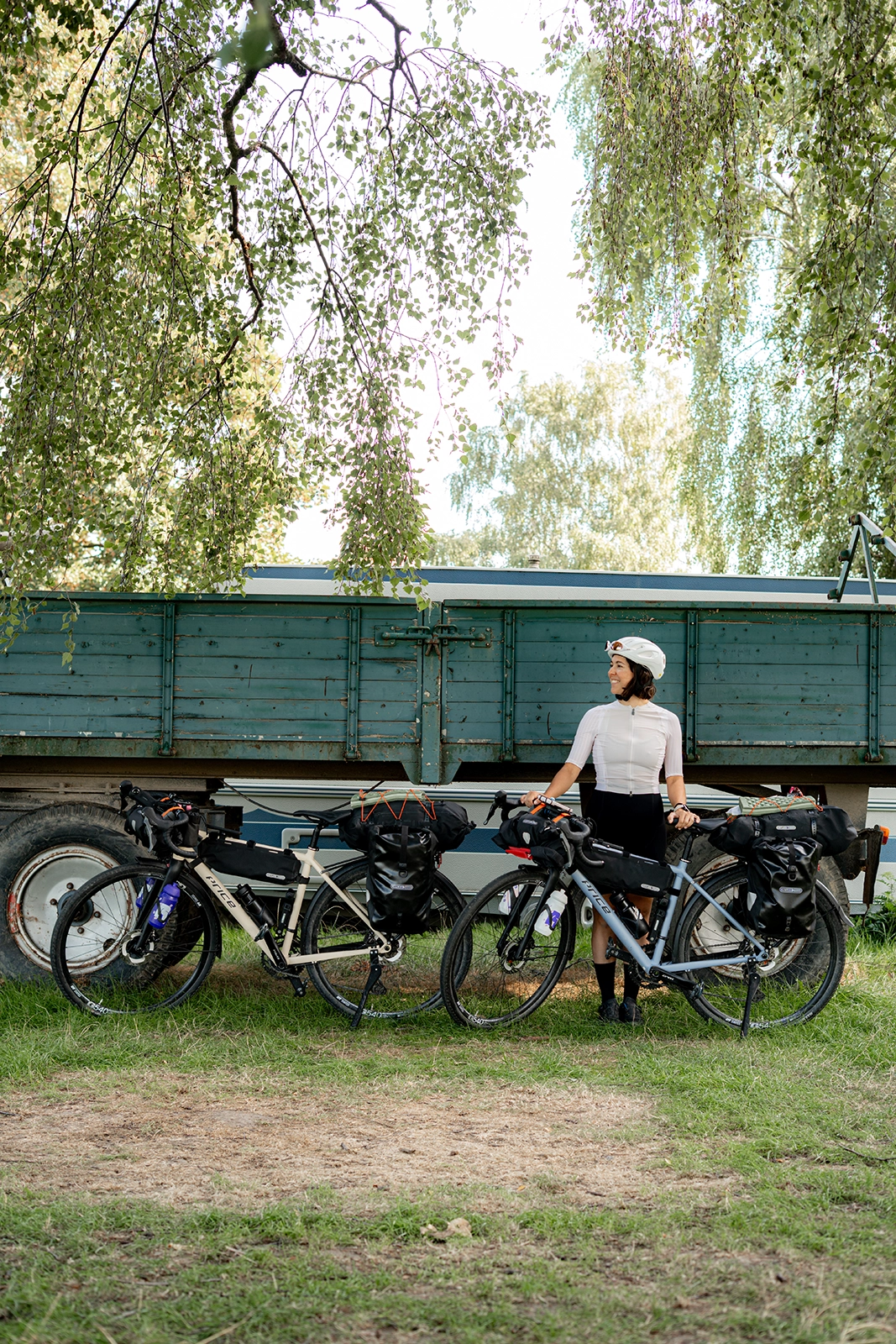
We had exactly the same bag setup on both bikes.

Per bike:

That gave us 57 liters of storage per bike, or 114 liters between the two of us, not including the small handlebar bags.

Having several smaller bags rather than one large bag made organizing everything so much easier. Clothes, camping gear, cooking equipment, food, and electronics all had their own place.

Inside our bags, we also used several Sea to Summit dry bags to organize our clothes and protect our electronics.

Our bike repair kit

For both bikes, we carried:

  • 2 × spare inner tubes
  • 1 × tire patch kit
  • 1 × bike pump
  • 1 × multitool
  • 3 × tire levers
  • 1 × chain lubricant
  • 1 × cleaning cloth
  • Carabiners
  • Zip ties
  • Tape
  • A few small spare parts

Luckily, we barely needed any of this. After more than 1000 km, we only had one flat tire.

But even on a route that regularly passes through towns and villages, we’d never leave without the basics needed to fix a flat or deal with a minor mechanical issue.

What clothes should you pack for two weeks of bikepacking?

We tried to keep our clothing to a minimum. With regular laundry stops at campgrounds, there’s really no need to pack a different outfit for every day.

Per person, we brought:

  • 2 × T-shirts
  • 1 × long-sleeve athletic shirt
  • 1 × Isadore merino long-sleeve top
  • 1 × cycling T-shirt
  • 2 × padded cycling bib shorts
  • 2 × cycling jerseys
  • 1 × athletic shorts
  • 1 × leggings
  • 1 × sweatpants
  • 1 × fleece
  • 1 × waterproof jacket
  • 1 × rain pants
  • 1 × puffer jacket
  • 4 × pairs of underwear
  • 3 × pairs of cycling socks
  • 1 × pair of regular socks
  • 1 × neck gaiter
  • 1 × pair of Northwave Corsair 2 cycling shoes
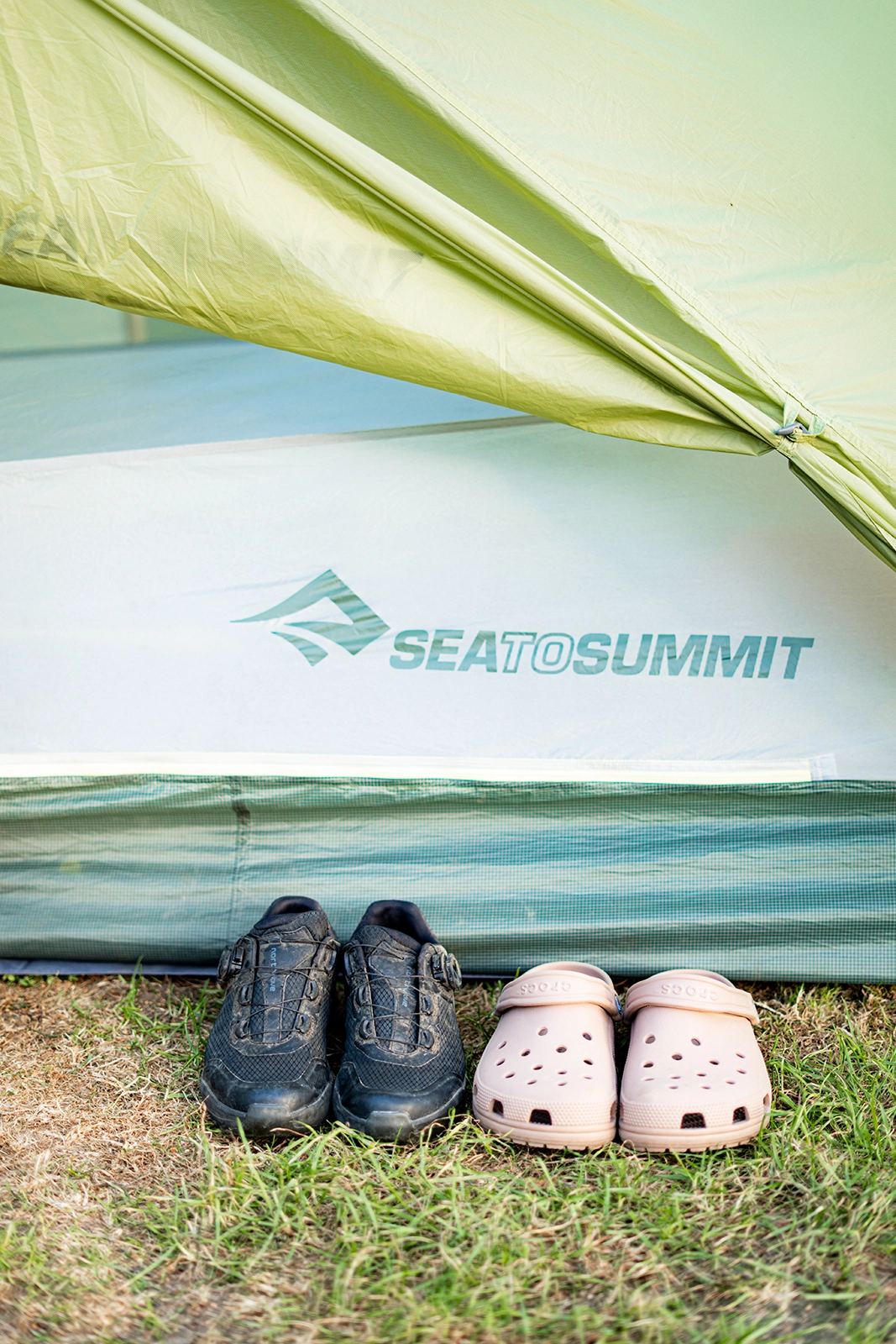
  • 1 × pair of sandals for camping and showers
  • 1 × pair of Isadore Autumn/Spring gloves
  • 1 × swimsuit
  • 1 × cap
  • 1 × pair of sunglasses

Our cycling clothing

Audrey alternated between:

And Benji between:

Having two pairs of padded cycling shorts each was incredibly practical. We could wash one pair in the evening and wear the other the next day if the first hadn’t completely dried.

After more than 1000 km, we’d definitely say that good cycling shorts are one piece of gear worth investing in.

We also applied chamois cream every morning before putting on our cycling shorts to help prevent chafing.

As for the clothes we barely used, our long-sleeve athletic shirts and cycling gloves stayed in our bags most of the time.

On the other hand, we were really glad to have a fleece and puffer jacket for evenings at the campground, especially as we got closer to the Netherlands.

Our camping gear

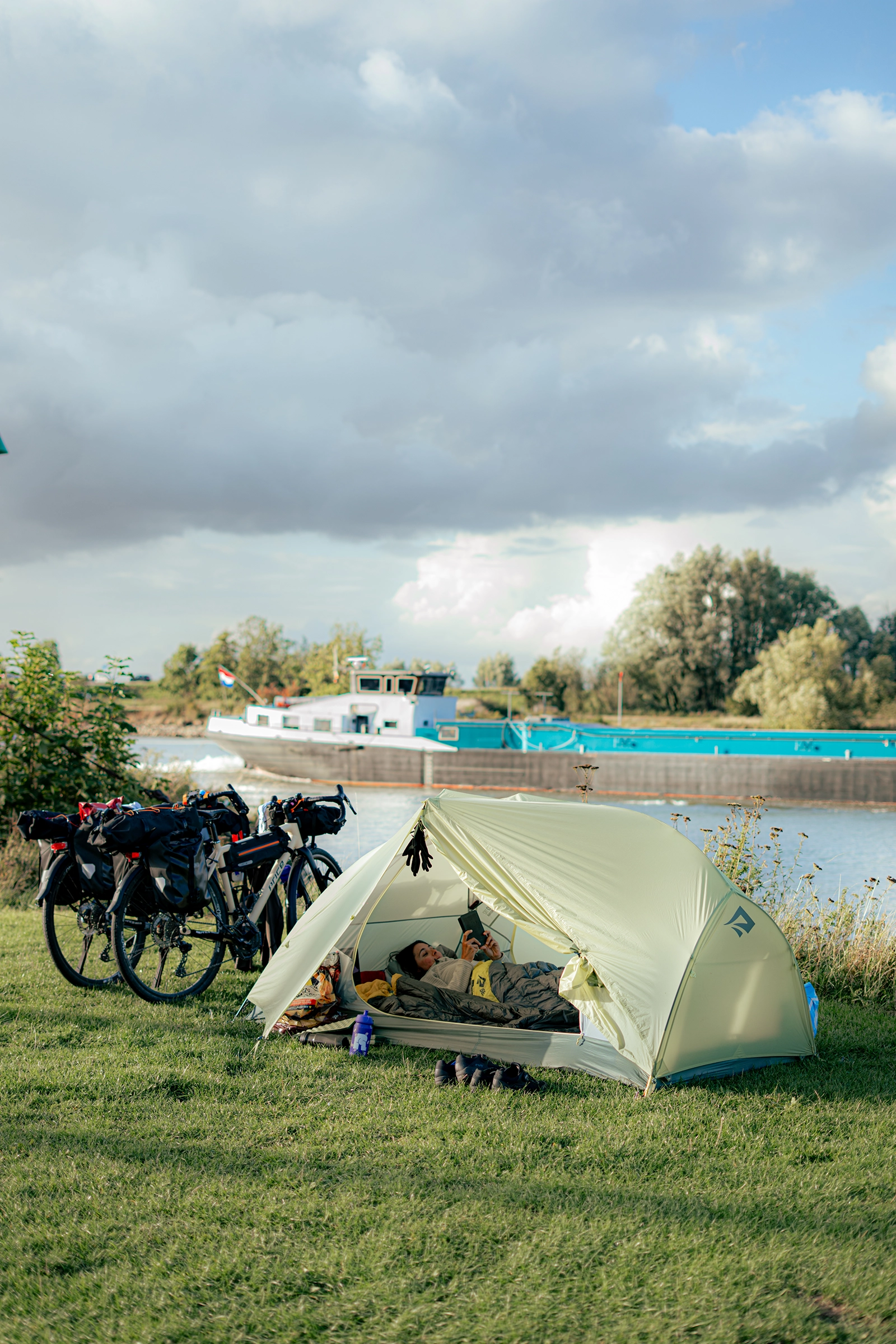
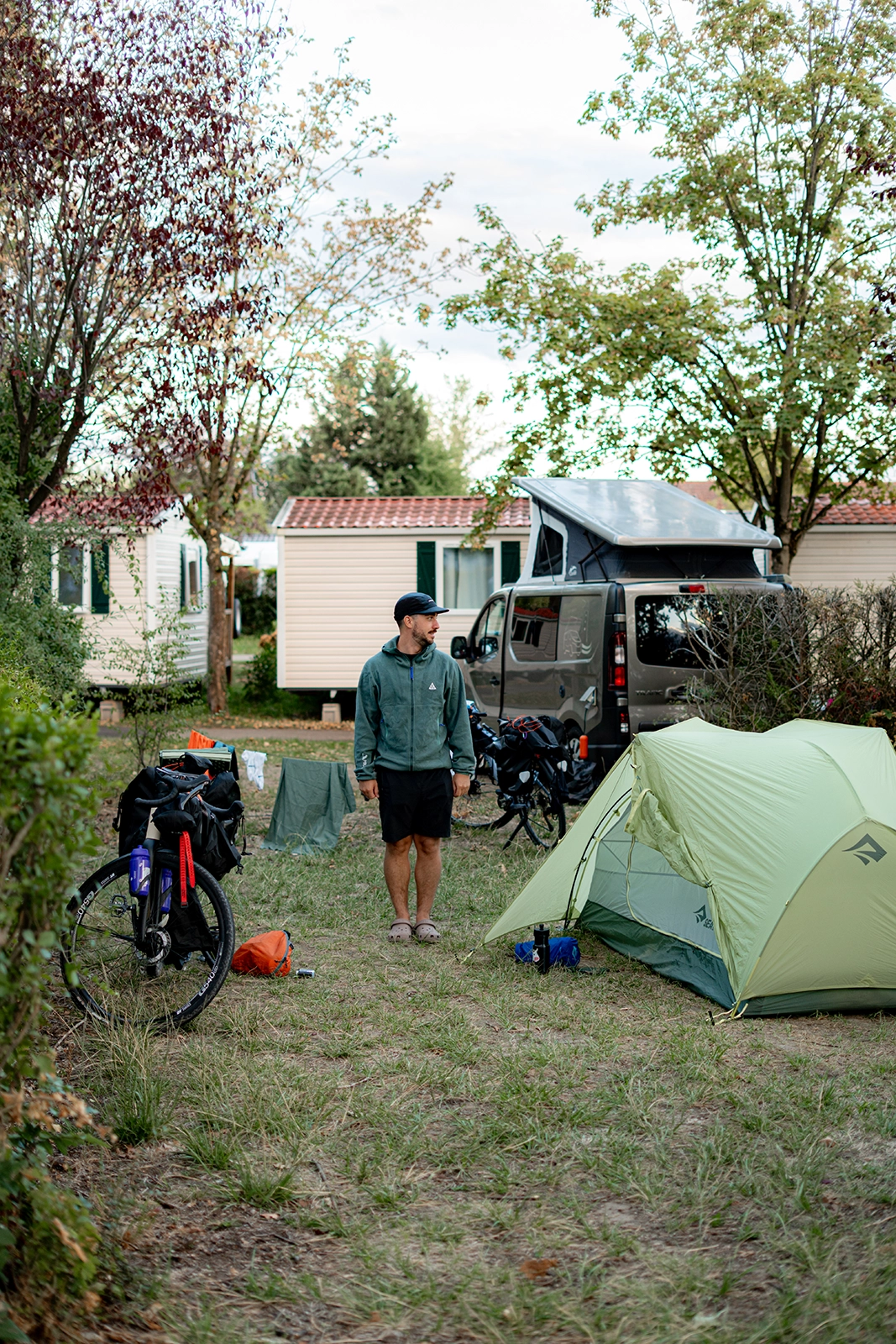
We spent 16 nights in a tent and not a single night in a hotel.

Since we had to set up and pack away our camp almost every day, we wanted gear that was compact and relatively lightweight.

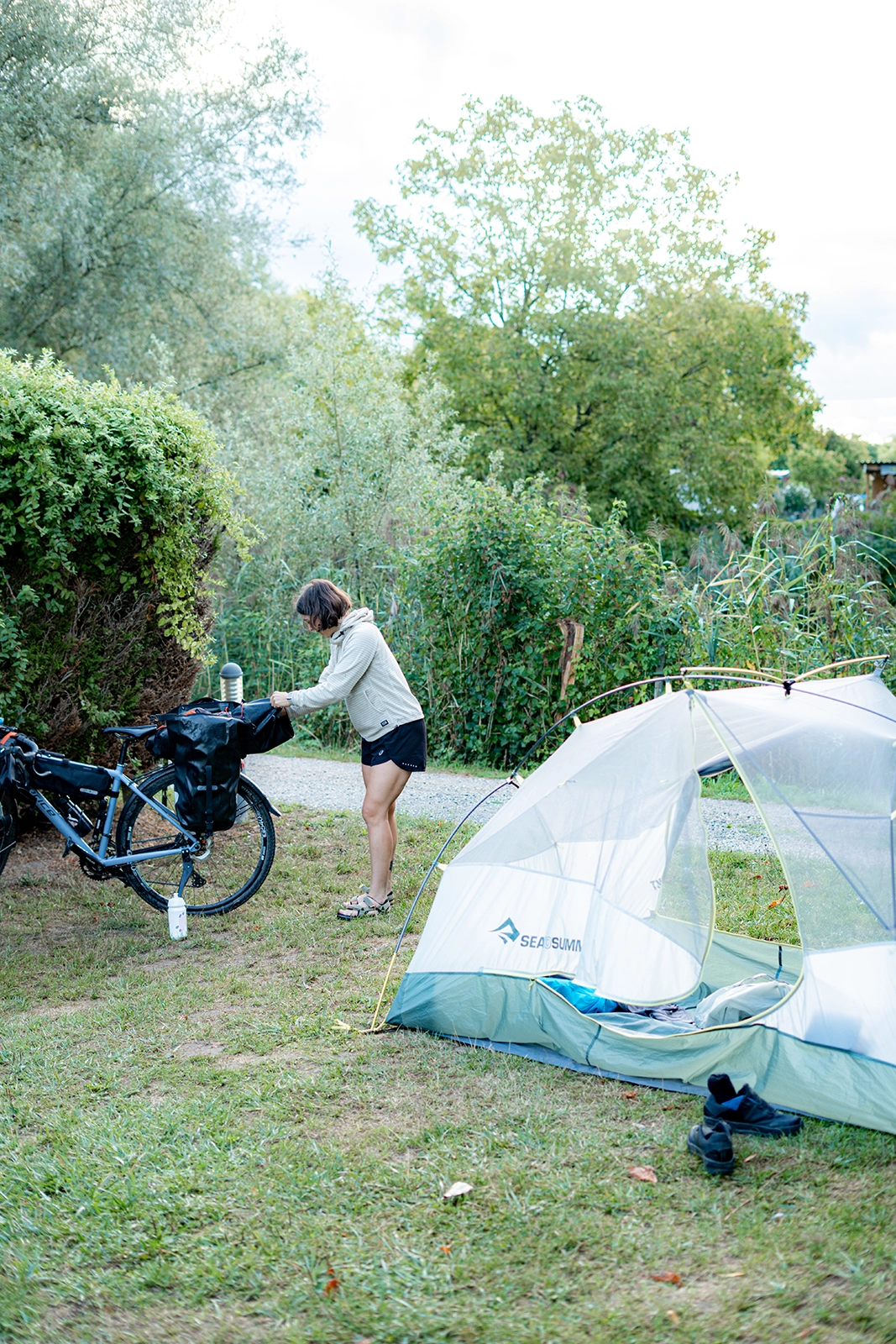
Our tent

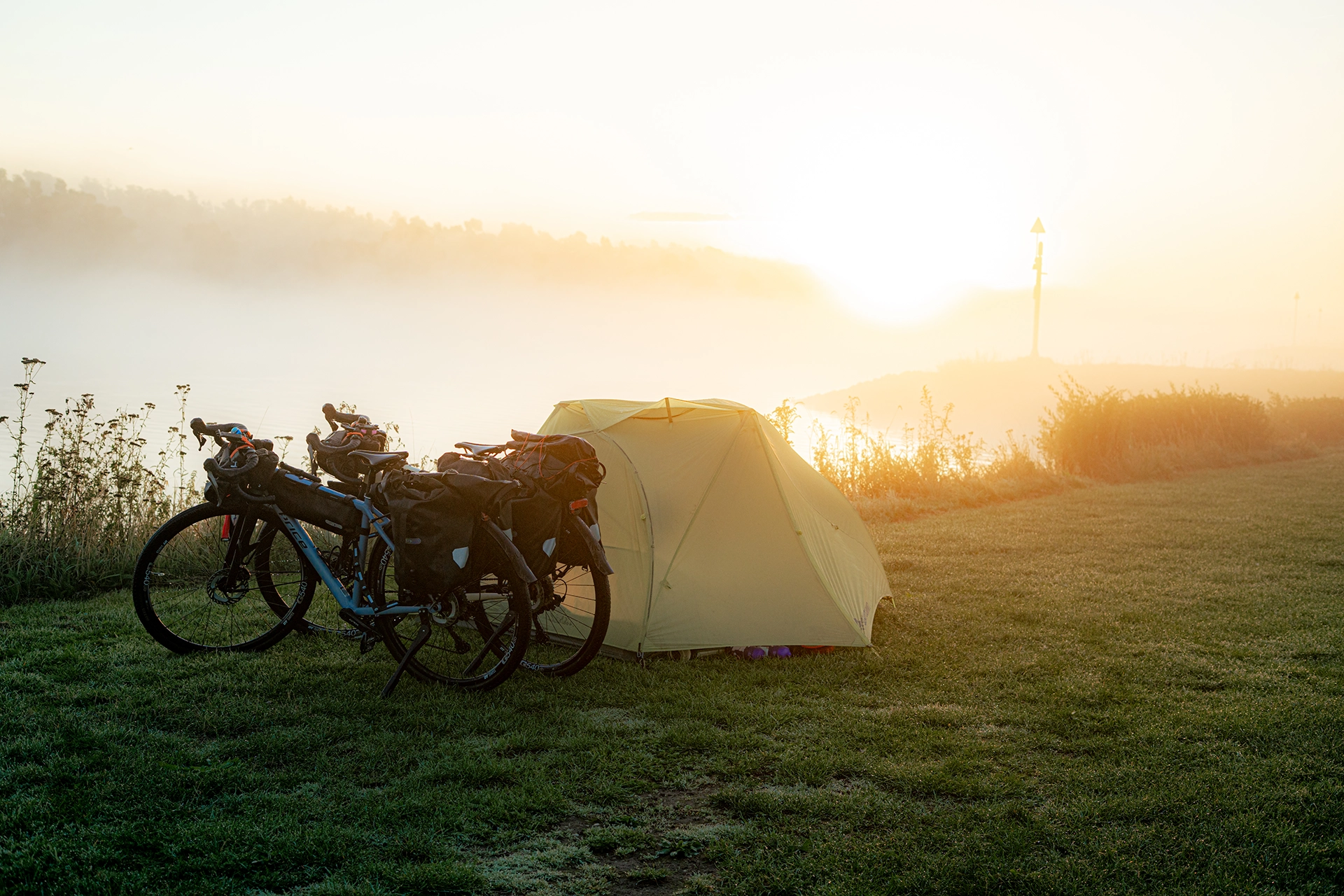
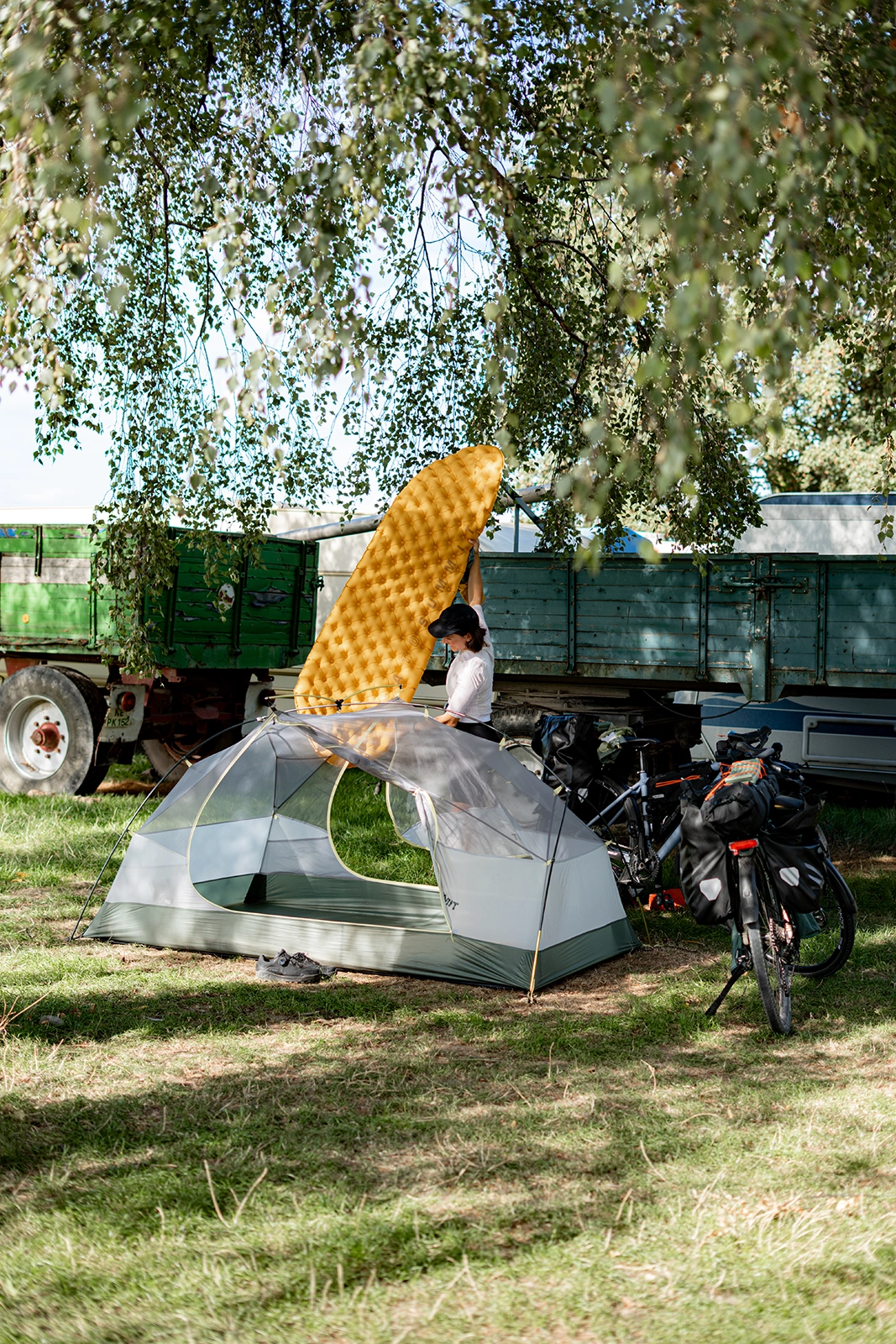
We used a two-person Sea to Summit Telos Bikepack tent, along with the Telos LightFoot footprint.

The Bikepack version is specifically designed for this kind of adventure, with a compact packed size that makes it easier to carry on a bike.

Our sleeping setup

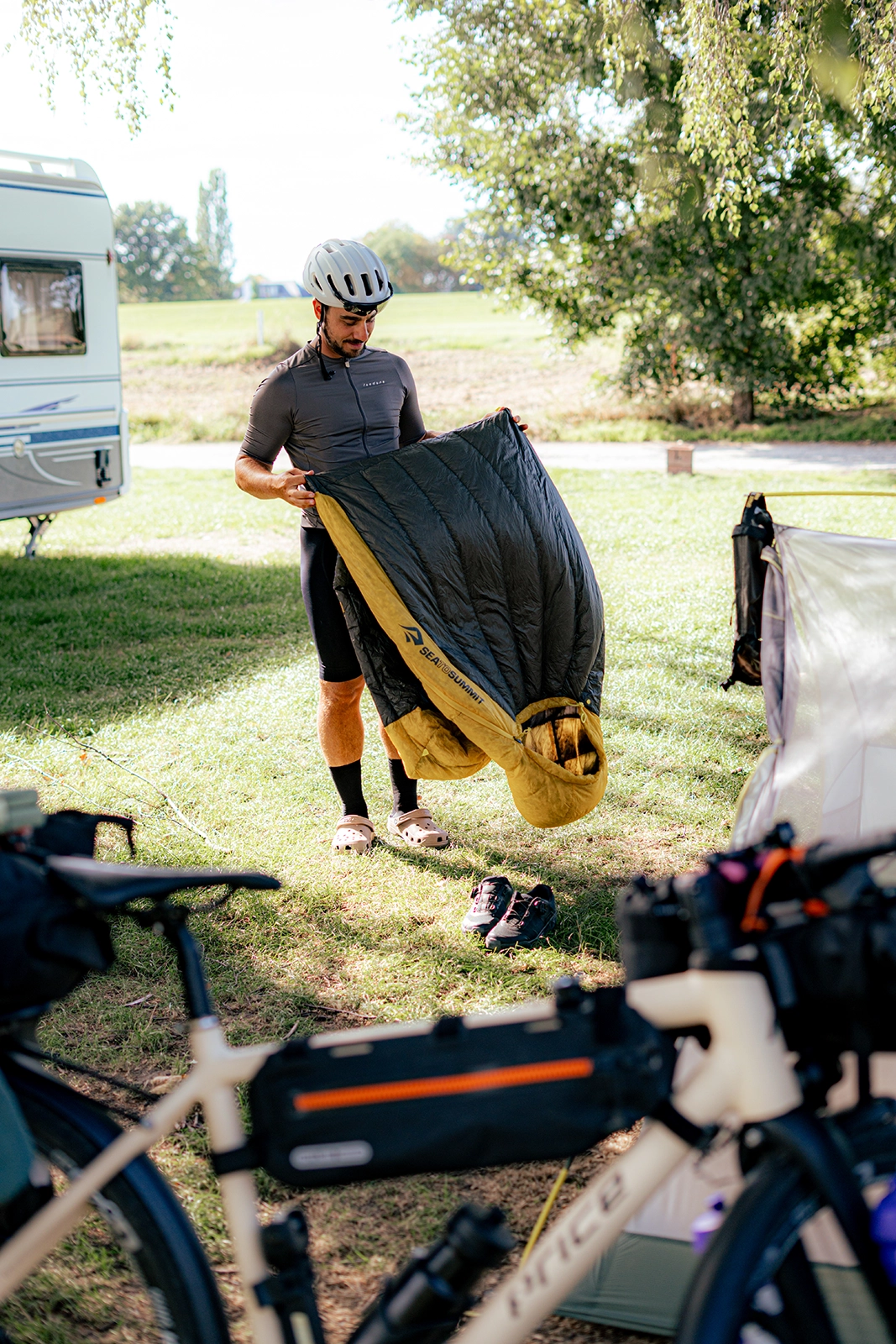
For two people:

We traveled between late August and mid-September, with temperatures ranging from approximately 15 to 30°C (59–86°F). Our sleeping setup was more than enough for those conditions.

In the end, our biggest issue wasn’t the cold, but the moisture and morning dew.

More than once, we had to pack up a still-damp tent before getting back on the road.

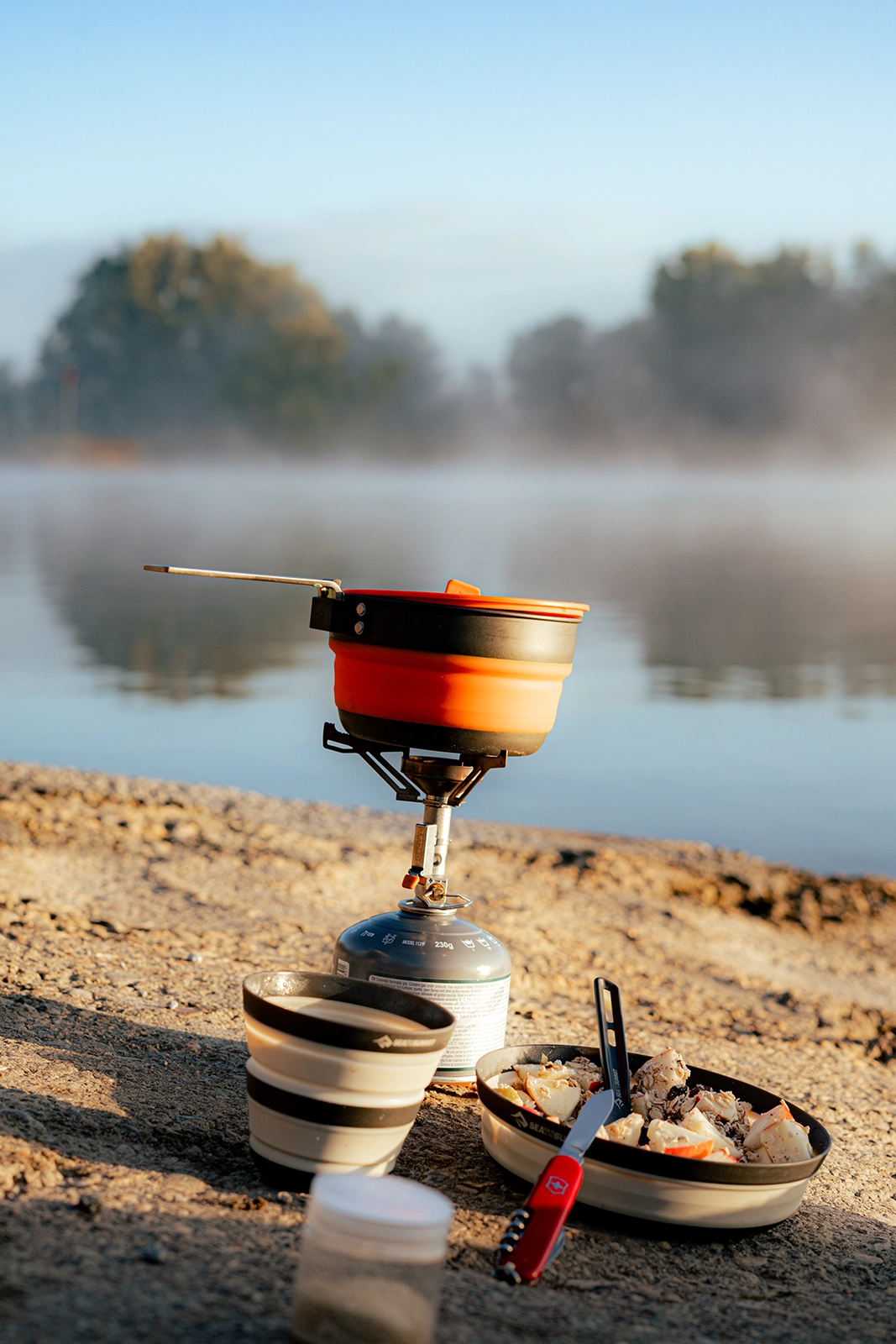
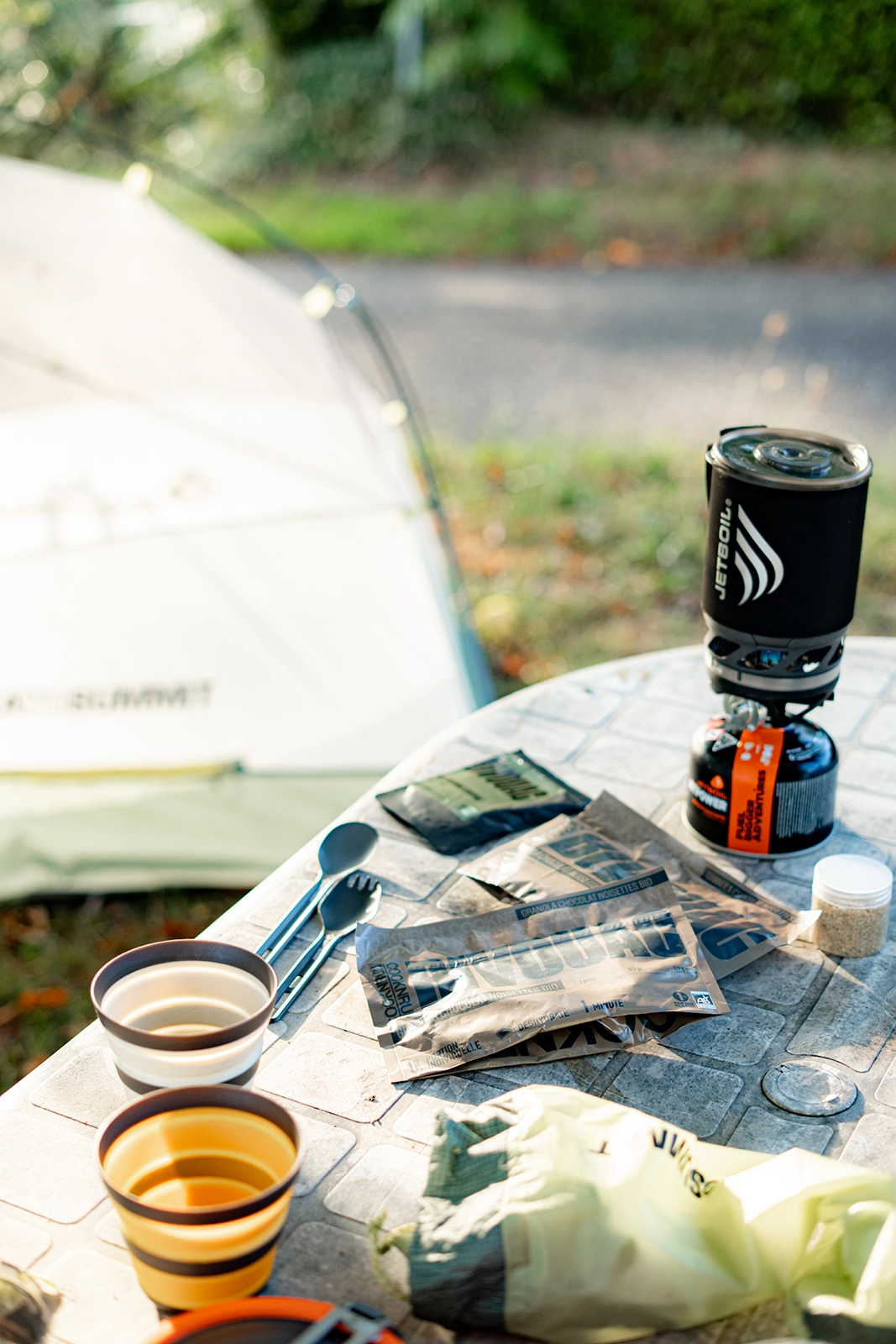
Our bikepacking cooking gear

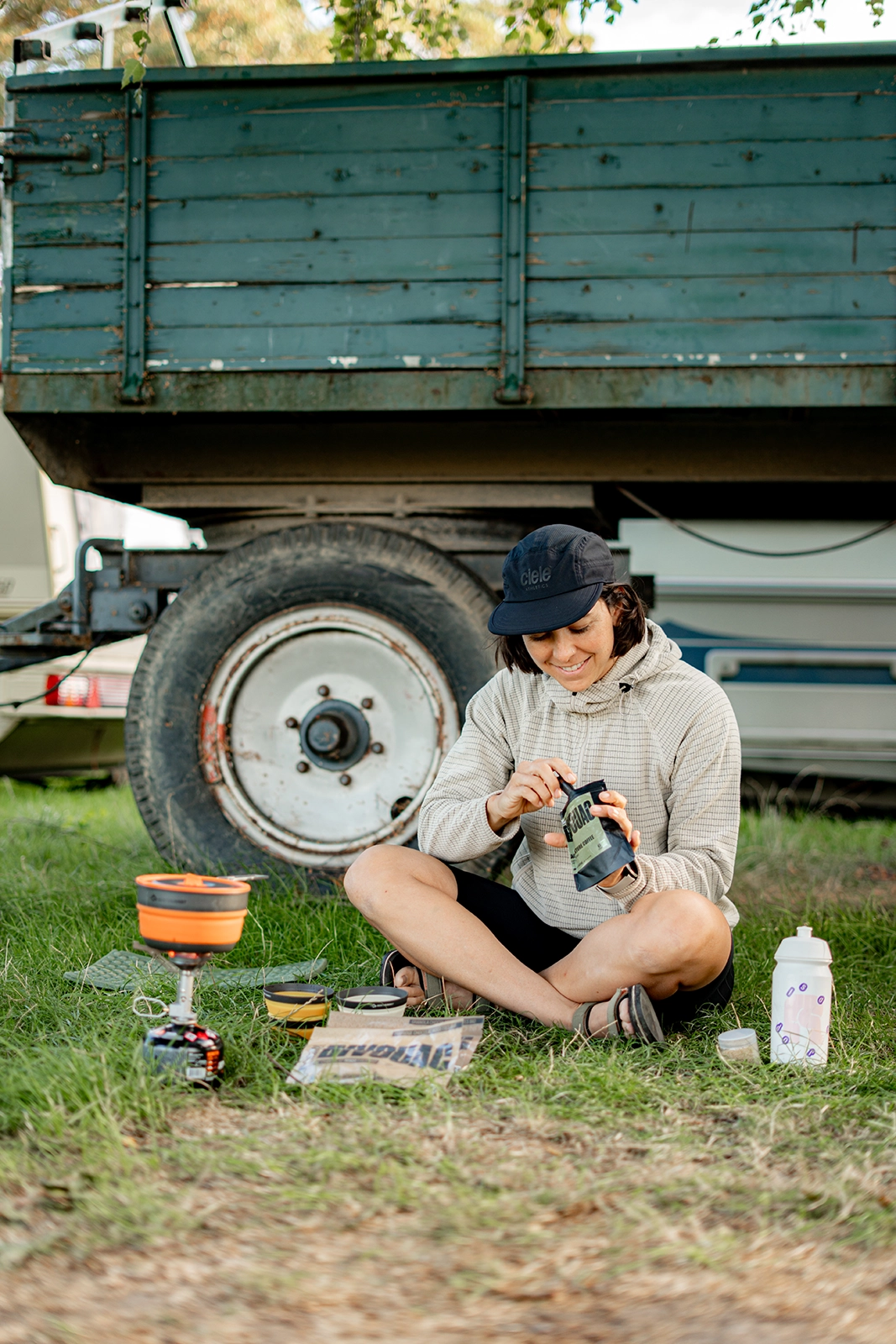
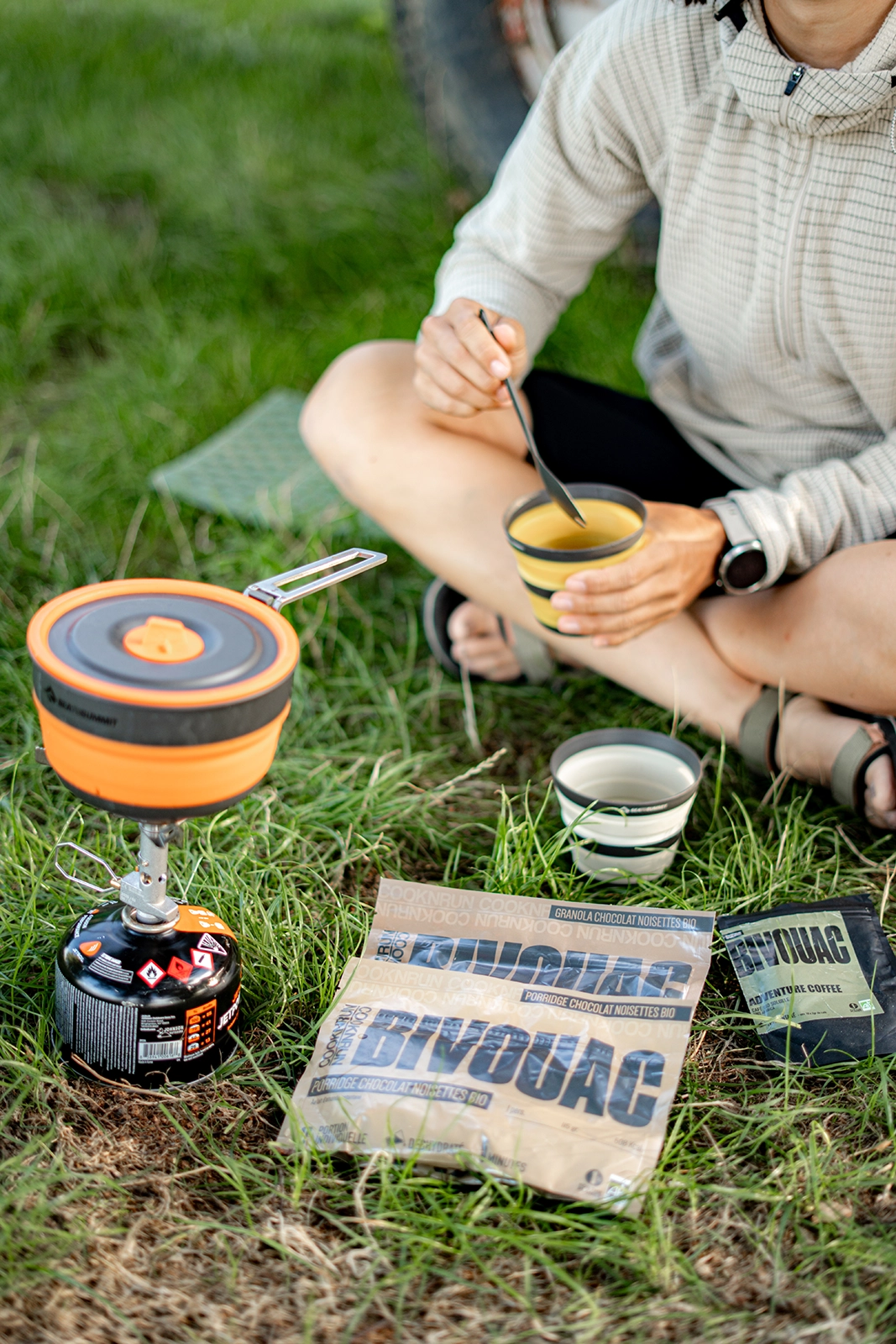
We bought groceries almost every day and regularly cooked dinner at the campground.

We deliberately kept our cooking setup pretty simple.

For two people:

There’s really no need for an elaborate camp kitchen.

Most evenings, dinner was simply pasta, sauce, and a salad we’d picked up at a supermarket a few kilometers before reaching the campground.

Toiletries and first aid kit

For two people:

We also carried a small first aid kit containing:

  • Bandages
  • Antiseptic
  • Blister bandages
  • Dafalgan / acetaminophen (paracetamol)
  • Ibuprofen
  • Throat lozenges
  • A few basic medications

Two products turned out to be especially important during the trip: chamois cream and mosquito repellent.

Our camera gear and electronics

This is definitely the category where our packing list is a little less minimalist than a typical bikepacking setup.

Since we were creating content throughout the trip, we needed to bring all our photography, video, and computer equipment.

For both of us:

  • 1 × Sony A7C II
  • 2 × camera lenses
  • 2 × Sony batteries
  • 3 × SD cards
  • 1 × SSD
  • 1 × battery charger
  • 1 × drone
  • 1 × drone battery
  • 1 × set of ND filters
  • 1 × tripod
  • 1 × Insta360
  • 1 × DJI microphone
  • 2 × smartphones
  • 1 × laptop + charger
  • 1 × Garmin Edge
  • 1 × Garmin watch
  • 2 × pairs of earbuds
  • Charging cables
  • 1 × universal travel adapter
  • 1 × camping electrical hookup adapter
  • 1 × power bank
  • 1 × multiport wall charger
  • 1 × Sunslice 12 W solar panel with a 10,000 mAh power bank

Keeping all our electronics charged required a bit of planning, especially since around 80% of the campgrounds didn’t have an electrical outlet directly next to our tent.

For this kind of trip, we’d definitely recommend bringing a power bank and a multiport charger.

We also carried a Sunslice solar panel as an extra charging option whenever we couldn’t easily access an outlet.

If we had to cut down on camera gear, we’d probably leave our second lens at home. We barely used it.

What we ate during the day

We never carried several days’ worth of food because our route regularly passed through towns and villages.

Still, we always kept a few snacks and essentials in our bags:

Energy bars were especially convenient during the day. We kept them in the small handlebar bag so we could easily grab one whenever we stopped for a break.

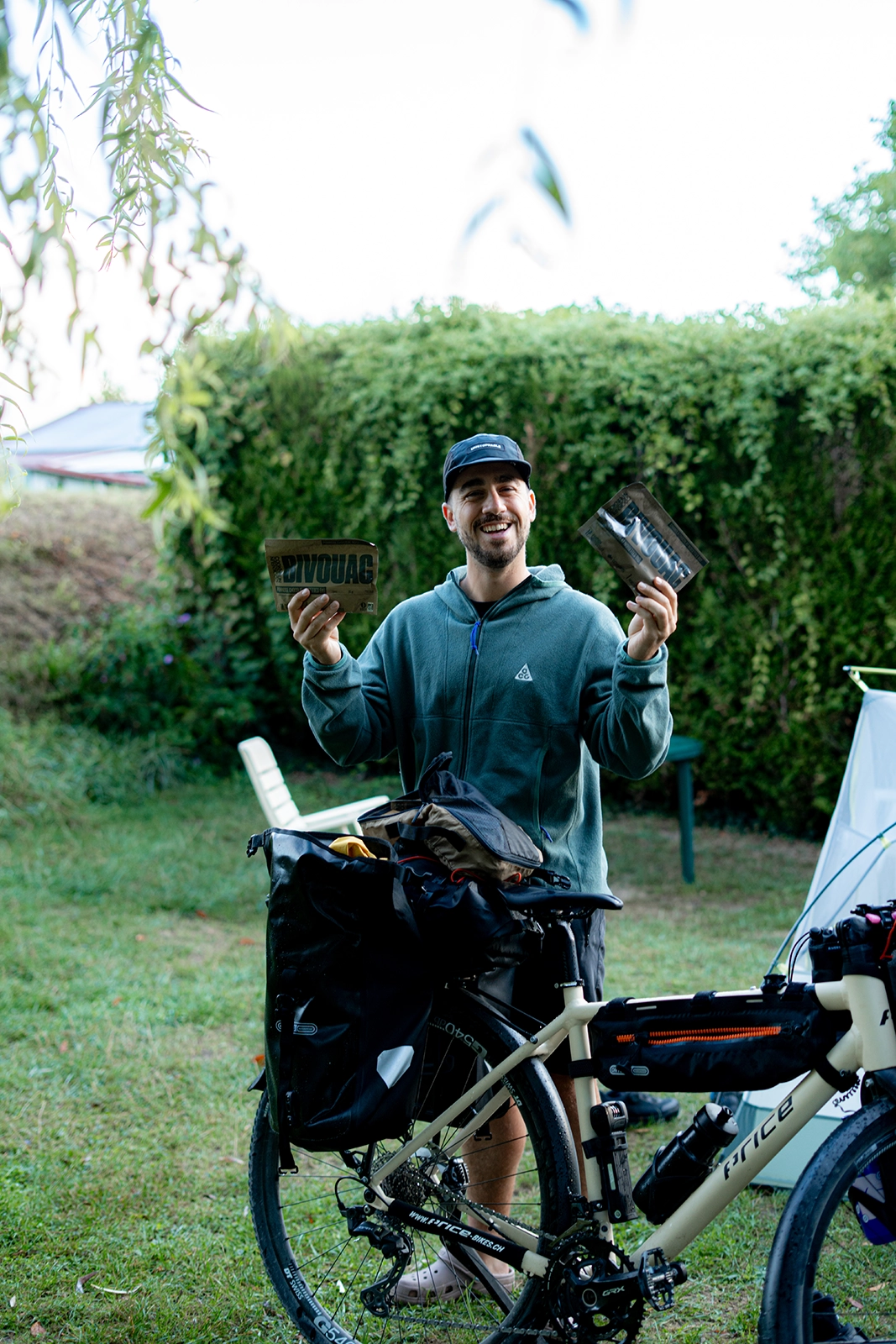
For breakfast, we’d alternate between oatmeal, granola, bars, or something picked up at a supermarket or bakery.

How we organized our bikepacking bags

To avoid having all our belongings mixed together, we used several Sea to Summit dry bags:

These helped us keep our clothes separate from our electronics and, more importantly, made it much easier to find things quickly.

Our rule was simple: always put the same things back in the same place.

After a few days, we knew exactly which bag to check whenever we needed something, and setting up or packing away camp became much faster.

With 57 liters of storage per bike, we had more than enough room for all our camping gear, camera equipment, and electronics.

Without a laptop, camera, drone, and all the other content creation equipment, it would be easy to travel with significantly less.

The little essentials you shouldn't forget

Besides our main gear, we also brought:

  • Wallet
  • Cash
  • IDs
  • Insurance cards
  • Important documents
  • Earplugs

And yes, earplugs are absolutely on our essentials list.

After more than two weeks of camping, between noisy neighbors, nearby roads, animals, and all the random sounds during the night, there’s no way we’d go on another trip without them.

What we'd change after more than 1000 km

Surprisingly, not much.

We did bring a few things that we barely used:

  • Our second camera lens
  • Water filter
  • Long-sleeve athletic shirt
  • Cycling gloves

On the other hand, there are several things we’d definitely pack again:

  • Two good pairs of padded cycling shorts per person
  • Chamois cream
  • A fleece and puffer jacket for evenings
  • A properly waterproof jacket and rain pants
  • A power bank
  • A camping electrical hookup adapter
  • Mosquito repellent
  • Dry bags to organize and protect our gear
  • Earplugs

How much did our fully loaded bikes weigh?

Just before leaving, we weighed both bikes with all our gear packed.

  • Audrey’s bike: 28 kg (62 lbs)
  • Benji’s bike: 32 kg (71 lbs)

This included the bikes themselves, all the bags and their contents, our camping equipment, clothes, camera gear, electronics, and a small supply of food.

However, our water bottles were empty, so water wasn’t included in those weights.

Benji was carrying a little more weight, mainly because he had some of the heavier camera and electronic equipment.

As for storage, we found that 57 liters per bike was a really good amount of space for two weeks of camping while carrying photography and video gear.

Of course, if you’re traveling without a laptop, camera, drone, and everything else needed for content creation, you can pack much lighter.

After more than 1000 km, our biggest takeaway is that you really don’t need to bring that much stuff.

What matters most is choosing the right gear, keeping your bags organized, and finding a good balance between weight, comfort, and being self-sufficient.

As for us, after more than two weeks on the road and 16 nights in a tent, there wasn’t a single essential item we felt we were missing.

Did you like the article ?
Pin it !

Leave a Reply

Your email address will not be published. Required fields are marked *